The Blue Bead

The Blue Bead: Short story by Norah BurkeThis story by Norah Burke explores the simple, yet dangerous life of junglis (jungle and wild forest dwellers) in colonial India. A twelve-year-old girl, whose “life from birth to death is marked for work”, dreams about being able to complete a necklace she has started to make. When she saves a villager by fighting off a four-meter crocodile, she is more excited by a blue bead she later finds in the water than the danger she faced. Themes include poverty, life and survival in the forest, gender roles, perseverance, courage, reward/karma, finding happiness in small things.

Continue ReadingThe Blue Bead

Menagerie, a Child’s Fable

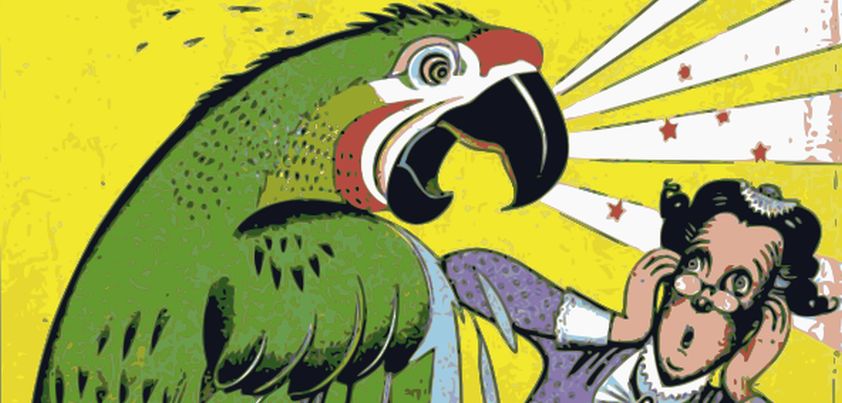
Menagerie, a Child’s Fable: Short story by Charles JohnsonLike George Orwell’s Animal Farm, Charles Johnson’s confronting allegorical fable about animals left to fend for themselves in a locked pet shop is not for children. Some see the story as a religious allegory for the consequences (chaos and hell fire) of losing faith in God (Tilford) and listening to the devil (the monkey). Another interpretation is as a political allegory for the anarchy that can arise after a breakdown of authority and the rule of law, much like modern day (2024) Haiti. Themes include oppression, freedom and democracy, pluralism vs. racism, lawlessness and power (greed, violence, murder and rape).

Continue ReadingMenagerie, a Child’s Fable

The Mesmerizer

The Mesmerizer: Short story by Mark TwainIn this story taken from the Autobiography of Mark Twain, the author reminisces about a childhood prank that still haunts him in adult life. When a traveling mesmerizer (hypnotist) came to town, young Twain volunteered as a subject to show off before the public … and make the people laugh and shout and admire. His performance was so convincing that he fooled everyone in town. Later in life he comes to regret the deception, but learns that it can sometimes prove very difficult to undo a lie. Themes include showmanship, deception, the temporary nature of fame, cruelty, gullibility.

Continue ReadingThe Mesmerizer

Black Is My Favorite Color

Black Is My Favorite Color: Short story by Bernard MalamudIn this cynical take on 1960s race relations by Bernard Malamud, a Jewish-American shopkeeper turns the traditional racial discrimination debate on its head. Claiming to be open-minded and desirous of not only integrating with his local African-American community but also marrying into it, he finds himself shunned, vilified, beaten and rejected for his efforts. Some reviewers suggest that he has brought these problems upon himself by trying to be “too kind” and unintentionally coming across as privileged and condescending towards those he tries to help. Themes include racial inequality, racial and religious discrimination, interracial relationships, violence.

Continue ReadingBlack Is My Favorite Color

Breakfast at Tiffany’s

Breakfast at Tiffany's: Novella by Truman CapoteSet in the early 1940s, this story by Truman Capote explores the relationship between a budding writer and his downstairs neighbour, mysterious New York café society girl Holly (Holiday) Golightly. Holly lives by socializing with, and seeking a husband from among, wealthy men who take her to clubs and restaurants and give her money and expensive gifts. Unfortunately, a side hustle with a jailed mob boss forces a hasty exit from the country, after which she is not seen again. Themes include freedom, independence and privacy, sexuality, manipulation, yearning for wealth, love and happiness.

Continue ReadingBreakfast at Tiffany’s

Double Birthday

Double Birthday: Short story by Willa CatherThe major theme of this story from Willa Cather is daring to be different. The protagonist and his aging uncle have the same birthday. Both have suffered major losses: the protagonist, his share of his father’s fortune, frittered away on travel and entertainment; the uncle, a young musical protégée he undoubtedly loved. They share a house, living in the past among sentimental relics and resisting cultural aspects of “modern” (1920s) America. An unexpected visitor on their mutual birthday signals that things may soon change for the better. Themes include nonconformity, cultural dissent, judgmentalism, the price of “success”, and revitalization.

Continue ReadingDouble Birthday

The Sand Castle

The Sand Castle: Short story by Alma Luz VillanuevaThe major theme of this story by Alma Luz Villanueva is climate change. Set over fifty years into the future, Earth has warmed so much that all birds and marine life are extinct and direct exposure to sunlight or seawater can be deadly. Although protective clothing must be worn when venturing outside during the day, an aging woman takes her grandchildren on monthly excursions to the beach. This time she has prepared a special treat. Spurred on by her own childhood memories, they are going to build their first sand castle. Other themes: memories, family, childhood wonder and imagination, hope.

Continue ReadingThe Sand Castle

Philomel Cottage

Philomel Cottage: Short story by Agatha ChristieThis romantic story with a deadly twist is one of Agatha Christie’s lesser-known tales. Shortly after newly-weds Alix and Gerald move into secluded Philomel Cottage, Alix hears some disturbing news from the gardener. Gerald’s angry reaction when she asks him about it makes her realize how little she really knows about him. She sets out to fill in the gaps and discovers a trail of bigamy, swindling, murder, and escape form prison. Sensing danger, some quick thinking and a terrible-tasting new brand of coffee save her life. Themes include love and romance, manipulation, isolation, innocence, curiosity, fear, and the supernatural.

Continue ReadingPhilomel Cottage