Supper

Supper: Short story by Lesléa NewmanThe major themes of this story by Lesléa Newman are sexuality and alienation. Protagonist Jocelyn’s annoying grandmother spoils supper by complaining about her vegetarian diet and trying to force her to eat some meat. Later, the grandmother makes a cruel comment about her being too skinny to attract boys. Jocelyn blushes because she thinks there might be something wrong with her. She “doesn’t like” boys, but found a kissing and petting ‘practice session’ with her best friend (who demonstrated what her experienced boyfriend does) sexually stimulating. Sadly, the poor girl doesn’t appear to have anyone to talk to about it.

Continue ReadingSupper

The Censors

The Censors: Short story by Luisa ValenzuelaWritten during the early days of Argentina’s Videla dictatorship, this story by Luisa Valenzuela satirizes the use of censorship in limiting free speech. A man worried that government censors may misinterpret an innocent letter he wrote to a woman in Paris gets a job at the censorship office to recover it. Ironically, he becomes so immersed in the job that his values change to embrace censorship. His dedication results in promotion to a top position and, when his letter finally reaches him, he dutifully censors it, bringing about his own downfall. Themes include censorship, oppression, paranoia, love, alienation, identity, duty.

Continue ReadingThe Censors

The Three-Century Woman

The Three-Century Woman: Short story by Richard PeckIn this humorous story by Richard Peck, a fourteen-year-old girl accompanies her mother and aunt to visit her great-grandmother on her 102nd birthday. Because of the great-grandmother’s “three-century” status (born in 1899, living through the 1900s, and still alive in 2001), her room in the usually quiet nursing home is surrounded by press. Anticipating this, the normally sleepy, forgetful old woman is not only propped up in bed dressed for an interview, but has prepared an elaborate prank to play on them. Themes include playfulness, taking the aged for granted (the aged are more than their memories!), change.

Continue ReadingThe Three-Century Woman

The Door in the Wall

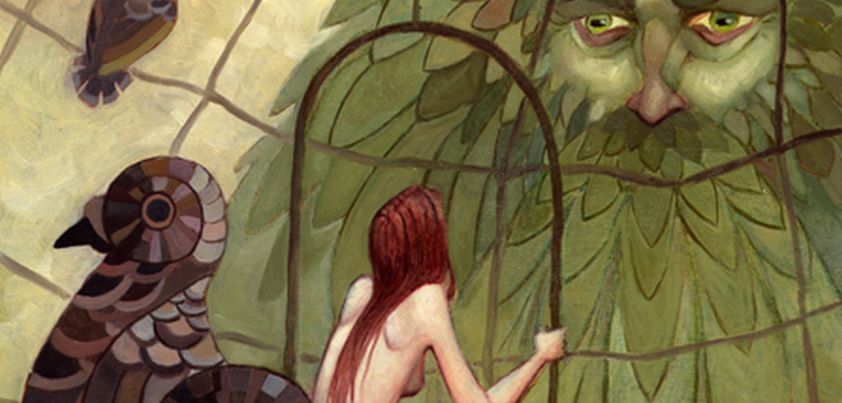
The Door in the Wall: Short story by H. G. WellsThe major theme of this psychological fantasy by H. G. Wells is the conflict between reality (logic) and imagination. A precocious five-year old from a loveless household is permitted to walk the streets of London alone. One day he is drawn to a door that opens to an enchanted garden where he is greeted by tame animals and a beautiful, loving woman and plays with friendly children. Despite achieving great success in life, he becomes obsessed with re-visiting the garden. Other themes: childhood neglect, alienation and loneliness, escape, regret, obsession, success vs. happiness.

Continue ReadingThe Door in the Wall

The Signal-man

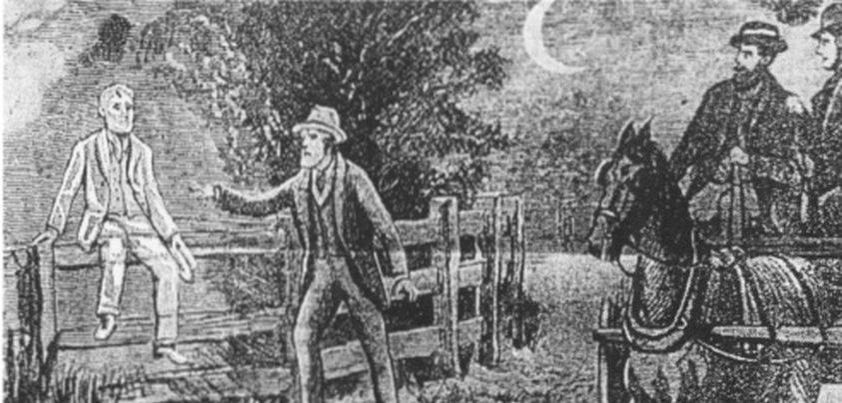
The Signal-man: Short story by Charles DickensMany Charles Dickens stories feature ghosts. Part of the attraction of The Signal-man is that, although generally considered one of these, there is no hard evidence of a ghost. Dickens masterfully uses setting to create a forbidding, unearthly atmosphere, and then leaves the question of the ghost to the reader. Like all first-person stories, the narrator’s version is open to misinterpretation and bias. The only evidence of the supernatural are the ghostly sightings described by the (now dead) signal-man, and some (potentially coincidental) shared expressions and gestures. Themes: duty & responsibility, fate, isolation, guilt, sanity, the supernatural.

Continue ReadingThe Signal-man

Solitude

Solitude: Short story by Miguel De UnamunoThis story by Miguel De Unamuno should not be confused with his soliloquy of the same name by a man who chooses solitude. Predicting what her baby daughter’s future will hold, the dying wish of a woman married to a selfish, uncaring man is that she be named Solitude. After a failed love affair and the death of her father, the girl lives up to her name. When questioned years later, she has some interesting observations on men (Poor little fellows!) and erotica. Themes include isolation and loneliness, bullying, unrequited love, contentment in solitude.

Continue ReadingSolitude

Once Upon a Time

Once Upon a Time: Short story by Nadine GordimerAlthough Nadine Gordimer’s Once Upon a Time follows a fairy-tale pattern (there is even a wise old witch!), the storyline doesn’t have a fairy-tale ending. On a superficial level, it could be regarded as a parody of The Three Little Pigs: a family builds a stronger and stronger house to keep out the big bad wolf, only for the extra security to ruin their lives. On a more serious note, the story has several important themes: Racism, Apartheid and Inequality (which lead to Social Decay) and the consequences of being ruled by Fear (Anxiety, Overreaction, and in this case Self-Destruction).

Continue ReadingOnce Upon a Time

The Mill

The Mill: Novelette by H. E. BatesThe major theme of his story by H. E. Bates is exploitation: economic exploitation by parents who place their daughter in servitude, and sexual exploitation by her employer who rapes her on an almost daily basis. The most puzzling aspect of the story is the girl’s compliant, almost robot-like, demeanor, perhaps brought about by her father’s dictatorial bullying. It only when the girl arrives home after her employer’s son, the only man who has shown her any kindness, realises and tells her she is pregnant, that her eyes come to life with tears. Other themes include isolation, naivety, jealousy, fear.

Continue ReadingThe Mill