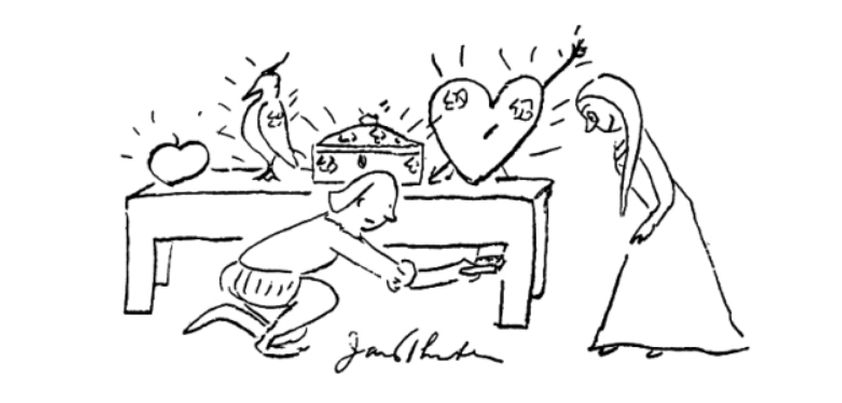
A Cup of Tea

A Cup of Tea: Short story by Katherine MansfieldAlthough written in a lighthearted tone, this innocently titled story from Katherine Mansfield deals with some big issues. Its major theme is the materialism, hypocrisy and vanity of the British upper class. The desire for a “cup of tea” symbolizes the one similarity (womanhood) between a young beggar and middle-aged socialite. One is poor, desperate and astonishingly pretty; the other rich, entitled and not exactly beautiful. The socialite’s reason for wanting to help the girl was to show how compassionate she is. However, she soon realizes this may highlight a less favorable difference between them. Other themes: appearance, jealousy, insecurity.

Continue ReadingA Cup of Tea

Sardarji

Sardarji: Short story by K. A. AbbasThis story by K. A. Abbas uses satire and irony to highlight the madness and futility of the religious riots that killed and displaced millions during the 1947 Partition of India. The Delhi-bred Muslim protagonist not only vilifies Hindus and Sikhs, but also looks down on the crude rustic Punjabi practitioners of his own faith. Like most bigots, he advances no reason for his hatred other than that the three groups have different accents, appearances and customs. Fate plays a cruel trick as an angry mob comes for him. Themes include religious and racial intolerance, fear, violence, sacrifice.

Continue ReadingSardarji

Lullaby

Lullaby: Short story by Leslie Marmon SilkoAlthough this story by Leslie Marmon Silko takes place over a single evening, some of the events described span three generations. An aging Native American woman searching for her alcoholic husband reminisces about her life. Although her childhood memories are pleasant, her adult memories are full of loss and tragedy. Her husband has been exploited by a “white rancher” and, having lost at least three children to natural causes and one to war, her last two were removed by “white doctors”. Themes: memories, tradition and change, language barriers, racism, oppression and exploitation, motherhood, death and loss.

Continue ReadingLullaby

The Chrysanthemums

The Chrysanthemums: Short story by John SteinbeckIn this seemingly straightforward story by John Steinbeck, chrysanthemum-growing Elisa’s character can be interpreted in several, often contradictory, ways. Is she “strong and happy” as her husband says, or weak and disillusioned with her life? Does she crave companionship, intimacy and perhaps a child, or freedom? Is her fascination with chrysanthemums because of a special connection with nature, or because they represent the only joy in her life? Whatever the answers, after a smooth-talking tinker raises her self-esteem and then shatters it, Elisa’s tears signify her realization that nothing will change. Themes: isolation, loneliness, aesthetics, lack of fulfillment, betrayal.

Continue ReadingThe Chrysanthemums

A Job for Valentin

A Job for Valentin: Short story by Judith Ortiz CoferThis coming-of-age story from Judith Ortiz Cofer describes the interaction between a teenage girl working a summer job in a swimming pool kiosk and Valentin, her thirty-year-old mentally challenged male assistant. Valentin is nervous and clumsy, creating chaos whenever he tries to help. Fortunately, his rubber-band “art” animals keep him occupied. She would rather work alone and have more time to flirt with the muscular young lifeguard and talk with friends. Things change when the lifeguard “goes missing” and the girl and Valentin rescue a small child who nearly drowns. Themes: inclusion, patience, acceptance, friendship, courage, responsibility.

Continue ReadingA Job for Valentin

Big Brother / Bade Bhai Sahab

Big Brother / Bade Bhai Sahab: Short story by PremchandThis story by Premchand contrasts two Indian bothers attending boarding school. The older (by five years) is studious, disciplined, serious about his responsibility to look after and guide his younger brother, and consistently fails his grade. The younger brother is the opposite: fun-loving, undisciplined, irresponsible, and consistently tops his class. The major messages of the story are the danger of arrogant pride, and that irrespective of one’s level of education, there is always something to learn from those with more life experience. Themes include education, self-discipline, responsibility, pride, work/life balance, respect for one’s elders.

Continue ReadingBig Brother / Bade Bhai Sahab

Diary of a Madman

Diary of a Madman: Short story by Guy de MaupassantAlthough not one of Guy de Maupassant’s best known works, this is still a fascinating read. The madman (and in this case thrill killer) is a highly respected magistrate who sentences an innocent man to death for one of his own gruesome murders. Later, he gets an additional thrill from witnessing the poor man’s execution. The motif here is that even seemingly incorruptible members of society can descend into madness and commit the most heinous of crimes. Themes: madness, false impressions, society’s fascination with killing (especially as part of war), the undiscovered madmen among us.

Continue ReadingDiary of a Madman

The Barber’s Trade Union

The Barber's Trade Union: Short story by Mulk Raj AnandThe major theme of this inspirational story by Mulk Raj Anand is class as reflected in the Indian caste system. When a young barber tries to improve his appearance by dressing more professionally, he is verbally abused and humiliated by village elders for acting above his “lowly” position in life. Rather than becoming disillusioned and giving in to their ingrained bigotry, he changes the way he works, makes more money than ever before, and ingeniously turns the tables on his detractors. Other themes: human dignity, alienation, appearance, determination, ingenuity, organized labor.

Continue ReadingThe Barber’s Trade Union