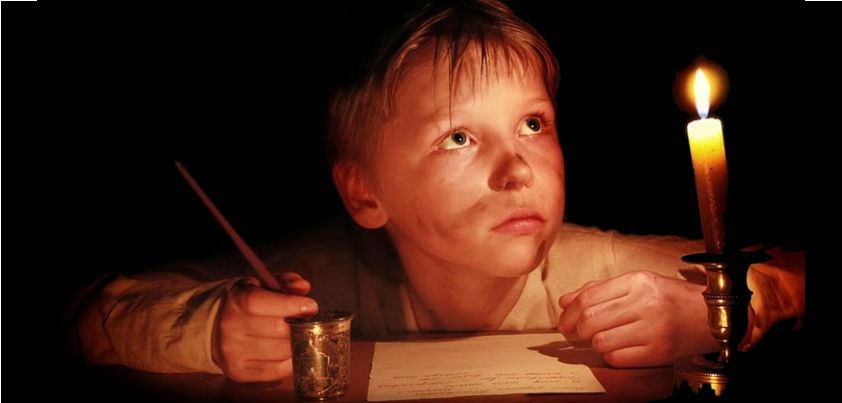
The Fly

The Fly: Short story by Katherine MansfieldKatherine Mansfield‘s The Fly is about death, grief and aging. Two old men handle their sons’ wartime deaths differently. Six years have passed. Mr Woodifield, in poor health physically and mentally, has come to terms with the loss of his son. “The boss”, healthy and successful, still grieves… but not for his son. He laments the sacrifices he made in preparing the boy to take over his business, and shows his true character by torturing a fly. This leaves him feeling wretched and frightened. Could the fly’s struggles have reminded him that even the strongest (himself included) eventually die?

Continue ReadingThe Fly

The Million Pound Bank Note

The Million Pound Bank Note: Short story by Samuel Clemens (aka Mark Twain)This humorous story from Samuel Clemens (aka Mark Twain) explores two themes related to the power of money. The first is the different attitudes people have towards the rich and the poor. The second, which is particularly relevant today, is the power the rich (influencers) can exert over the decision-making of admirers (followers). Other themes: enduring love (Portia and Henry’s relationship prospers, despite their playful deceptions); honesty (Henry’s intention to pay back his debts); and the peculiarities of British High Society (settling arguments with bets, determining social position through gossip columns, and missing meals if unable to decide seating precedence).

Continue ReadingThe Million Pound Bank Note

Swaddling Clothes

Swaddling Clothes: Short story by Yukio MishimaThe major theme of Yukio Mishima’s Swaddling Clothes is the loss of traditional Japanese values to Western modernization. Other themes include class, morality, gender roles, compassion, fear, and sacrifice/atonement. The callous swaddling of an illegitimate baby in newspaper and protagonist Toshiko’s conviction that it is destined to grow up a poverty-stricken criminal underlines Japan’s rigid class structure. Her husband’s heartless description of the delivery demeans women who contravene social norms. When Toshiko does this (by taking a walk alone at night to contemplate her own child’s future and unsatisfying Western lifestyle), she comes face to face with her prophesy.

Continue ReadingSwaddling Clothes

The Outlaws

The Outlaws: Short story by Selma LagerlöfThe story from Selma Lagerlöf involves two medieval fugitives who meet and become close friends while hiding out in the Swedish wilderness. The men differ greatly in physique, confidence, class, religious belief and the seriousness of their crimes. One has murdered a monk; the other has admitted to stealing a fishing net. The only thing they have in common is that their charges arose because of manipulating women. To his ultimate cost, the murderer tries to help the fisherman (a pagan) by teaching him the fundamentals of Christianity. Themes: living in nature, mateship, culture, betrayal, religion, repentance, ‘justice’.

Continue ReadingThe Outlaws

The Lesson

The Lesson: Short story by Toni Cade BambaraA well-educated woman living in a poor New York neighborhood takes a reluctant group of local children on day trips to teach them about the world. The Lesson in this Toni Cade Bambara story involves an excursion to Manhattan’s up-market FAO Schwarz toy store. The children soon realize that nothing in the store is in their family’s price range. The young narrator is disturbed by not only the point of the lesson (economic inequality), but also the condescending way the woman talks about their neighborhood and the people living in it. Themes include education, social class, inequality, ostentation, patronization, resentment.

Continue ReadingThe Lesson

Cranes

Cranes: Short story by Hwang Sun-wonHwang Sun-won’s Cranes shows how humanity can outweigh ideology. Two childhood friends find themselves on opposite sides in the Korean War. One, a village commander, is captured and the other assigned to take him for interrogation and probable execution. When asked why he did not flee, the captured man talks about his aged father’s connection to the land. The other man can relate to this, because he carries the guilt of having left his family when he went away to war. This prompts the captor to suggest they go off on a crane hunt, as they did once as boys.

Continue ReadingCranes

What Shall We Do When We All Go Out?

What Shall We Do When We All Go Out?: Short story by Gregorio C. BrillantesIn this story by Gregorio Gregorio C. Brillantes, a nine-year-old Philippine boy’s childhood innocence is shattered over the course of a school term. His public servant father has been relocated to a large provincial town. The boy likes this town more than the smaller ones they had lived in, and is very happy in his new school. Two events destroy his comfortable outlook on the world: the death of a classmate followed by a school field-trip to view his body, and his forced initiation under threat of violence into a gang of older students. Themes include innocence, death, violence, intimidation, fear.

Continue ReadingWhat Shall We Do When We All Go Out?

The Ordinary Son

The Ordinary Son: Short story by Ron CarlsonThe story from Ron Carlson is a satire of 1960s life and its fixation with science, war, protest and material possessions. Protagonist Reed had a spartan, lonely childhood. His parents (NASA physicist father and poet/activist mother) are eccentric geniuses. His brother and sister are equally intelligent. When Reed discovers he is “ordinary”, he feels a sudden sense of relief and freedom. He gets a low-level job, buys a car, drinks beer and goes fishing for the first time, and fantasizes over a lewd picture he sees in a magazine. Themes: family, materialism, diversity, pressure to meet expectations, work/life balance, sexuality.

Continue ReadingThe Ordinary Son