The Lottery

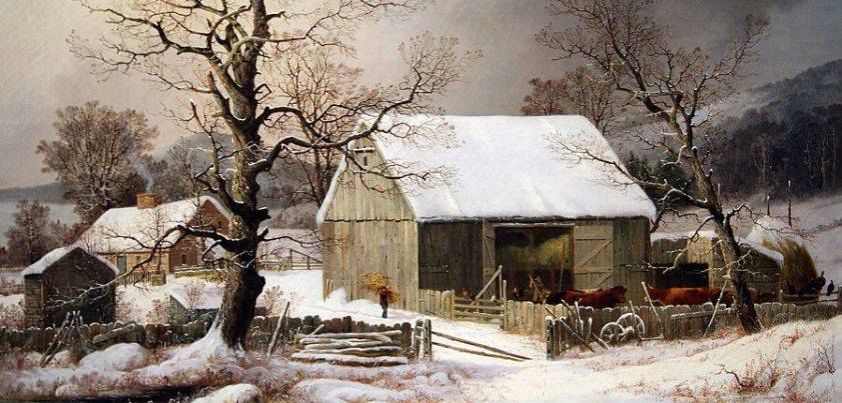
The Lottery: Short story by Shirley JacksonAuthor Shirley Jackson had no idea of the angry reaction The Lottery would receive when it first appeared in 1948. The story tells how each year the otherwise ‘normal’ people in a small American farming town perform a gruesome ritual to ensure a favorable growing season. The major theme is how herd or mob mentality can drive people to do things they would never consider individually. Other themes include dystopia, gender roles, violence and cruelty (human sacrifice), acceptance (the blind following of tradition), and man’s inhumanity to man (the potential for evil in all of us).

Continue ReadingThe Lottery

When the Mice Failed to Arrive

When the Mice Failed to Arrive: Short story by Gerald MurnaneIn 2018, the New York Times dubbed Gerald Murnane “the greatest living English-language writer most people have never heard of.” Now 83, Murnane has remained largely unknown due to his distinctive stream of consciousness writing style. Stories contain frequent changes of perspective from character to character, and between past and present. In When the Mice Failed to Arrive, a storm breaking as a father waits for his son to come home from school triggers memories of the man’s earlier life. Themes include father-son relationships, childhood anxiety, religious parody, awakening sexuality, insecurity, deceit, and what some may consider animal cruelty.

Continue ReadingWhen the Mice Failed to Arrive

How to Tell a True War Story

How to Tell a True War Story: Short story by Tim O'BrienThis metafictional story by Tim O’Brien uses observations on a small collection of stories related by soldiers to highlight the difficulty of faithfully communicating one’s wartime experiences. His central argument is that in war it’s difficult to separate what happened from what seemed to happen and therefore you lose your sense of the definite, hence your sense of truth itself. This leads to the seemingly paradoxical conclusion that in a true war story nothing is ever absolutely true. Themes include the nature of truth in storytelling, memories vs. imagination, the trauma of war, morality.

Continue ReadingHow to Tell a True War Story

The Nightingale and the Rose

The Nightingale and the Rose: Short story by Oscar WildeThe major themes of this Oscar Wilde story are sacrifice and the nature of love. A nightingale sacrifices its life in exchange for a red rose to help a love-smitten student. The story contrasts the selfless, unconditional love of the nightingale, the student’s naïve infatuation with a fickle girl, and her materialistic love of another. The student, who only knows things that are written down in books, not only laments that the nightingale’s song doesn’t do any practical good but, angry about being rejected, dismisses love as quite unpractical. Other themes include compassion, naivety, materialism, and intellectualism vs. aesthetic appreciation.

Continue ReadingThe Nightingale and the Rose

Voodoo

Voodoo: Flash story by Fredric BrownThis story by Fredric Brown explores the use of black magic to solve a marriage problem. Mr and Mrs Decker have decided on a divorce. Love has turned to hate, and the break-up is not friendly. The biggest issue they need to agree on is the financial settlement. Mrs Decker wants half of everything; Mr Decker thinks this is too much. She knows voodoo, and tells him she could use it to kill and him and get everything if he didn’t agree. This leads to an all-or-nothing bet. Themes include hatred, divorce, greed, the supernatural.

Continue ReadingVoodoo

Someone to Talk To

Someone to Talk To: Short story by Deborah EisenbergThe major theme of this story by Deborah Eisenberg is the need to be heard. A once up-and-coming concert pianist struggles to deal with a stalled career and failed relationship. Potential salvation arrives with an invitation to perform in an unnamed Latin American Country. Patronizing treatment by the concert’s upper-class organizers, a walk through poorer neighborhoods, and the inane behavior of an English radio journalist, emphasize the importance for people of all persuasions to not only speak out, but also be heard and understood. Other themes: loneliness, alienation, elitism, class, poverty, oppression, indifference to the suffering of others.

Continue ReadingSomeone to Talk To

Long Walk to Forever

Long Walk to Forever: Short story by Kurt VonnegutKurt Vonnegut described this semi-autobiographical tale, written in honor of his wife, as a sickeningly slick love story. A satire of the “love at first sight” romance cliché, it describes how, after a platonic friendship of almost twenty years, a single expression of love and two kisses is all it takes for Catharine to question her plans to marry another man and fall into Newt’s arms. Themes include communication (failure to express/discuss their feelings sooner), taking people for granted (Newt didn’t appreciate how much Catharine meant to him until almost losing her!), and fighting for what is important in life.

Continue ReadingLong Walk to Forever

The Imp of the Perverse

The Imp of the Perverse: Short story by Edgar Allan PoeLike two of our earlier Edgar Allan Poe tales (The Back Cat and The Tell-Tale Heart), this story involves an unreliable, unhinged narrator facing execution for murder trying to account for his crime. He blames his actions on an agent he claims to be in all of us called the “Imp of the Perverse”. The Imp, he argues, is an urge that drives people to do things they shouldn’t for the simple reason that they know it to be wrong. Ironically, the Imp that drove him to murder also drove him to confess. Themes include perverseness, obsession, madness, self-destruction.

Continue ReadingThe Imp of the Perverse