
The Boy Who Broke the Bank
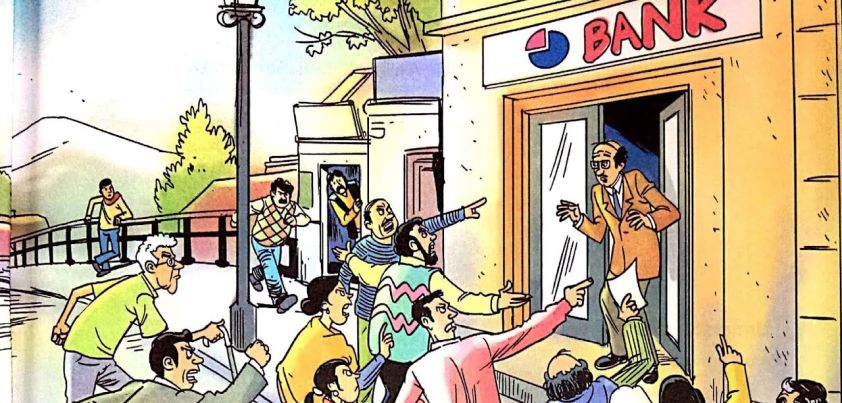 Although published over thirty years ago, this light-hearted story by Ruskin Bond highlights a major problem in today’s world: the spread of fake news on social networks based on incomplete or inaccurate information. A young sweeper working for an Indian bank is paid late, presumably because of his lowly caste. He complains to a friend, who mentions it to a customer, and soon word spreads throughout the bazaar that the bank cannot pay any of its salaries. This causes panic among depositors, leading to a run on the unfortunate bank. Themes include social class, exploitation, discontent, rumor, panic, crowd psychology.
 Although the 9-year-old twins in this
  Although the South African law banning sexual intercourse between “whites” and “non-whites” was repealed in 1985 (five years after
  This story from
  The protagonist in this pioneering cyberpunk story by
  This story from
  This story by Marta Salinas is about prejudice, privilege and hope. Martha is 14 and about to enter High-School. Her parents are very poor, so she lives with her grandparents. Marta gets top grades, and wants nothing more than for this to be recognized by winning the Grade 8 Scholarship Jacket. She is devastated when she hears two teachers arguing about whether the jacket should go instead to a lesser student whose father is on the School Board. When Martha explains the problem to her grandfather, his answer proves that you don’t need a formal education to acquire great wisdom.
 This partly autobiographical story from