The Interlopers

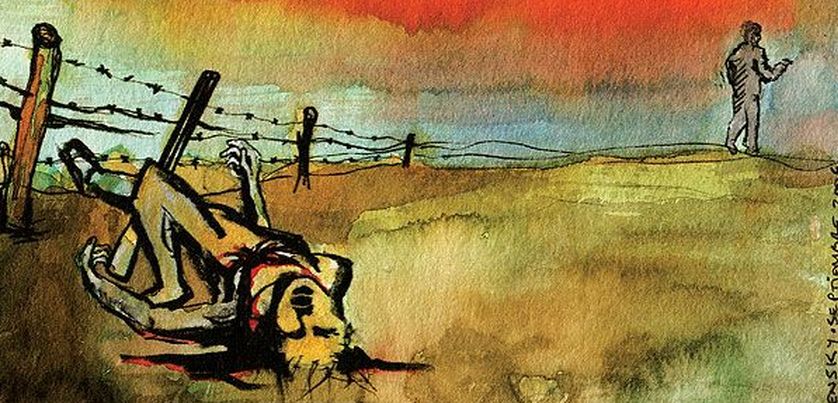
The Interlopers: Short story by H. H. Munro (aka Saki)This story by Saki has perhaps the shortest surprise ending of all: a single word that comprises the last line of the story. Two families have been feuding for years over the use of a poor piece of forest land. When the heads of the families find themselves trapped under a fallen tree, they realize how silly they have been and promise to be friends for life. Sadly, just as they are looking forward to a more peaceful future, some unexpected visitors spoil it all. Themes: greed, pride, inherited hatred, man vs. nature, social class.

Continue ReadingThe Interlopers

The Outcasts of Poker Flat

The Outcasts of Poker Flat: Short story by Bret HarteBret Harte’s “outcasts” are four “improper persons” (a gambler, a prostitute, a brothel madam, and a drunkard and suspected thief) banished by a vigilante group from a Californian Gold Rush town. When they camp for the night on the way to the next settlement, the drunkard steals their horses. The other three and a young couple journeying the other way find themselves “snowed in” in a secluded mountain cabin. With food and firewood running low, we see another side of the remaining outcasts. Themes: appearances; immorality vs. innocence; goodness; sacrifice; the power of nature; luck, fate and human agency.

Continue ReadingThe Outcasts of Poker Flat

Oysters

Oysters: Short story by Anton ChekhovIn this story by Anton Chekhov a young boy so weak from hunger that he can barely stand sees a sign in a restaurant advertising oysters. He knows that oysters are some kind of seafood. However, he does not know what they look like. In his hunger-affected state, the boy imagines himself eating creatures half-way between a crab and a frog. He then pictures himself eating up everything around him. He suddenly comes back to earth when two rich “gentlemen” agree to introduce him to the real thing. Themes include poverty, social class, insensitivity, shame, false pride, vanity, unconditional love.

Continue ReadingOysters

The Bound Man

The Bound Man: Short story by Ilse AichingerThis Kafkaesque story by Ilse Aichinger opens with a man waking up to find himself bleeding and bound from head to toe. The ropes are loose enough to allow some movement, but cannot be untied. With difficulty, he manages to stand and “walk” to a nearby village where a circus owner hires him as a performer. He not only becomes famous, but insists on wearing the same bonds night and day for the whole season. In an ambiguous conclusion, an act of compassion ends his career. Themes include insecurity, turning adversity into opportunity, freedom vs. restriction, loneliness, self-discovery, compassion.

Continue ReadingThe Bound Man

The Centipede

The Centipede: Short story by Rony V. DiazThe major theme of this story by Rony V. Diaz is revenge. A boy who has suffered years of torment from his older sister snaps when she severely beats and injures the eye of his beloved dog. Forgetting she has a weak heart, he plays a cruel, potentially fatal trick on her. The girl’s hatred and victimization of her brother raises the question of whether she, too, is taking revenge (albeit unconsciously) for the death of her mother when giving birth to him. Other themes include dealing with injustice and the need to stop and think before acting in anger.

Continue ReadingThe Centipede

The Queen of Spades

The Queen of Spades: Short story by Alexander PushkinThis entertaining, quite witty story from Alexander Pushkin shows how greed can overcome our better judgement when presented with a seemingly easy way to make money. A young soldier spends hours watching his fellow officers gamble at cards. He never joins in because he can’t afford to risk his small savings. When he learns that an old socialite knows a secret strategy that always wins at faro, he devises a heartless plan to learn it. He begins to gamble using her information, winning and doubling the bet each time. Unfortunately for him, the old socialite has the last laugh.

Continue ReadingThe Queen of Spades

The Tell-Tale Heart

The Tell-tale Heart: Short story by Edgar Allan PoeIn this Gothic horror story by Edgar Allan Poe, the narrator describes how cleverly he or she has planned and carried out the murder of an old man. The only reason given is fear of what is described as the old man’s ‘vulture eye’. The narrator’s purpose in telling the story is to convince the audience that he or she is not mad. There are a number of ironic aspects to the story, perhaps the greatest being that in trying to prove his or her sanity, the narrator clearly demonstrates the opposite. Themes: mental illness, fear, time, guilt vs. innocence.

Continue ReadingThe Tell-Tale Heart

Unaccustomed Earth

Unaccustomed Earth: Short story by Jhumpa LahiriThe major themes of this story from Jhumpa Lahiri are connection (daughter-parents, grandfather-grandson) and biculturalism (how different generations respond to belonging to two different cultures). A widowed Indian immigrant visits his daughter and three-year-old grandson. The visit triggers memories of the difficulties and frustrations the daughter experienced growing with parents who had different values and beliefs to their adopted culture. It also highlights her lonely, isolated life and strained marriage, and an inner-conflict she feels about the Indian cultural practice of a child taking a widowed parent into their home. Other themes: death and grief, moving on, independence, companionship, loneliness.

Continue ReadingUnaccustomed Earth