
Cat and Mouse in Partnership
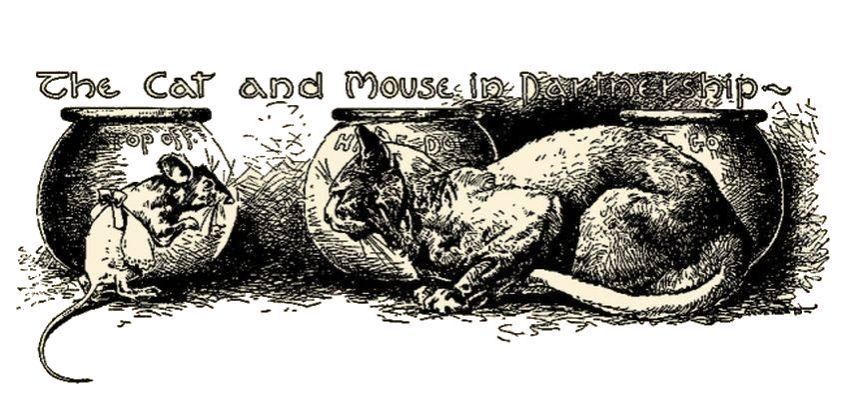 This folktale is about a greedy cat that cheats a trusting friend. A cat and mouse decide to live together. They discover a pot of ‘fat’ (probably dripping) and hide it in a safe place so they will have something to eat over winter. Unfortunately, the cat cannot stop thinking about the pot and empties it well before time. In most folktales, something bad would happen to the cat to teach it a lesson. Not so here! When the mouse complains, the cat does what cats normally do. The moral: You can’t change the natural ways of the world.
 This Japanese folktale teaches some important lessons. Two frogs from different cities set off on a journey, each wanting to visit the other’s city. They meet on a mountaintop halfway and accidentally look back at their own city, thinking it their destination. Deciding that the two cities look the same, they each return home. Possible morals: 1) If you really want to do something, learn all you can about it before you start; and 2) Don’t look for reasons to give up in the middle of something important. They are too easy to find and you may be sorry later.
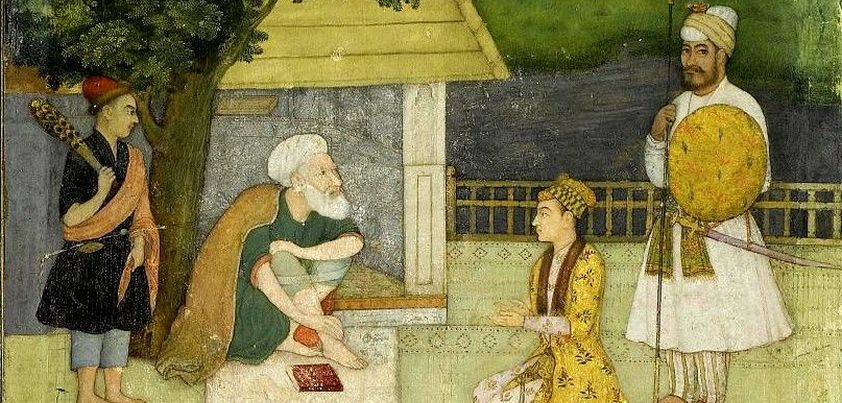 The moral of this Indian folktale appears to be that evil will always receive the punishment it deserves. We have a famed holy man who turns out to be not very holy after all, a selfish, gullible rajah who wants to keep the holy man’s talents and blessings all for himself, and an overly curious princess who disobeys her father’s order not to leave the palace grounds. We aren’t told much about the “gallant young prince of Dilaram” but he, too, must have done something wrong to be punished with the disobedient princess as a wife.
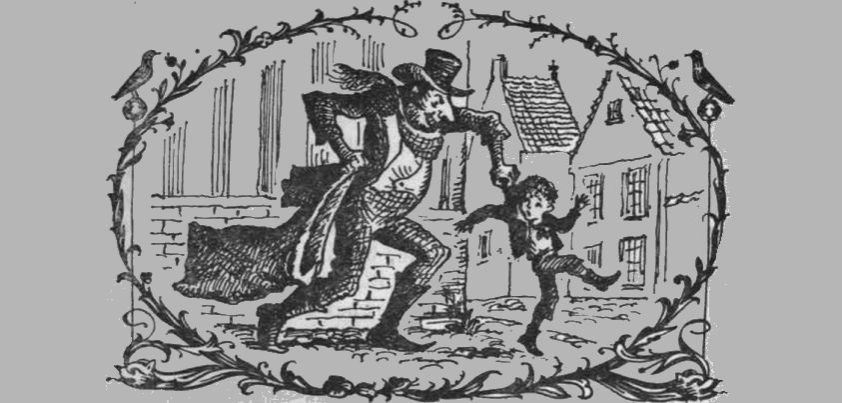 Mr. Miacca is an English folktale of the ‘bogeyman’ type, where adults tell stories of imaginary beings to frighten young children into being good. In the story, a boy does something wrong and finds himself about to be cooked for Mr. Miacca’s dinner. He gets away by tricking Mrs. Miacca. The forgetful boy makes the same mistake, and again finds himself on Mr. Miacca’s dinner menu. This time Mr. Miacca watches over the boy himself, and decides to cut off the lad’s leg (which he throws in the cooking pot) to make sure he doesn’t run away.
 Although this story was described as an “Australian” folktale when published in 1910, Australia is too young a nation to have folktales of its own. This is an adaption of an Australian aboriginal myth. Like those of many ancient cultures, it tries to explain the meaning of every-day things: in this case, how fish got into rivers and why rivers always feel warmer if you swim in them on a cold day. According to the story, fish used to live and hunt on the land and only came to live underwater because of an accident lighting a fire.
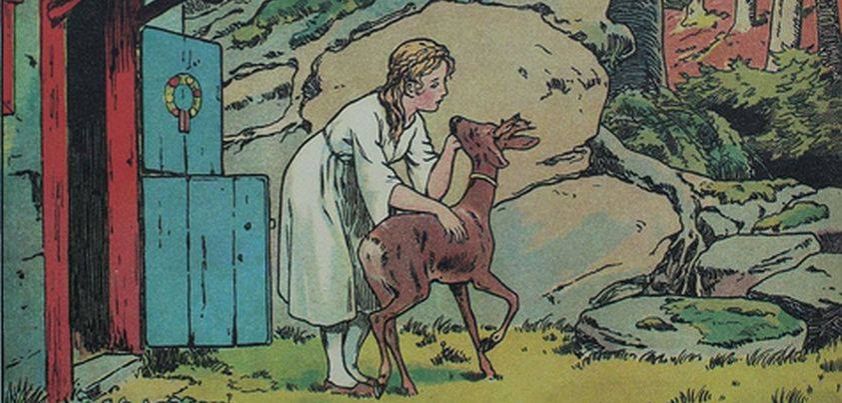 This is a well-known European folktale. A brother and sister run away from home after years of being badly treated by (you guessed it!) their wicked stepmother. The stepmother also happens to be a witch, and the children have some unlikely adventures. The brother is turned into a deer that loves nothing better than to be hunted. The sister becomes a Queen, has a baby, and is murdered by (you guessed it!) the wicked stepmother. Fortunately, the sister’s ghost comes back to life, the brother is made normal again, and they all (except the wicked stepmother) live happily ever after.
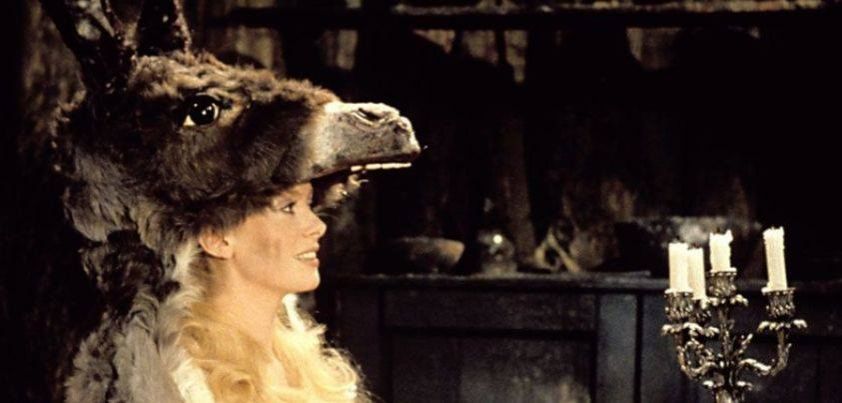 The lessons taught by many folktales are just as important today as they were hundreds of years ago. Donkey Skin deals with sexual abuse in the form of incest between father and daughter. A powerful king wants to marry his daughter, as this is the only way he can keep a promise he made to his dying wife. Fortunately, the brave girl has other ideas. I find it interesting that the story makes it clear that the king’s actions are wrong, but seems to have no problem with a handsome prince who spies on women through key holes.
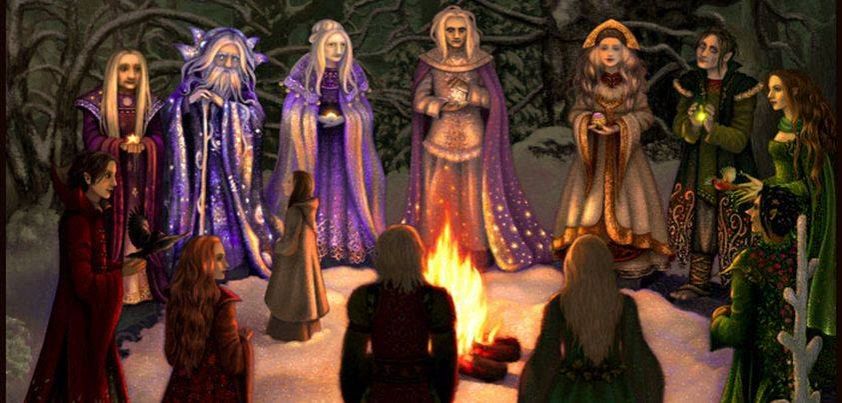 Although this folktale has been called the “Slavic Cinderella”, for me it doesn’t quite get there. We have a young girl persecuted by family and a magical element (the gods of the twelve months of the year) that helps her, but here the comparison ends. There is no ball or special event, no beautiful clothes, and no handsome prince. She falls in love with a kind man and the two spend a blissful life of drudgery taking care of her family farm. As nice as it seems, this is not what most people would call a ‘fairytale’ ending!