
Diamond Cuts Diamond
 In this Thai folktale, a poor man has only plain rice to eat during a trip to visit a sick relative. Along the way, he smells some delicious curry being cooked for a rich man’s lunch. He stops nearby to eat his own lunch, and enjoys the plain rice more than ever because he imagines eating it with the curry. The rich man finds out about this and tries to make him pay for the smell of his curry. Thanks to a village chief who is cleverer than the rich man, things don’t go as he had planned.
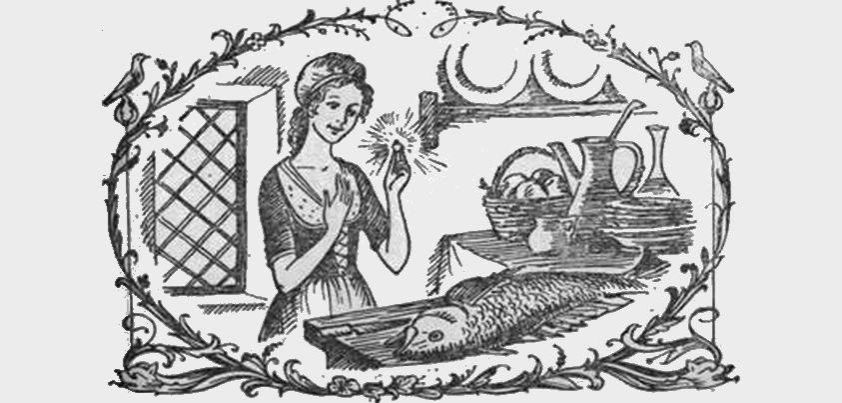 In this Scottish folktale, a rich and powerful man looks into the future and learns that the fate of his son is to marry a girl from a very poor family. He wants a high society wife for his son and does everything that he can to stop the marriage. He unsuccessfully tries to kill the poor girl twice, and is about to throw her over a cliff when she agrees to go away forever. A hungry fish brings them together again and teaches him that, no matter how much you try, you can’t change what is meant to be.
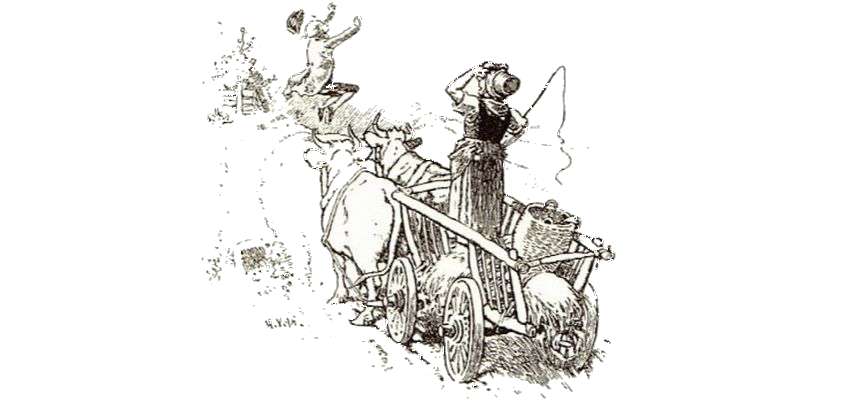 In this folktale (aka The Clever People), a cruel farmer is angry with his wife because she was cheated out of two cows. He promises not beat her for it if can find someone more foolish. He soon finds one: a widow who is worried about how well her dead husband is doing in Heaven. The farmer makes up for losing his cows by cheating the widow out of a bag of money and stealing a horse from her son. At the end of the story, he seems to think that it is OK to cheat foolish people.
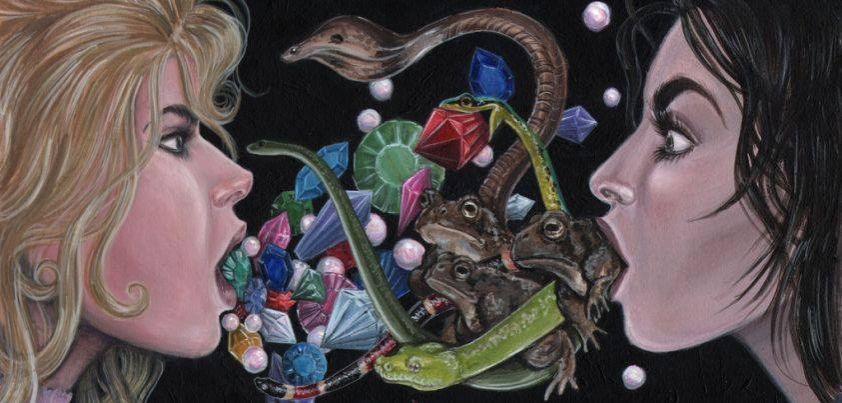 This story from
  This folktale from Japan is about a hardworking man who leads a poor but happy life until the day a mountain spirit decides to grant him several wishes. Predictably, his initial wish is for riches. When this does not satisfy, he craves power. He starts with power over man (as a prince), and moves on to power over nature (as the sun, a cloud, and a great rock on a mountainside). He is never satisfied until finally realizing that a humble stonecutter has as much power as anyone or anything on Earth.
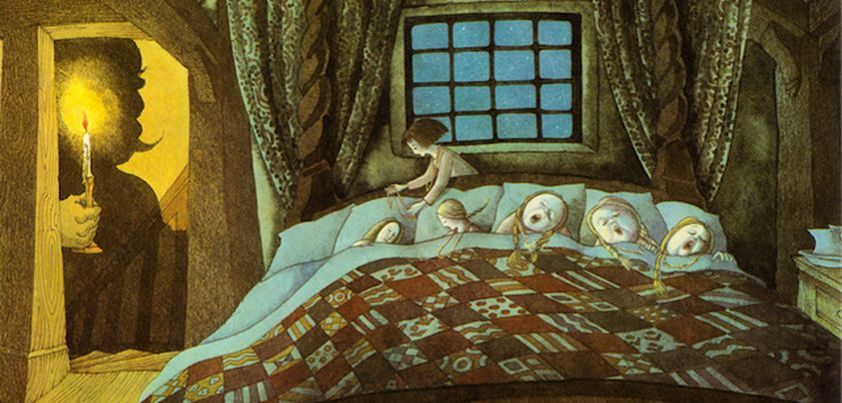 This Scottish folktale is one of those rare stories where the character who successfully defeats a giant is a girl. As often happens in folktales, Molly achieves this through gruesome actions. First, she tricks the giant into killing his three innocent daughters. Later, she tricks him into severely beating has kind wife, who had helped when Molly and her sisters needed food. As a reward, the girls marry into the family of a cowardly king who is happy to send Molly into danger three more times to satisfy his greed. There don’t seem to be any true heroes here.
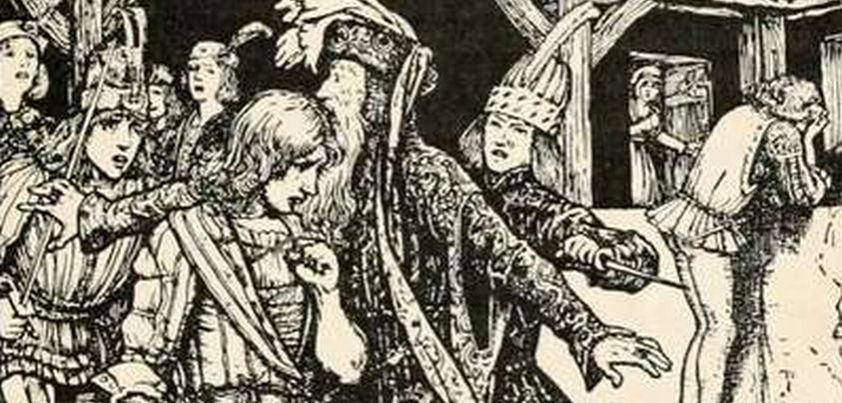 This Portuguese folktale begins with a king learning about an argument between his son and a young nobleman on a tennis court. The prince spoke rudely to the noble, who lost his temper and hit him. Although the king is angrier with his son for not fighting back than the noble, hitting the prince is punishable by death. The only way the noble can save himself is to marry a very ugly, very old woman. As is often the case in folktales, there is a lot of magic around and some surprises are on the way for all involved.
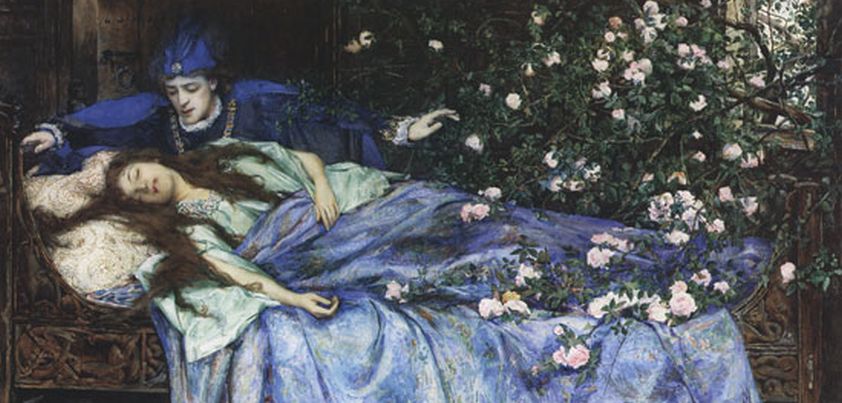 Today we have a reverse chronology of the folktales behind the classic children’s story, Sleeping Beauty. The famous kiss that woke the princess comes from the Brothers Grimm’s Briar-Rose (1812). Charles Perrault’s Sleeping Beauty in the Wood (1697) has no kiss but lots of talk, a hasty wedding followed by a night of “very little sleep”, and an added section where the prince’s mother (an Ogress) decides to make a meal of their children. Perault’s inspiration was the Giambattista Basile’s Sun, Moon and Talia (1634). Here, the king “gathers the first fruits of love” (rapes) the poor unconscious girl.