
King Thrushbeard
 The Brothers Grimm would have us believe that this folktale teaches a valuable lesson by documenting the fall of a spoiled princess who judges potential suitors by looks alone and is so ill-mannered that she says cruel things about them to their faces. Through her punishment (being married to a beggar street musician), we also learn that she has almost no household or practical skills. I’m not sure though about the central idea that the best way to teach humility is to publicly humiliate a person. Isn’t this what the princess was punished for at the beginning of the story?
 Most ‘frog’ folktales involve a frog prince or at the very least a male frog. However, in this story from Italy, a female frog makes friends with a young man and helps him keep his mother happy as he searches for a wife. Little does the young man know that his perfect woman is sitting on a rock beside him. Three possible morals: 1) Sometimes we don’t appreciate those around us enough; 2) Often the thing we are looking for is right under our noses; 3) Or how about the English idiom beauty is only (frog) skin deep.
 This Norwegian folktale is about a young man whose poor father sends him out into the world to earn a living. He joins a group of robbers, and is so good at stealing that he becomes their leader. The Master Thief returns home a rich man and decides to marry the Governor’s daughter. In order to marry the girl, he must prove how good a thief he is. This story goes against the English idiom: Crime doesn’t pay. The moral seems to be that crime does pay… but only if you are very good at it!
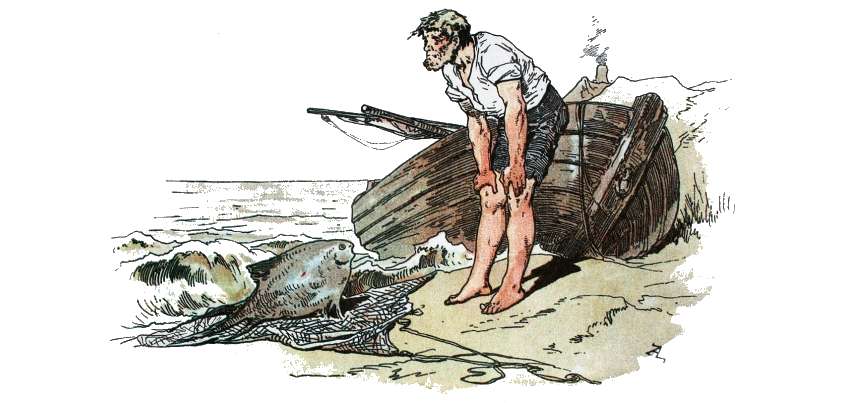 It’s time for another folktale. This one is about dissatisfaction and greed. A poor fisherman catches an enchanted fish and sets it free. When he tells his wife, she is angry that he did not demand a wish in return. She sends him to ask the fish for a nicer house. When the fish grants this, the wife becomes greedy. She sends her husband back several times to ask for bigger and bigger things. Her final wish is so outrageous that the fish either will not or cannot grant it. The fisherman is no doubt happy with what happens next.
 In this folktale from the American Southwest, a misunderstanding arises due to a priest’s poor choice of words. In soliciting donations, he alludes to the biblical concept expressed in Mark 10:30, whereby he who gives up everything for God will be rewarded a hundredfold. A misled, or more likely wily, parishioner donates a cow and takes a hundred of the priest’s cattle in return. The story’s message is to make sure you understand the culture of people you are dealing with before making promises and, even then, be careful what you say.
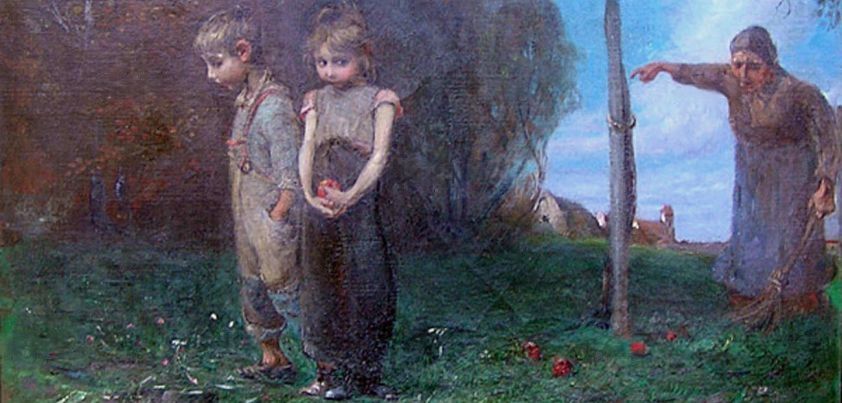 In this Puerto Rican folktale retold by
 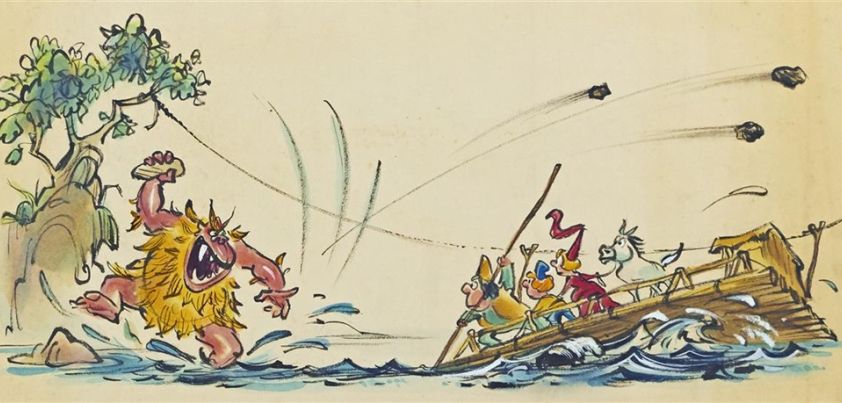 A dying king is told that his only hope for a cure is a magical feather from an ogre known to kill any human it sees. When no one else volunteers to face the creature, one of his most loyal attendants steps forward. The story from here shares elements found in several other European and Eastern folktales: during the journey, he encounters people who request him to ask the ogre for solutions to problems they have been experiencing. Two of the solutions will change his and the ogre’s life. Themes include good vs. evil, loyalty, helping others, courage and bravery.