Diary of a Madman

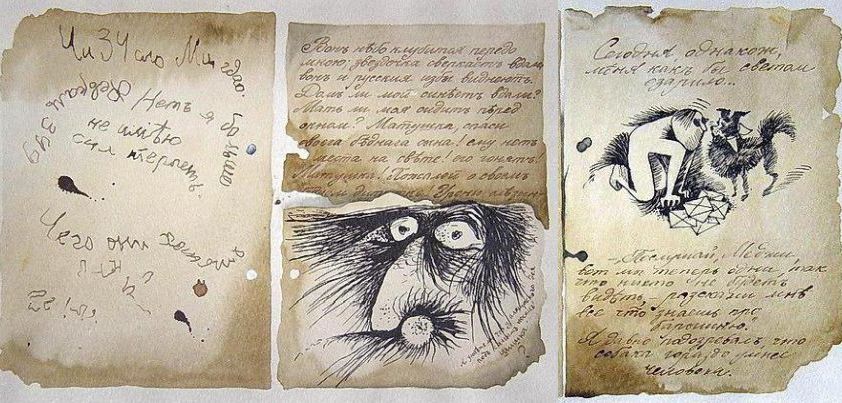
Diary (Memoirs) of a Madman: Short story by Nikolai GogolThis humorous story from Nikolai Gogol charts the descent of a government clerk into insanity. He dismisses his supervisor’s concerns about strange behavior as jealousy, becomes infatuated with his Department Head’s daughter, stalks the poor girl after overhearing a conversation between two dogs, reads their (the dogs’) letters, and finally suffers delusions of grandeur, believing himself to be the King of Spain. In the process, the story satirizes Russia’s bureaucratic wastefulness and obsession with titles and social status. The major theme is, of course, madness. Other themes: purposeless work, alienation, envy, wounded pride, class and (in the asylum) cruelty, suffering.

Continue ReadingDiary of a Madman

The Murders in the Rue Morgue

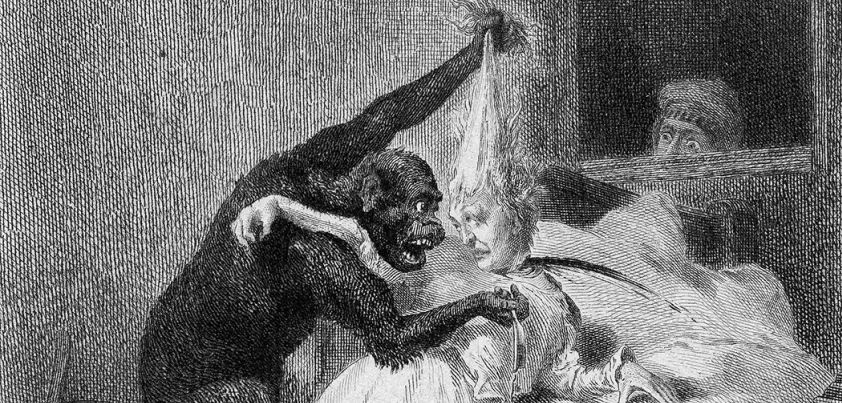
The Murders in the Rue Morgue: Short story by Edgar Allan PoeWritten in 1841, this rather unlikely story by Edgar Allan Poe is considered one of the world’s first modern detective stories. In a seemingly insoluble locked-room mystery, the wrong man is arrested for the violent murder of two women. In an effort to find the truth, Poe’s amateur detective Dupin demonstrates the importance of “mental analysis” in problem solving and, in the process, shows how an “Ourang-Outang” was able to make a monkey out of the police. Themes include ingenuity (inventiveness) vs. mental analysis (critical thinking), violence, the pursuit of truth, justice.
Continue ReadingThe Murders in the Rue Morgue

The News from Ireland

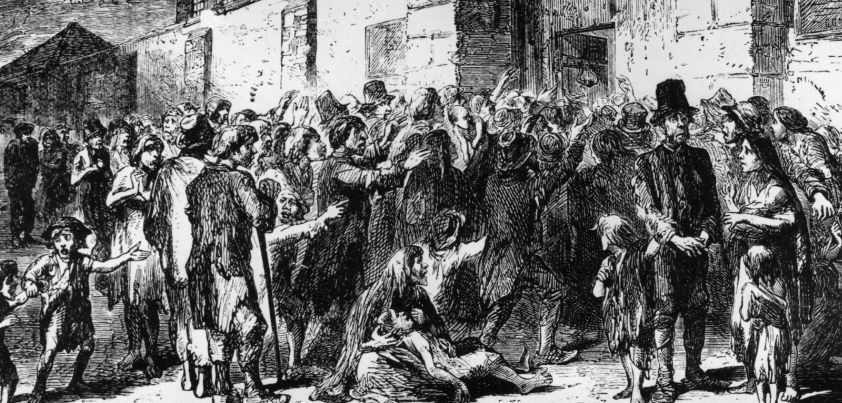
The News from Ireland: Short story by William TrevorThis story from William Trevor is set during the Irish Potato Famine of the 1840s. It contrasts the comfortable lives of those living behind the walls of a large English-owned estate with the misery of the rural poor. The issues are considered from multiple points of view, including those of servants and staff. Two major themes are acceptance and complacency. Although the plight of the rural poor initially disturbs newcomers, they soon become desensitized to the suffering, considering it a normal aspect of Irish life. Other themes: the gap between rich and poor, heritage, gender roles, religious faith and conflict.

Continue ReadingThe News from Ireland

Bartleby the Scrivener: A Tale of Wall Street

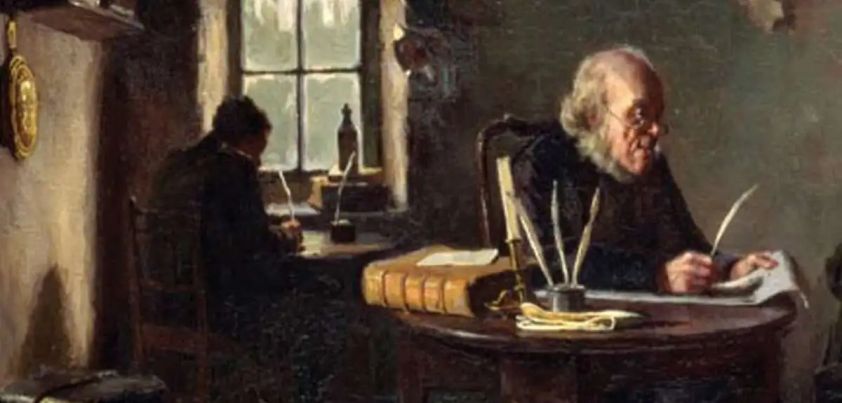
Bartleby the Scrivener, A Tale of Wall Street: Novelette by Herman MelvilleHerman Melville’s Bartleby the Scrivener is regarded as a classic of Modern Literature. A major theme is the depression that comes with being alone in the world and lacking a purpose in life. Other themes include exploitation, insensitivity and guilt (the Lawyer), conformity and coping with boring, repetitive work (Turkey and Nipper), alienation, apathy and passive resistance to one’s responsibilities (Bartleby), and loss of hope and the inevitability of death (symbolized by the Dead Letter Office). The Lawyer’s final words, Ah, Bartleby! Ah, humanity!, reflect the irony of Bartleby finding himself in the two worst possible jobs for his disposition.

Continue ReadingBartleby the Scrivener: A Tale of Wall Street

Boule de Suif / Ball of Fat

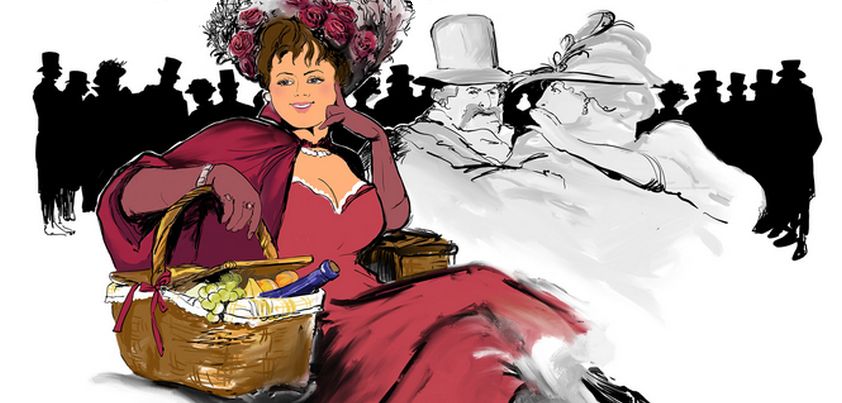
Boule de Suif / Ball of Fat: Short story by Guy de MaupassantRegarded as one of Guy de Maupassant’s greatest works, this story explores the interactions between a prostitute with the unfortunate nickname Boule de Suif (Ball of Fat) and nine other coach passengers fleeing the Franco-Prussian War. Her fellow travelers comprise a cross-section of “respectable” French society: politics, business, the nobility and religion. Maupassant’s sad message about nineteenth-century France is that no matter what shows of kindness or sacrifices people of the lower classes make, they are unlikely to be treated with respect and dignity by those of higher social standing. Themes: social class, patriotism, manipulation, exploitation, sacrifice/moral compromise, ingratitude, hypocrisy.

Continue ReadingBoule de Suif / Ball of Fat

A Spinster’s Tale

A Spinster's Tale: Short story by Peter TaylorIn this story by Peter Taylor, an aged woman looks back at a traumatic period in her youth that may have shaped her life and led to spinsterhood. Her mother’s religious condemnation of alcohol sets the scene for the story. The subsequent loss of her mother following a still-birth, growing up in a (drinking) male-dominated household, and her phobia about the town drunk at a critical period in her life (as she enters puberty) leave her isolated and in fear of the masculine world. Themes include family dynamics, personal growth, isolation and loneliness, fear, cruelty, sexual conflict.

Continue ReadingA Spinster’s Tale

The Diamond Mine

The Diamond Mine: Short story by Willa CatherThe Diamond Mine in this story by Willa Cather is an internationally renowned opera singer. The story highlights the emotional pressure associated with pursuing art for fame and fortune, rather than for art’s sake alone. The diva derives pleasure from “giving” to her husbands and extended family, most of whom ruthlessly exploit the poor woman. Although happy to bask in her fame, her vitality and success inspires envy and hatred among them. Their indolence and greed leaves her mined out, both financially and emotionally. Themes: the artist as a celebrity, vitality, envy, greed, exploitation, betrayal.

Continue ReadingThe Diamond Mine

Young Archimedes

Young Archimedes: Short story by Aldous HuxleyThis tragic story from Aldous Huxley is about an English family renting a secluded Italian villa. When their young son is befriended by Guido, the son of a farm-worker, his father notices that in addition to being musically gifted, Guido has the makings of a math prodigy. While the family are holidaying in the Swiss Alps the childless, status-seeking wife of their landlord tricks Guido’s father into letting her take the boy away for musical instruction. The selfish woman tells Guido a terrible lie, with tragic results. Themes: greed, genius, family, class, social status, manipulation, abandonment, suicide.

Continue ReadingYoung Archimedes