Rice

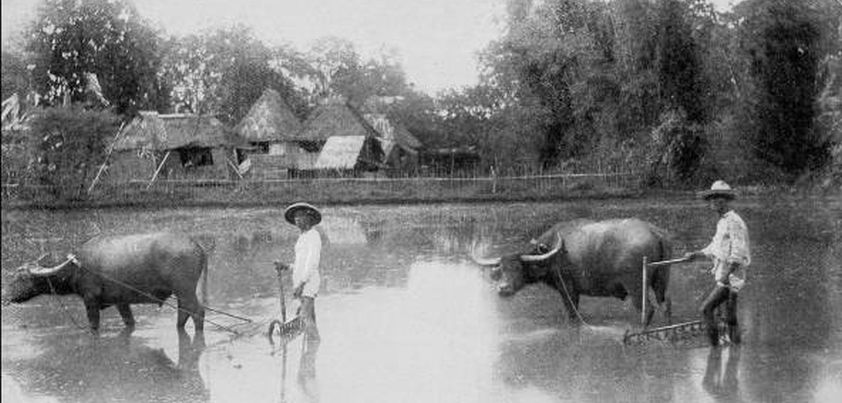
Rice: Short story by Manuel E. ArguillaAlthough set in pre-World War 2 Philippines, this story by Manuel E. Arguilla illustrates the plight of unprotected tenant farmers throughout the world. Storms have destroyed half the rice crop. The landlord has taken her full due, and there is insufficient left for farming families. The landlord offers to lend them rice until the next harvest, but on exorbitant terms. Desperate farmers must choose between accepting the offer, seeing their families starve, or taking action that could leave them dead or in jail. Themes include poverty, the unpredictability of nature, feudal oppression and exploitation, greed, despair, activism.

Continue ReadingRice

A Manual for Cleaning Women

A Manual for Cleaning Women: Short story by Lucia BerlinDespite the title, this entertaining first-person narrative by Lucia Berlin focuses more on how to cope with being a cleaning woman than how to do the job. Major themes are the humanity of domestic workers, and the crucial role they can play in client households. The protagonist shares the frustrations of her work, the mind games and other devices she uses to deal with them, the pain of losing her partner, and her habit of stealing sleeping pills from clients for a rainy day. Other themes: camaraderie, life of the city poor, class, loss and loneliness.

Continue ReadingA Manual for Cleaning Women

Wunderkind

Wunderkind: Short story by Carson McCullersWunderkind (wonder child) is a German expression for child prodigy. The major theme of this story from Carson McCullers is a problem encountered all over the world: the tendency to place so much pressure to succeed on the shoulders of gifted children that they become discouraged and begin to under-perform. Questions are also raised as to whether the protagonist (fifteen-year-old Frances) has the passion to become a great pianist and, if so, whether her teacher (a well-meaning family friend) is the best one to work with her. Other themes: alienation/loneliness, competitive pressure, fear of failure, sexual confusion, escape.

Continue ReadingWunderkind

Aquifer

Aquifer: Short story by Tim WintonAquifer is from Tim Winton’s collection The Turning. Set in an Australian immigrant suburb, the overlapping stories explore life-shaping events in otherwise ordinary lives. Here, a drop in the aquifer brought about by land clearing and prolonged dry weather drains a nearby swamp. A news story about the discovery of human bones at the water’s edge prompts a middle-aged ex-resident to re-live his childhood and the time when, as the only witness, he calmly stood by and watched a neighborhood bully drown. Themes: change, racial stereotyping, perceptions of time. Change is explored on three levels: personal, community and the environment.

Continue ReadingAquifer

The Waving Rye

The Waving Rye: Short story by Johannes V. JensenJohannes Jensen won the 1944 Nobel Literature Prize for the fertility of his poetic imagination, intellectual curiosity and creative mind. We don’t post poetry. However this prose poem, which is the title story in a book containing translations of fourteen of Jensen’s works, is a wonderful example of these attributes. It paints a powerful word-picture of Scandinavian rye fields through the seasons and the magic (and contribution to population growth!) of Danish “light nights”, and then takes readers on a “night flight” with the author across the countryside. Themes include the beauty and bounty of nature, dreams, artistic inspiration.

Continue ReadingThe Waving Rye

He

He: Short story by Katherine PorterThe central theme of this poignant, rather dark story from Katherine Porter is a mother’s relationship with her devoted special needs son. The woman is obsessed with appearances. Although she professes greater love for him than her other children combined, one wonders if this is out of pity or, worse, a mere show for neighbors. Similarly, are her tears as she takes the boy to the County Home the result of losing him, a sense of failure/shame as a mother, and/or (as the narrator cruelly suggests) wishing he had never been born? Other themes: struggle against poverty, family, appearances, guilt.

Continue ReadingHe

The Replacement

The Replacement: Short story by Alain Robbe-GrilletThis story by Alain Robbe-Grillet is an example of the Nouveau Roman literary trend of the 1950s. Rather than following a traditional short story structure, The Replacement inter-weaves three seemingly unrelated plot lines involving a frustrated teacher and his bored students, a story they are reading in class, and a schoolboy outside interacting strangely with a tree. In presenting the sequence of events objectively with no authorial interpretation, readers are left to draw their own conclusions as to the story’s meaning and message. Themes could include the attainment of knowledge, the reading process, perseverance, classroom learning vs. curiosity and self-discovery.

Continue ReadingThe Replacement

The First Seven Years

The First Seven Years: Short story by Bernard MalamudThe major theme of this story from Bernard Malamud, with its allusion to the biblical tale of Jacob and Rebecca, is materialism vs. spiritualism. An aging, ailing shoemaker is excited to identify a potential suitor with good financial prospects for his nineteen-year-old daughter. His dreams are shattered when the girl, an avid reader of the classics, rejects the man as being a materialist with “no soul”. He later experiences an epiphany upon learning that she already shares a romantic interest… with his equally sensitive but poorly educated, much older workshop assistant. Other themes: insensitivity, independence, self-learning, worldliness vs. love.

Continue ReadingThe First Seven Years