Clay

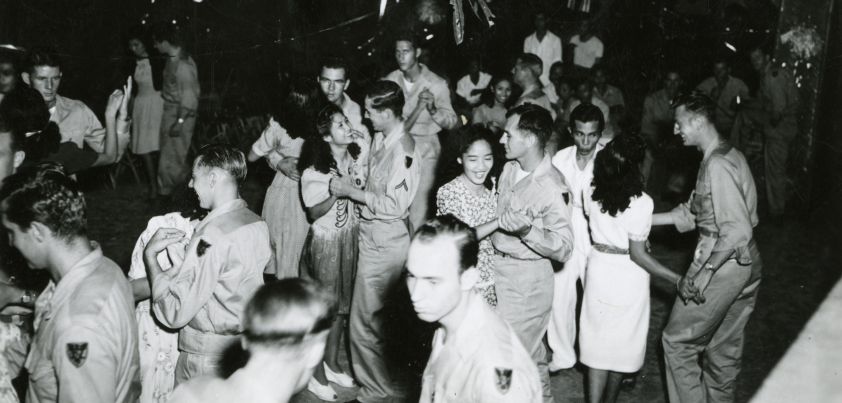
Clay: Short story by Juan T. GatbontonIn this story by Juan T. Gatbonton, a sensitive sixteen-year-old Filipino boy is left horrified and disillusioned after an American soldier he had come to idolize boasts about having seduced a pure woman he is infatuated with (his teacher) and reduced her to being just like the other girls. Set during the period of American rule, the story could be regarded as an allegory of colonialization where an occupying power (Clay) exploits what a country has to offer (Miss Rosete) without concern for the consequences. Themes include coming of age, colonialization, friendship, infatuation, betrayal.
Continue ReadingClay

In the Shadow of War

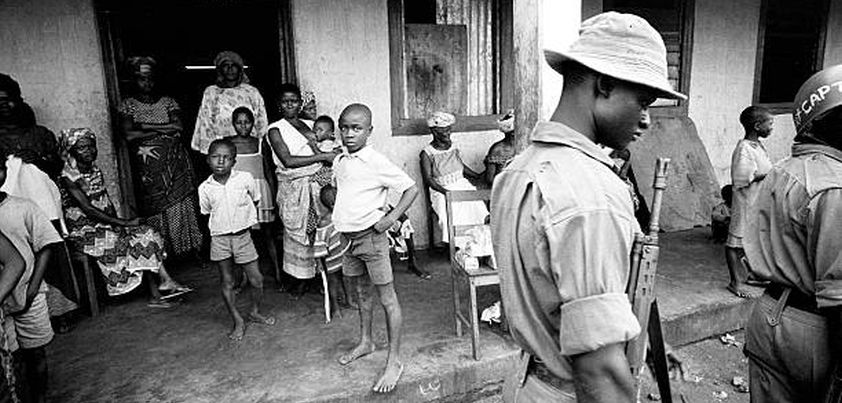
In the Shadow of War: Short story by Ben OkriIn this story by Ben Okri, a boy becomes curious about a mysterious woman who walks through his village every day wearing a black veil. Set during the Nigerian Civil War, other children think she is a witch; three soldiers looking for her think she is a spy. The soldiers follow the woman into a forest, as does the boy. Sufficient ambiguity exists for readers to question whether the horrific events described in the forest really take place, or if the woman is indeed a spy or simply a kindly benefactor. Themes include loyalty and morality in war, brutality, humanity.

Continue ReadingIn the Shadow of War

The Eye

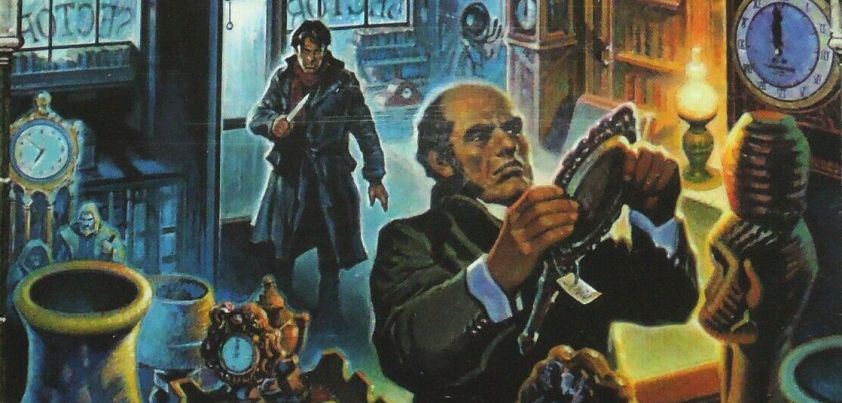
The Eye: Short story by Paul BowlesIn this story from Paul Bowles, a long-term expatriate living in Tangier investigates the death of a fellow expatriate he has never met. The man died from an apparent digestive illness, suspected to be the result of gradual poisoning. Rumor among the expatriate community blamed his night watchman, who had both motive (a reported legacy) and opportunity (he had replaced the original cook, purportedly with a relative). The narrator’s investigation suggests that rather than murder, the dead man was the victim of a ritual healing gone wrong. Themes: expatriate lifestyle (paranoia, detachment, idle gossip), isolation, superstition, criminality vs. fate.

Continue ReadingThe Eye

The Lost Child

The Lost Child: Short story by Mulk Raj AnandMulk Raj Anand’s The Lost Child can be looked at on two levels. At its most basic, it is about a boy who gets so carried away by the excitement of a fair that he becomes separated from his parents. Alone in the arms of a kind stranger, all he wants is to be reunited with his mother and father. On another level, it is a story of life. When young, we can’t wait to leave home and make our way in the world. It is not until we lose our parents that we understand how important they really are.

Continue ReadingThe Lost Child

The Easthound

The Easthound: Short story by Nalo HopkinsonThis post-apocalyptic horror story by Nalo Hopkinson redefines the concept of puberty. A virus has swept the world, causing all who achieve adulthood to “sprout” into ravenous, werewolf-like beasts. To escape them, children hide in small groups. The story is told from the perspective of twin sisters, one of whom naively believes she caused the virus by inventing the word easthound. Their group are closely monitoring an older boy who is about to undergo the change and will soon have to leave them, when the unexpected occurs. Themes include violence, camaraderie, survival, childhood innocence, adult predation.

Continue ReadingThe Easthound

The Lottery

The Lottery: Short story by Shirley JacksonAuthor Shirley Jackson had no idea of the angry reaction The Lottery would receive when it first appeared in 1948. The story tells how each year the otherwise ‘normal’ people in a small American farming town perform a gruesome ritual to ensure a favorable growing season. The major theme is how herd or mob mentality can drive people to do things they would never consider individually. Other themes include dystopia, gender roles, violence and cruelty (human sacrifice), acceptance (the blind following of tradition), and man’s inhumanity to man (the potential for evil in all of us).

Continue ReadingThe Lottery

How to Tell a True War Story

How to Tell a True War Story: Short story by Tim O'BrienThis metafictional story by Tim O’Brien uses observations on a small collection of stories related by soldiers to highlight the difficulty of faithfully communicating one’s wartime experiences. His central argument is that in war it’s difficult to separate what happened from what seemed to happen and therefore you lose your sense of the definite, hence your sense of truth itself. This leads to the seemingly paradoxical conclusion that in a true war story nothing is ever absolutely true. Themes include the nature of truth in storytelling, memories vs. imagination, the trauma of war, morality.

Continue ReadingHow to Tell a True War Story

Long Walk to Forever

Long Walk to Forever: Short story by Kurt VonnegutKurt Vonnegut described this semi-autobiographical tale, written in honor of his wife, as a sickeningly slick love story. A satire of the “love at first sight” romance cliché, it describes how, after a platonic friendship of almost twenty years, a single expression of love and two kisses is all it takes for Catharine to question her plans to marry another man and fall into Newt’s arms. Themes include communication (failure to express/discuss their feelings sooner), taking people for granted (Newt didn’t appreciate how much Catharine meant to him until almost losing her!), and fighting for what is important in life.

Continue ReadingLong Walk to Forever