
Neighbours

Neighbours: Short story by Moe Moe (Inya)Set in 1970s Burma, this story by Moe Moe (aka Inya) uses the experiences of a young couple with a four-month-old child to explore the theme of “neighborliness”. Moving to the suburbs after living with family “downtown”, they find the neighbors friendly and helpful but also experience incidences of prying, malicious gossip, quarreling, greed, and pressure to keep up appearances. Moving to an apartment closer to the city, they find an individualistic environment where nobody even talks to their neighbors. This leaves the poor protagonist with no idea what sort of neighborhood she wants to live in.
Continue ReadingNeighbours

The Boy Who Broke the Bank

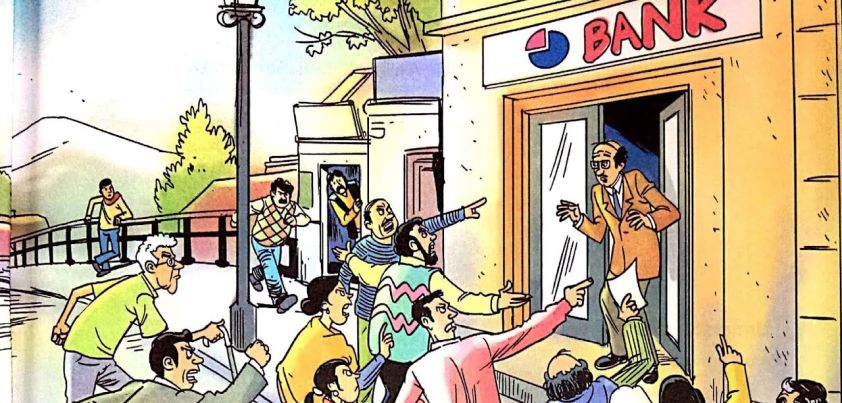
The Boy Who Broke the Bank: Short story by Ruskin BondAlthough published over thirty years ago, this light-hearted story by Ruskin Bond highlights a major problem in today’s world: the spread of fake news on social networks based on incomplete or inaccurate information. A young sweeper working for an Indian bank is paid late, presumably because of his lowly caste. He complains to a friend, who mentions it to a customer, and soon word spreads throughout the bazaar that the bank cannot pay any of its salaries. This causes panic among depositors, leading to a run on the unfortunate bank. Themes include social class, exploitation, discontent, rumor, panic, crowd psychology.

Continue ReadingThe Boy Who Broke the Bank

The End of the Party

The End of the Party: Short story by Graham GreeneAlthough the 9-year-old twins in this Graham Greene story look the same, they have very different psychological dispositions. The first-born (Peter) is self-confident and has a special connection with his brother. The younger (Francis) has an anxiety disorder that results in unreasoning fear, particularly of the dark. Peter feels what Francis feels, and is fiercely protective of him. Despite their best efforts to avoid it, the two attend a birthday party that will include a game of hide-and-seek in the dark. During the game, a thoughtless act by Peter has tragic results. Themes: innocence, brotherhood, connection, fear, adult insensitivity, death.

Continue ReadingThe End of the Party

Town and Country Lovers

Town and Country Lovers: Short story by Nadine GordimerAlthough the South African law banning sexual intercourse between “whites” and “non-whites” was repealed in 1985 (five years after Nadine Gordimer wrote this story), inter-racial and inter-religious relationships are still frowned upon in some cultures. Moreover, as in the story, the consequences for women are often much more severe than for men. Despite the obvious affection between the two couples in the story, questions arise as to whether for the men the sex was a function of convenience rather than love, and the extent to which the women initially felt pressured into participating. Themes: forbidden love, sexual coercion, unequal consequences.

Continue ReadingTown and Country Lovers

The Blues I’m Playing

The Blues I'm Playing: Short story by Langston HughesThis story from Langston Hughes contrasts two women with very different outlooks on life. A wealthy, white, middle-aged widow finds purpose and intimacy through the patronization of young artists. Tensions emerge when the woman, who expects her protégés to behave in a manner consistent with her high social standing, takes on a black pianist for the first time. The talented, independent, working class young woman has her own ideas on life, love, and the music she wants to play. Themes: art, paternalism vs. independence, race and racism, sexuality, the significance and transforming power of music.

Continue ReadingThe Blues I’m Playing

Johnny Mnemonic

Johnny Mnemonic: Short story by William GibsonThe protagonist in this pioneering cyberpunk story by William Gibson is a data courier. To escape a Yakuza assassin, he must decode a message in a secure storage device implanted in his brain. When the client who holds the password is killed, he turns to razor-fingered Molly Millions, Jones the dolphin, and the “Lo Teks”, Molly’s anti-technology friends, for help. The major theme, given that every major character has some kind of bionic enhancement, is identity (how technology can blur the line between man and machine). Other themes: body augmentation, corporate power, organized crime.
Continue ReadingJohnny Mnemonic

The Rockpile

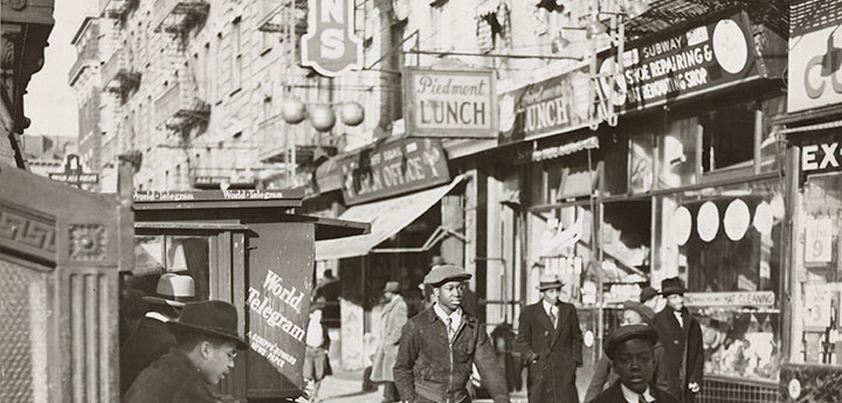
The Rockpile: Short story by James BaldwinThis partly autobiographical story from James Baldwin explores aspects of African-American life in Depression-era Harlem. It contrasts religious zeal with violence and division in the community. In addition to the violence taking place in the children’s “gang” skirmishes on the rockpile, a climate of fear and intimidation exists in the protagonist’s household. Religion is presented not as an uplifting faith that gives meaning to life, but rather something to be feared and obeyed, and through which people are automatically classified as either “redeemed” or “wicked”. Themes: religion, fear, obedience/temptation, choices and consequences, alienation, motherly love.
Continue ReadingThe Rockpile

The Weeping Fig

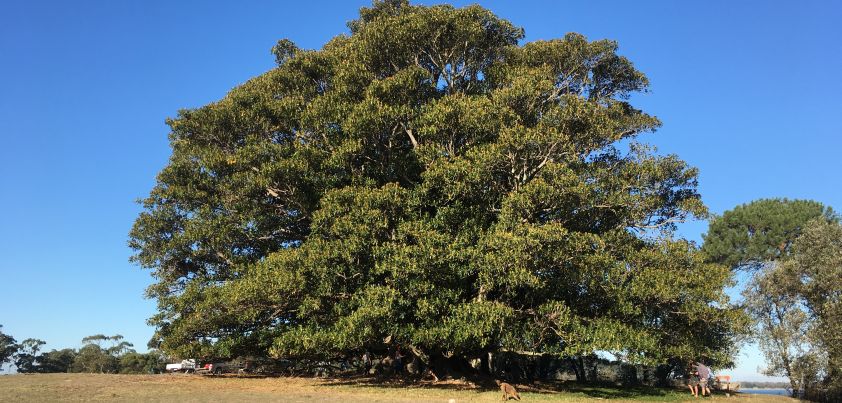
The Weeping Fig: Short story by Judith WrightThis story by Judith Wright is a tribute to the pioneering families who tamed the harsh Australian outback. A man comes into possession of his great-grandfather’s diary. In search of his roots, he visits the cattle station on which his ancestors had settled. He finds what he came for in a weeping fig tree planted by his great-grandmother… a mass of green and the tallest tree for miles. The tree stands as a testament to his forefathers’ courage and determination, and in reconciliation for their failure. Themes include man vs. nature, the pioneering spirit, hope, suffering and defeat, reconciliation, identity/connection.

Continue ReadingThe Weeping Fig