Bigfoot Stole My Wife / I Am Bigfoot

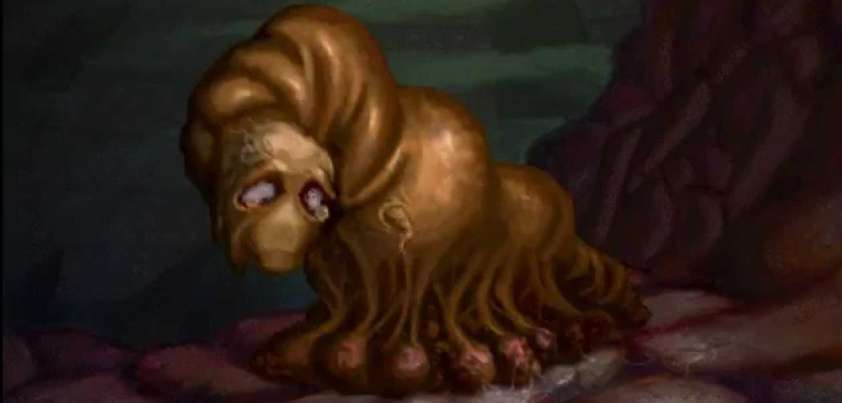
Bigfoot Stole My Wife / I Am Bigfoot: Short stories by Ron CarlsonToday we have two linked stories from Ron Carlson: Bigfoot Stole My Wife and I am Bigfoot. In the first, despite a host of context clues suggesting that the protagonist’s wife has left him, shame and denial lead him to believe that the legendary Bigfoot has abducted her. Using flawed logic, he argues that this must be true because another seemingly impossible event in his life was also true. The story opens with the line: “The problem is credibility.” In the ironic second story, credibility comes as Bigfoot issues a fearful warning to all men of the world.

Continue ReadingBigfoot Stole My Wife / I Am Bigfoot

The Secret Cause

The Secret Cause: Short story by Joaquim Maria Machado de AssisCharacters in Joaquim Maria Machado de Assis stories often have a causa secreta (ulterior motive) for their actions. When a young doctor opens a hospital in partnership with a forty-year-old acquaintance, he is amazed by the older man’s dedication to nursing the most seriously ill and injured patients. A visit to his partner’s house explains why. He is a sadist who finds pleasure in inflicting pain on animals and observing the suffering of others. The doctor suppresses a growing love for the man’s frightened wife, only letting it show on her deathbed. Themes include sadism, cruelty, and secret love.

Continue ReadingThe Secret Cause

Dahong Palay

Dahong Palay: Short story by Arturo B. RotorThe Filipino term dahong palay has several meanings: a rice leaf, a single edged sword and, as in this story by Arturo B. Rotor, a deadly viper. A young man is the butt of constant jokes about his timid nature and slight build. An attempt to prove himself at a community rice-pounding gathering leads to further ridicule. Later, when bitten by a dahong palay to save his prospective girlfriend, he proves that resourcefulness, strength and courage aren’t dependent upon how well-built you are. Themes: community, body image, bullying, young love, courage.

Continue ReadingDahong Palay

Filial Sentiments of a Parricide

Filial Sentiments of a Parricide: Short story by Marcel ProustFilial parricide is the murder of a parent by a son or daughter. This story by Marcel Proust, originally published as a newspaper article and full of classic literary references, discusses a parricide-suicide committed by a highly respected French businessman. Written shortly after the death of Proust’s mother, he philosophizes about memories, the nature of death, the observation that all children commit a slow form of parricide through the anxiety and pain they cause their parents, and the question of whether, if they knew this, some may feel that life is worth living. Themes include memory, death, madness, parent-child relationships.

Continue ReadingFilial Sentiments of a Parricide

Signs and Symbols

Signs and Symbols: Short story by Vladimir NabokovVladimir Nabokov once indicated that Signs and Symbols contains a second story hidden behind various textual clues. The frame story, which involves an elderly couple’s dilemma about how to deal with their institutionalized mentally ill son, is a moving piece of dramatic prose in its own right. The supposed inner story has been the subject of much speculation. So far, nobody has convincingly decoded it. Perhaps there is none, Nabokov’s intention being to encourage readers to pay more attention to the signs and symbols in their own lives. Themes include mental illness, alienation, misfortune, suffering, poverty, death, parental love, hope.

Continue ReadingSigns and Symbols

An Occurrence at Owl Creek Bridge

An Occurrence at Owl Creek Bridge: Short story by Ambrose BierceThis Ambrose Bierce story contains some of the best descriptive language in American literature… so much so that most people will need to read the passage at least twice in order to properly appreciate it. All I can say about the plot without spoiling the experience for those who haven’t read it is that the surprise ending usually sticks in reader’s minds for some time. The major themes: sense of duty; love and sacrifice; the brutality of war; confronting death; near-death experiences; and time (the length of a moment) as reflected in the personification metaphor time stood still.

Continue ReadingAn Occurrence at Owl Creek Bridge

A Problem

A Problem: Short story by Anton ChekhovIn this Anton Chekhov story, wealthy family members consider what to do about a nephew who has issued a false promissory note (IOU) in one of their names. Do they repay the debt to preserve family honor and avoid a scandal, or let justice take its course? On learning of the decision, the unscrupulous young man uses it to extort further money from an uncle trying to help him and, in the process, grudgingly admits an unfortunate aspect of his character. Themes: crime and consequences; justice/civic duty vs. family honor; nature vs. nurture, hedonism of the young upper-class, pride, despair.

Continue ReadingA Problem

The Purloined Letter

The Purloined Letter: Short story by Edgar Allan PoeEdgar Allan Poe is famous for his horror stories. However, only about fifteen of his sixty or so stories are of this kind.He is also widely recognized as the “father” of modern detective fiction thanks to his three tales featuring the Chevalier [Sir] Auguste Dupin. In a manner later emulated by the likes of Sherlock Holmes and Hercule Poirot, Dupin succeeds where eminent policemen fail… in this case, simply by recognizing that the best place to hide something important is in plain sight. Themes: blackmail, political manipulation, deception, linear (scientific) vs. lateral thinking.

Continue ReadingThe Purloined Letter