Signs and Symbols

Signs and Symbols: Short story by Vladimir NabokovVladimir Nabokov once indicated that Signs and Symbols contains a second story hidden behind various textual clues. The frame story, which involves an elderly couple’s dilemma about how to deal with their institutionalized mentally ill son, is a moving piece of dramatic prose in its own right. The supposed inner story has been the subject of much speculation. So far, nobody has convincingly decoded it. Perhaps there is none, Nabokov’s intention being to encourage readers to pay more attention to the signs and symbols in their own lives. Themes include mental illness, alienation, misfortune, suffering, poverty, death, parental love, hope.

Continue ReadingSigns and Symbols

An Occurrence at Owl Creek Bridge

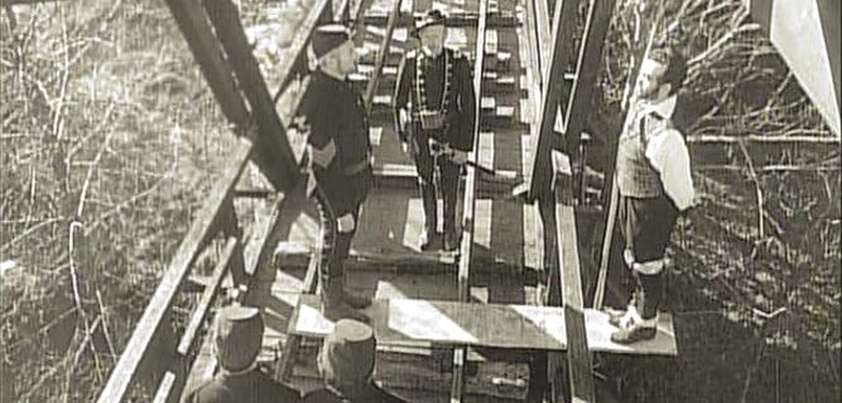
An Occurrence at Owl Creek Bridge: Short story by Ambrose BierceThis Ambrose Bierce story contains some of the best descriptive language in American literature… so much so that most people will need to read the passage at least twice in order to properly appreciate it. All I can say about the plot without spoiling the experience for those who haven’t read it is that the surprise ending usually sticks in reader’s minds for some time. The major themes: sense of duty; love and sacrifice; the brutality of war; confronting death; near-death experiences; and time (the length of a moment) as reflected in the personification metaphor time stood still.

Continue ReadingAn Occurrence at Owl Creek Bridge

A Problem

A Problem: Short story by Anton ChekhovIn this Anton Chekhov story, wealthy family members consider what to do about a nephew who has issued a false promissory note (IOU) in one of their names. Do they repay the debt to preserve family honor and avoid a scandal, or let justice take its course? On learning of the decision, the unscrupulous young man uses it to extort further money from an uncle trying to help him and, in the process, grudgingly admits an unfortunate aspect of his character. Themes: crime and consequences; justice/civic duty vs. family honor; nature vs. nurture, hedonism of the young upper-class, pride, despair.

Continue ReadingA Problem

The Purloined Letter

The Purloined Letter: Short story by Edgar Allan PoeEdgar Allan Poe is famous for his horror stories. However, only about fifteen of his sixty or so stories are of this kind.He is also widely recognized as the “father” of modern detective fiction thanks to his three tales featuring the Chevalier [Sir] Auguste Dupin. In a manner later emulated by the likes of Sherlock Holmes and Hercule Poirot, Dupin succeeds where eminent policemen fail… in this case, simply by recognizing that the best place to hide something important is in plain sight. Themes: blackmail, political manipulation, deception, linear (scientific) vs. lateral thinking.

Continue ReadingThe Purloined Letter

Mrs. Geni in December

Mrs. Geni in December: Short story by Arswendo AtmowilotoThis story by Arswendo Atmowiloto explores the life of an eccentric Indonesian bridal make-up artist. While some of her views reflect Indonesia’s Muslim culture (marrying when it is time, not of love, and support for polygyny), others challenge it (pregnant brides should be proud of their proven fertility and not hide the fact). She believes that while marriage is illogical and “humanity’s most restricting and frightening discovery”, the ceremony brings joy and happiness. She proclaims: “Let people experience joy once in their lives,” implying the ceremony may mark the end of their happiness. Themes include marriage, freedom and happiness.

Continue ReadingMrs. Geni in December

End of the Game

End of the Game: Short story by Julio CortázarThis Julio Cortázar story involves two “games”. One is the daily Statues role-play three adolescent girls perform to entertain passengers on a passing train. The second is also a game of pretend… ignoring the effect a debilitating disability will have on one of their lives. For the disabled girl (Letitia), Statues is the only physical activity in which she can match the others. They in turn are resentful of Letitia’s special treatment at home. When a boy on the train takes a special interest in Letitia, both games end. Themes: fantasy vs. reality, envy, guilt, confronting disability, coming of age.

Continue ReadingEnd of the Game

The Drummer Boy of Shiloh

The Drummer Boy of Shiloh: Short story by Ray BradburyThis story by Ray Bradbury packs a lot of raw emotion, even though the “action” is limited to a single conversation that takes place over the course of no more than half an hour. A fourteen-year-old drummer boy who must march into battle with no gun or means of protecting himself is a bundle of nerves on the night before his first encounter with the enemy. An inspirational talk with his commanding general teaches him that his drum may be one of the most effective weapons in the army. Themes include isolation and loneliness, empathy, duty, fear, courage, death, honor.

Continue ReadingThe Drummer Boy of Shiloh

Flowering Judas

Flowering Judas: Short story by Katherine Anne PorterThe major theme of this story by Katherine Porter is betrayal. Other themes include alienation, fear, corruption, despair and guilt. Laura, an idealistic American schoolteacher who traveled to Mexico to support the socialist revolution has a sense of impending doom. Trapped by the unwanted attentions of the corrupt, adulterous revolutionary Braggioni and with no love for the Mexican people, she feels lost and alone. Braggioni’s lifestyle is a betrayal of both his socialist ideals and marriage. In working for a socialist cause, Laura betrays her Catholic faith. Her sexual repression could also be seen as betrayal of her womanhood.

Continue ReadingFlowering Judas