Night Driver

Night Driver: Short story by Italo CalvinoIn Italo Calvino’s Night Driver, a man speeds to his girlfriend’s house to apologize about a phone argument during which he called off their relationship. He needs to get there quickly, because she threatened to call a rival. He faces two problems in getting there on time: 1) they live far apart, so it is a long drive; and 2) he thinks too much. As he drives, the man examines every possibility as to what the other two may be doing, whether one or both could also be driving along the same highway, and what other steps he should take.

Continue ReadingNight Driver

The Cone

The Cone: Short story by H. G. WellsWhen the manager of an iron-works takes an artist friend he knows to be sleeping with his wife on a tour of the furnaces, it seems inevitable that one of them will meet with an unfortunate ‘accident’. The power of this H. G. Wells story lies in its gradual build-up of suspense and vivid descriptions of the industrial landscape and smelting process. Major themes are adultery, revenge, violence and (for modern-day readers) environmental degradation. Ironically, when the story was published in 1895, readers would have identified the fourth theme as something akin to ‘progress’.
Continue ReadingThe Cone

The Three Hermits

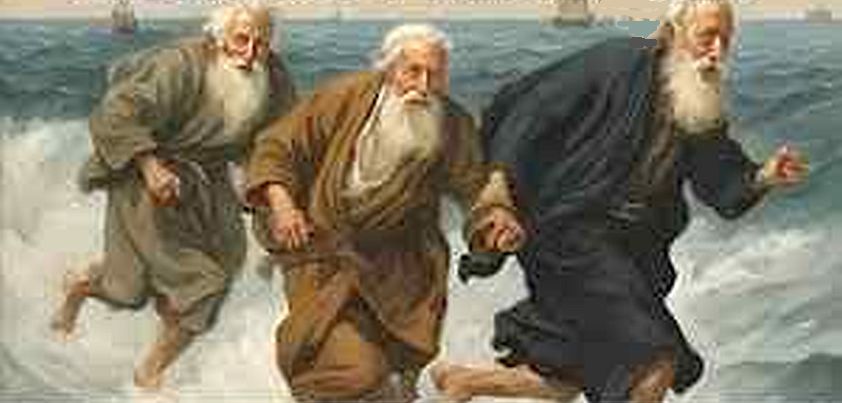
The Three Hermits: Short story by Leo TolstoyIn this story by Leo Tolstoy, a bishop of the Roman Orthodox Church schools three devout hermits seeking salvation by living alone on a deserted island in reciting the Lord’s Prayer. He claims that although that their own prayer ‘Three are ye, three are we, have mercy upon us.’ encompasses the essence of Christianity, it is insufficient to please God. The bishop is humbled and admits his mistake when they miraculously follow him by gliding across the sea, having forgotten the words. Themes include humility and devotion, religious dogma vs. faith, the nature of prayer.

Continue ReadingThe Three Hermits

A Horse in the Moon

A Horse in the Moon: Short story by Luigi PirandelloThis story by Luigi Pirandello opens with a wedding feast in which guests are concerned for the innocent, vivacious Italian bride. Although wealthy, the Sicilian groom appears physically and mentally ill. After seeing the guests off, the groom tries to hurry his new wife inside. She objects and, while heading towards the nearby village, they come across a dying horse. On seeing his reaction, she realizes the marriage was a mistake. A medical episode and vision he has as the moon rises behind the horse solves the problem for her. Themes include naivety, marriage, madness, suffering, compassion, death, culture clash.

Continue ReadingA Horse in the Moon

What We Talk About When We Talk About Love

What We Talk About When We Talk About Love: Short story by Raymond CarverThe power of this minimalist story from Raymond Carver about the difficulty of defining “real” love lies in its realism. The two couples involved in the alcohol-fueled conversation are not experts; each member has experienced a failed marriage. None of them can describe love, but they do manage to give examples of what it is and isn’t, and what can go wrong when it ends. The mood darkens along with the emptying bottle, and by story’s end all four are too despondent to move. Themes: the nature of love, the limits of language, marriage and divorce, alcohol abuse.

Continue ReadingWhat We Talk About When We Talk About Love

To Build a Fire

To Build a Fire: Short story by Jack LondonJack London is one of the leading authors in a literary style called “naturalism”. Such stories deal with the unforgiving power of nature and man’s struggle for survival. To Build a Fire takes place in the frozen wilds of Alaska. A poorly prepared prospector decides to return to his camp in dangerously cold weather conditions, ignoring advice from more experienced men never to travel through the snow alone. A single foolish mistake brings disaster and the most comfortable and satisfying sleep he had ever known. Themes include survival (man vs. nature), listening to advice, preparedness, instinct vs. intellect, death.

Continue ReadingTo Build a Fire

Witness for the Prosecution

Witness for the Prosecution: Short story by Agatha ChristieThis classic crime thriller from Agatha Christie is better known for its screen and theater adaptions than the short story upon which they are based. There is no Hercule Poirot type detective here. The man charged with finding evidence to free a prisoner he is convinced was wrongly arrested for murder is a dogged solicitor. Things look grim when the man’s wife agrees to testify against him. Fortunately, a letter delivered the day before the trial leads to critical evidence that frees the man. Strangely, the solicitor is unlikely to be happy with the outcome. Themes: justice, deception, betrayal, perception.

Continue ReadingWitness for the Prosecution

This is What It Means to Say Phoenix, Arizona

This is What It Means to Say Phoenix, Arizona: Short story by Sherman AlexieIn this story by Sherman Alexie a young Native-American man enlists the help of a boyhood friend he had grown away from to go on a road trip to bring back his father’s ashes. The focus of the story is the relationship between the two, and how it reflects growing individual and cultural disconnection among tribal Native-Americans. The other man’s help is not in recognition of their former friendship, but rather out of obligation for a deed of kindness once performed by the dead man. Themes include poverty, storytelling, friendship, alienation, loneliness, forgiveness, decline of Native-American culture.

Continue ReadingThis is What It Means to Say Phoenix, Arizona