How My Brother Leon Brought Home a Wife

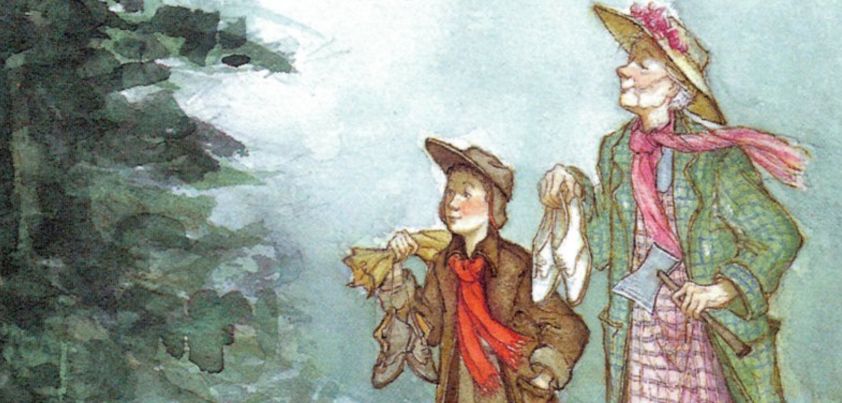
How My Brother Leon Brought Home a Wife: Short story by Manuel E. AguillaIn this popular Filipino story from Manuel E. Arguilla, a son brings his city-based bride home to the countryside to “meet the family”, only to have the poor woman tested by his father before she even arrives. The father has his younger son meet them with a bullock cart rather than horse and carriage, and bring them home via a stony “short-cut” along a dry creek bed rather than the smoother main road. The apprehensive but charming girl (in high heels no less!) passes the tests with flying colors. Themes: love, fear, perseverance, patriarchy, reputation.

Continue ReadingHow My Brother Leon Brought Home a Wife

Key Item

Key Item: Short story by Isaac AsimovIn this story, Isaac Asimov’s favorite supercomputer Multivac has a big problem. It doesn’t respond to commands, and isn’t following its built-in program to self-diagnose the cause. As the global economy depends on Mulitvac, this could result in panic across the world. Teams of technicians have been trying to identify what is wrong for three days. Finally, a scientist discovers the “key item” needed to fix the problem. It is a simple thing that we are all taught to use as children. Themes include the dangers of Artificial Intelligence and/or relying solely on technology, scientific hubris, good manners.

Continue ReadingKey Item

Harrison Bergeron

Harrison Bergeron: Sort story by Kurt VonnegutThis story by science-fiction writer Kurt Vonnegut is about a future world in which the government tries to make everyone equal. The strong must carry heavy weights, the beautiful must wear masks, and the clever are subjected to distracting sounds to stop them thinking clearly. As is usual in totalitarian worlds, those in power are excused from all this… especially the Handicapper General and her “H-G” men. A powerful, gifted fourteen-year-old boy tries to change things as his parents watch on in confusion. Themes: control (forced conformity through oppression and violence), identity (equality vs. individuality), rebellion, media power.

Continue ReadingHarrison Bergeron

Lather and Nothing Else

Lather and Nothing Else: Short story by Hernando TéllezIn this story by Hernando Téllez, a barber who secretly supports a revolutionary cause has a dilemma when an army captain who is particularly brutal in putting down the revolt asks for a shave. As the officer sits in the chair, the barber is torn between his professional duty (to give his customer the best possible shave), his revolutionary duty (to kill the captain, which will make him a hero but potentially force him to hide for the rest of his life), and moral qualms about murder. Themes include power and control, choices and consequences, violence, professionalism, duty, morality, trust.

Continue ReadingLather and Nothing Else

All at One Point

Some time ago we featured Distance of the Moon, the first story in Italo Calvino’s Cosmicomics collection. In this, the fourth story, we travel back to before the beginning of time. Everything (and everyone) in the universe existed in a single point in space. Things were rather crowded and people had no chance to move about and meet others. However, everyone knew and loved Mrs. Ph(i)Nk_0, whose wish for enough room to make noodles caused a burst of positive energy that resulted in the “big bang” and universe as we know it today. Theme: the power of selflessness and love.

Continue ReadingAll at One Point

Bread

Bread: Short story by Margaret AtwoodThis story by Margaret Atwood begins with four passages in which bread is used as a metaphor to illustrate a range of themes. In the first, it’s the good life (plenty and relaxation). In the second, famine (choices and consequences). In the third, life and death (betrayal or sacrifice). And in the fourth, social inequality and greed. The story concludes with a passage about a floating loaf of bread we know is real but are afraid to touch. The inference here is that most unaffected people prefer to turn a blind eye to the starvation and suffering in the world.

Continue ReadingBread

The Life You Save May Be Your Own

The Life You Save May Be Your Own: Short story by Flannery O'ConnorIn this Flannery O’Connor story a cynical, manipulative, one-armed drifter is given a chance at redemption (settling down to a “better” life) by an equally manipulative mother desperate to secure a future for her mentally handicapped daughter. Rather than the daughter, the man only has eyes for the family’s “barn-find” automobile. Immediately after their wedding, he leaves the girl to an uncertain future at a roadside diner and drives on alone. Perhaps out of guilt, he unsuccessfully tries to absolve himself from the moral consequences of his actions by doing a good deed. Themes: disability, devotion, desperation, deception, redemption, independence.

Continue ReadingThe Life You Save May Be Your Own

The Storyteller

The Storyteller: Short story by H. H. Munro (aka Saki)This story by Saki satirizes the way many traditional children’s stories had become so “sanitized” during the prudish Victorian period that they lost much of their original appeal. A major theme of the story is pride. The outer or “frame” story highlights the Aunt’s false pride in thinking that a bachelor couldn’t possibly tell a better children’s story than she could. The inner story illustrates the meaning of the English idiom Pride comes before a fall. Other themes include childhood, curiosity, control, “goodness” vs. reality (not all good people/things in life end happily!)

Continue ReadingThe Storyteller

The Day the Dancers Came

The Day the Dancers Came: Short story by Bienvenido SantosThis story by Bienvenido Santos is about an aging Filipino expatriate who feels cut off from his culture. After years of menial work in the United States, the protagonist has no remaining family and only one local, possibly terminally ill, Filipino friend. Rather naïvely, he decides to approach and offer to host to a group of visiting tinikling dancers. He is ignored, but makes an audio recording of their performance to remember them by. In the depressing denouement, he faces the grim reality of losing them all. Themes include nostalgia, connection with one’s roots, aging and death.

Continue ReadingThe Day the Dancers Came

I Stand Here Ironing

I Stand Here Ironing: Short story by Tillie OlsenIn this story by Tillie Olsen, a woman reviews events that may help a counselor better understand her nineteen-year-old-daughter. In the process, she questions the extent to which she may be responsible for her daughter’s problems. Poor care choices and lack of attention as an infant, and conflict with her younger sister as she grew up, have clearly affected the girl’s emotional development. A key question is what, if anything, could the woman have done differently in a society indifferent to the plight of single mothers. Themes: parenting, mother-daughter relationships, female identity, child cruelty, guilt, acceptance, hope.

Continue ReadingI Stand Here Ironing