Featured Stories

Arabesque: The Mouse

Arabesque: The Mouse: Short story by A. E. CoppardIn this psychological horror story by A. E. Coppard, an idealistic man who has withdrawn from society due to constant rebuff sits alone in a mouse-infested garret. As he watches the antics of a mouse in front of his fireplace, his mind wanders to the death of his mother and loss of the only woman he ever loved. When he comes back to reality, the mouse is sitting before a trap with its forepaws torn off. Association of this with his mother’s grisly death sends him to the brink of madness. Themes include mother-child relationships, loss, depression, despair, shame, insanity.

Continue ReadingArabesque: The Mouse

The Horse Dealer’s Daughter

The Horse Dealer's Daughter: Short story by D. H. LawrenceAt a simplistic level, this story by D. H. Lawrence can be looked upon as a traditional love story. However, with Lawrence’s reputation as a writer who explores human nature through psychological insight and sexual descriptions, it is highly unlikely he would write a story with such a straightforward message. Alternate interpretations include: 1) a tale in which a desperate, calculating woman tries to seduce a vulnerable man; and 2) a religious fantasy in which a near-death experience results in an epiphany that awakens feelings of love and desire. Themes include family relationships, patriarchy, misogyny, despair, death, rebirth, passion.

Continue ReadingThe Horse Dealer’s Daughter

The School Play

The School Play: Short story by Gary SotoThis Gary Soto story is about facing fear. The protagonist is scared of forgetting his only line in his sixth-grade play. In addition to worrying about being laughed at, another student has threatened to “bury his face in the ground” if he messes up. The play is about the infamous Donner Party. The fear theme is supported in its concluding words: You gotta suck it up (endure hardship) in bad times. Interestingly, although intended to suggest that the starving travelers should have been stronger in resisting cannibalism, this expression could also be used to justify eating dead bodies to survive?

Continue ReadingThe School Play

The Disappearance

The Disappearance: Short story by Chitra DivakaruniChitra Divakaruni’s hard-hitting story of a woman’s “disappearance” is told from her Indian-American husband’s point of view. After a year of denial, he accepts that she has left him. Their arranged marriage, although blessed with a son, had become intolerable for her. Years later, living in a nursing home and estranged from their son, he reflects on how much his wife must have hated him to leave the boy. The old man still fails to appreciate the effect his repression and sexual abuse would have had upon the poor woman! Themes include insensitivity, authoritarianism, marital rape.

Continue ReadingThe Disappearance

The Three Sillies

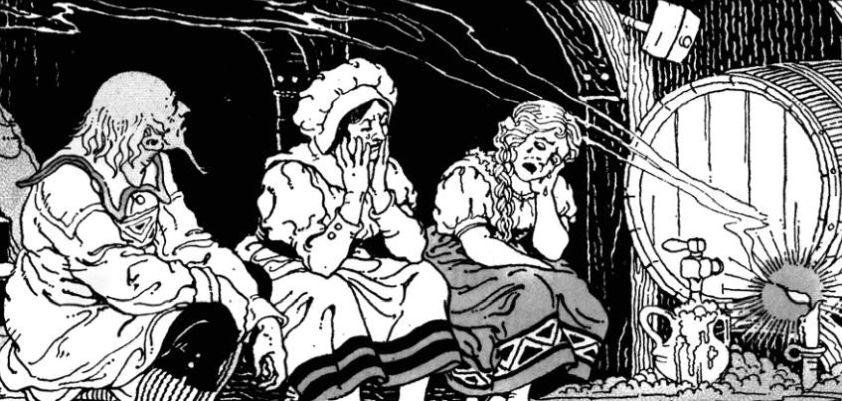
The Three Sillies: English folktale from Joseph JacobsNot all folktales are designed to teach or explain. Some, like this one, were popular for their entertainment value. In this story, a rich young man finds that the woman he loves and her family are not very clever. He decides that he will only marry the girl if he can find three people sillier than they are. A woman trying to push her cow up a ladder, a man who can’t get his trousers on, and a whole village trying to rescue a shadow from a pond prove that there certainly are sillier people in the world.
Continue ReadingThe Three Sillies

My Oedipus Complex

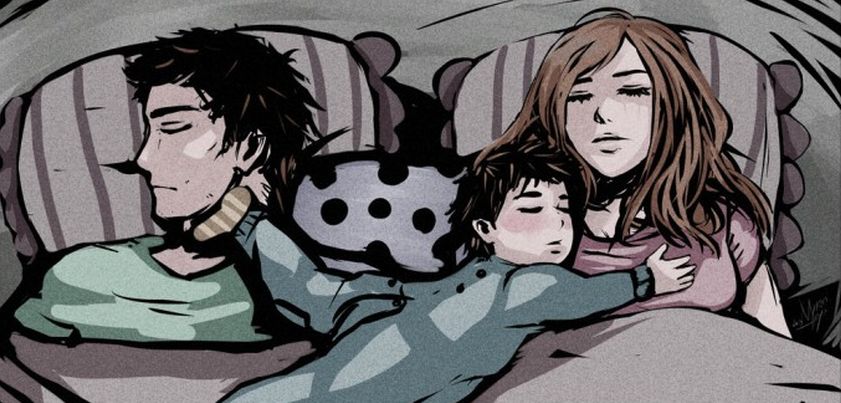
My Oedipus Complex: Short story by Frank O'ConnorThe term Oedipus Complex has its roots in psychology and Greek Mythology. In this coming of age story by Frank O’Connor, a five-year-old boy’s ordered life and close attachment to his mother are disrupted, firstly by his father’s return from World War 1, and later by the birth of a baby brother. During the war, the boy’s father is a mysterious, occasional visitor to be prayed for. On his return, his father becomes a fierce rival for his mother’s attentions and later, a fellow victim of the newborn’s demands. Themes include childhood innocence and imagination, mother/father-son relationships, jealousy, anger, understanding.

Continue ReadingMy Oedipus Complex

Gimpel the Fool

Gimpel the Fool: Short story by Isaac Bashevis SingerIf you take the story at face value (which is often dangerous with a first person narration), Isaac Singer’s Gimpel is no fool. He understands and rationalizes all that has happened in his life, claiming to have been misjudged due to being too trusting and accommodating towards others. Sadly, although not considering himself a fool, he feels compelled to accept the title. The real fools are shown to be those who took advantage of Gimpel, especially his debauched wife who suffers the consequences in the afterlife. Themes: faith, kindness and integrity, forgiveness, strength and wisdom, acceptance.

Continue ReadingGimpel the Fool

Outside

Outside: Short story by Etgar KeretEtgar Keret’s Outside was published in July, 2020, just over six months into the Covid-19 epidemic. Eighteen months later, we are now into our third wave of the disease. The story is a humorous account of the effects of being locked-down at home. The experience so traumatizes the protagonist that, along with thousands of others, he refuses to leave home when things improve. Forced outside by the army, he struggles to remember where to go and what to do. Fortunately, a chance encounter on the way to an ATM triggers a conditioned response that immediately brings him back to normal.

Continue ReadingOutside