Featured Stories

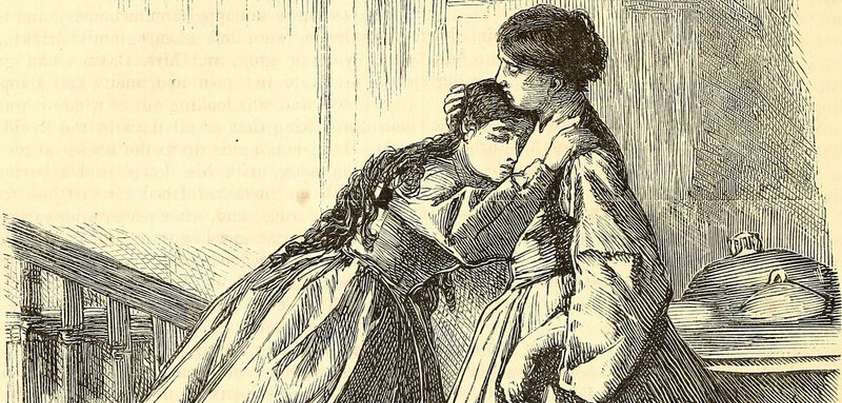
What Men Live By

What Men Live By: Short story by Leo TolstoyIn this story by Leo Tolstoy, God punishes a disobedient angel by casting him out of Heaven to live as a man. The only way he can get his job back is to learn the answers these questions: What dwells in man? What is not given to man? and What (do) men live by? He learns the answers from the family of a poor but compassionate shoemaker, an imperious rich man, and a kind, charitable woman who has adopted the two orphaned children of a dead neighbor. Themes: humanity, compassion, kindness, arrogance, duty, death.

Continue ReadingWhat Men Live By

A Home near the Sea

A Home near the Sea: Short story by Kamala DasIn this story by Kamala Das, an Indian woman angrily scolds her husband, a lazy drunkard, as she tells a fellow beggar how a year earlier he lost a secure job and caused them to be evicted from their hut. As the aging woman complains about her lot, the listener brings her to tears. He poetically extols the benefits of living in the open beside the sea, provides encouragement that things will improve, speaks to her of music and artistry, and likens her to the Hindu goddess Lakshmi. Themes include marriage (loyalty, jealousy, control and complacency), poverty, negativity, dreams, generosity.

Continue ReadingA Home near the Sea

The Offshore Pirate

The Offshore Pirate: Short story by F. Scott FitzgeraldSeveral F. Scott Fitzgerald stories feature spoiled young women from wealthy families who make a sport of manipulating the men around them. Ardita, the flapper protagonist in this romantic adventure, is one of the rudest, most obnoxious of these. A highlight of the story is Fitzgerald’s powerful descriptive language. A disturbing feature for today’s readers is the use of 1920s social and racial slurs in building Curtis Carlyle’s backstory. Major themes include wealth, egotism, rebellion against authority, escapism, racism and class-consciousness. Despite the closing “illustrative” kiss, one wonders if any relationship with Ardita could have a happily ever after ending.

Continue ReadingThe Offshore Pirate

Metamorphosis

Metamorphosis: Short story by Franz KafkaIn this enigmatic story from Franz Kafka, a man who works hard as a traveling salesman to support his parents and younger sister wakes up one morning having metamorphosed into a giant bug. The father brutally confines the man/bug to his room, and for a period he/it is treated with consideration and compassion by the mother and daughter. However, as the family struggles to deal with their new financial situation, he/it gets less and less attention and ultimately suffers a rather cruel end. Themes include family, identity, self-sacrifice, alienation, transformation, isolation, betrayal, and the absurdity of life.

Continue ReadingMetamorphosis

Foreign Shores

Foreign Shores: Short story by James SalterA feature of this story from James Salter is its ambiguity, starting with the identity of the protagonist. Is it Gloria, the young divorcee who is too caught-up in partying to take proper care of her demanding six-year-old-son? Or is it Truus, her conscientious nineteen-year-old au pair? And although Truss is certainly the erotic focus of the story, does she really develop the morals of a housefly? Alternatively, could she an exploited victim, guilty only of misguided love, or is everything an unfortunate misunderstanding? Themes: sexual grooming / exploitation, appearance, motherhood, condescension, judgmentalism, jealousy, insecurity, emptiness.

Continue ReadingForeign Shores

The Fly

The Fly: Short story by Katherine MansfieldKatherine Mansfield‘s The Fly is about death, grief and aging. Two old men handle their sons’ wartime deaths differently. Six years have passed. Mr Woodifield, in poor health physically and mentally, has come to terms with the loss of his son. “The boss”, healthy and successful, still grieves… but not for his son. He laments the sacrifices he made in preparing the boy to take over his business, and shows his true character by torturing a fly. This leaves him feeling wretched and frightened. Could the fly’s struggles have reminded him that even the strongest (himself included) eventually die?

Continue ReadingThe Fly

Nadia the Willful

Nadia the Wilful: Short story by Sue AlexanderThe central theme of this story from Sue Alexander is dealing with grief and loss. When a Bedouin boy is lost in the desert, his shattered father (a tribal sheik) decrees that none of his people speak the boy’s name. Nadia, his willful daughter, finds that the only way she can cope with her brother’s loss is to talk about their happy times together. When others follow her example, the sheik reacts angrily. However he, too, soon learns that rather than blocking out the memory, the best way process the death of a loved one is to celebrate their life.

Continue ReadingNadia the Willful

The Street-sweeping Show

The Street-sweeping Show: Short story by Feng JicaiThis story by Feng Jicai provides an insight as to how Chinese bureaucracy functioned under the Mao regime. A town Mayor, surrounded by groveling officials, puts on an artificial media show to be seen supporting National Cleanup Week. The event needs no publicity, as the town’s population is already out sweeping the streets. Moreover, the carefully choreographed newspaper and T.V. shoot is held in the Central Square, which has already been swept clean. When the Mayor’s grandson points out that he is on TV, he comments: It’s not worth watching! Themes include social class, propaganda, media manipulation, appearance vs. reality.

Continue ReadingThe Street-sweeping Show