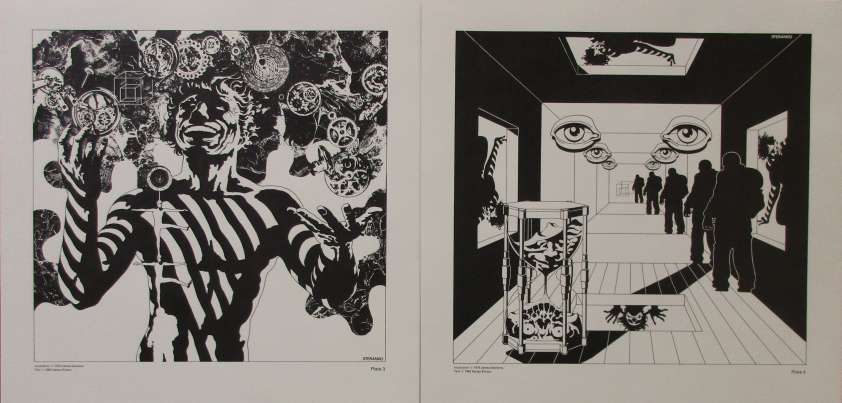
Repent, Harlequin! Said the Ticktockman

Repent, Harlequin! Said the Ticktockman: Short story by Harlan EllisonThis story by Harlan Ellison takes a satirical look at the way people can become slaves to time. In a future dystopian world, everyone and everything must be on time. The Master Timekeeper (aka the Ticktockman) is responsible for policing this. He has a special power: if someone is late to work or causes something to be delayed, that person has the lost time deducted from their lifespan. Only one man stands against him: a disruptive rebel who calls himself the Harlequin. Themes include totalitarianism, obsession with timeliness and productivity, misused technology, social regimentation, individualism, the futility of individual revolt.

Continue ReadingRepent, Harlequin! Said the Ticktockman

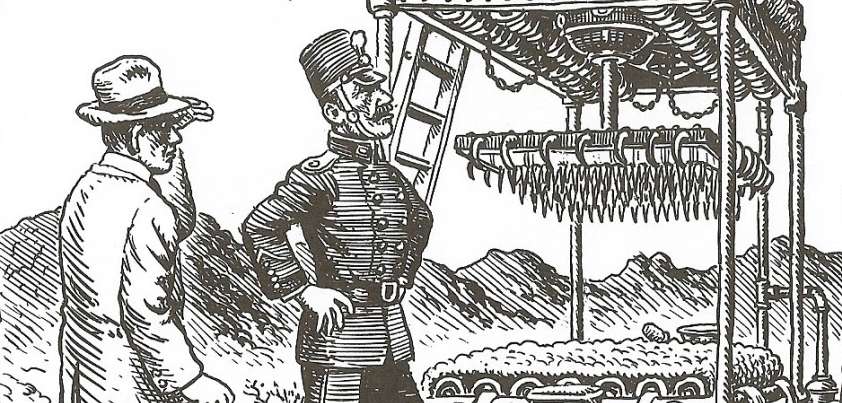
In the Penal Colony

In the Penal Colony: Novelette by Franz KafkaThis Franz Kafka story is a study on what can happen when you put a psychopath in charge of a process (or country) in which they have unfettered power and can make decisions over life and death with impunity. The story deals with some heavy themes: justice, due process, capital punishment, torture, sadistic voyeurism, and the difficulty of institutional change (even if for the good!). Central to all this is the “machine”, which seems to know that its time has come and chooses to self-destruct along with the only person left who cares about it.

Continue ReadingIn the Penal Colony

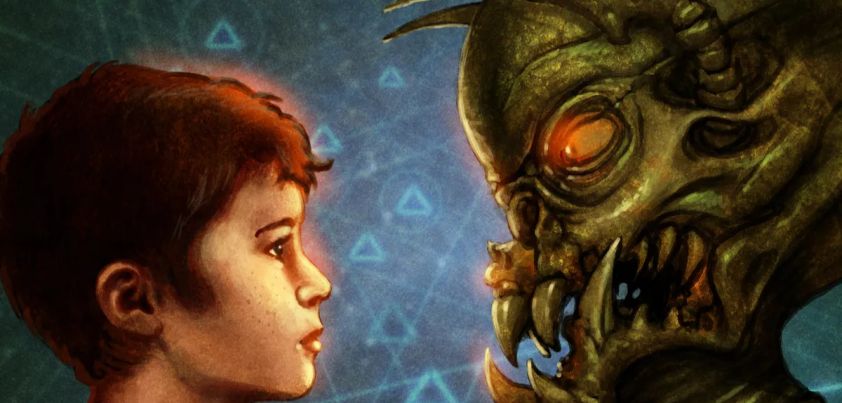
Bloodchild

Bloodchild: Short story by Octavia E. ButlerOctavia Butler described this as her “pregnant man” story. A colony of humans fleeing some kind of trouble takes shelter on a planet inhabited by giant, insect-like beings. The insects (Tlics) develop a symbiotic relationship with the humans (Terrans). In exchange for protection, adolescent boys are allocated to Tlic families, where they must incubate a Tlic mother’s eggs. The eggs are implanted in their abdomen, necessitating a rather gruesome but usually successful delivery process. Understandably, the Terran protagonist who has just reached maturity is having second thoughts about this. Themes: exploitation vs. interdependence, gender roles, fear, sacrifice vs. jealousy, love.

Continue ReadingBloodchild

2 B R 0 2 B

2BR02B: Short story by Kurt VonnegutKurt Vonnegut liked to write about imaginary worlds. Some time ago we featured Harrison Bergeron, another Vonnegut story. This was about a dystopian world; a world where most people are unhappy and afraid because they are not treated fairly. In 2BR02B, Earth at first appears perfect. There are no poor, no slums, no prisons, no wars. There is no insanity, disability or disease. Even aging has been cured. Everything is wonderful… unless you want to bring a child into the world. As the story develops, we soon see that this utopian sounding future masks yet another dystopian society.

Continue Reading2 B R 0 2 B

The Dead Past

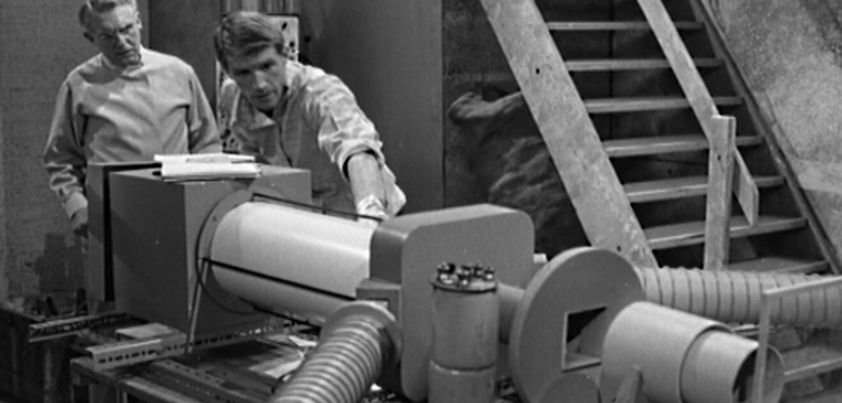
The Dead Past: Short story by Isaac AsimovIn this story by Isaac Asimov a young physicist, indignant at apparent government suppression of research in a fringe area of science, secretly builds a home “chronoscope” that can look back in time up to one hundred and fifty years. Too late, the government learns of this and tries to censor his work, pointing out the potential for his machine to destroy an important aspect of life everyone takes for granted. Themes include scientific curiosity and freedom, government disinformation and control (in this case for the greater good), privacy, guilt.

Continue ReadingThe Dead Past

Zero Hour

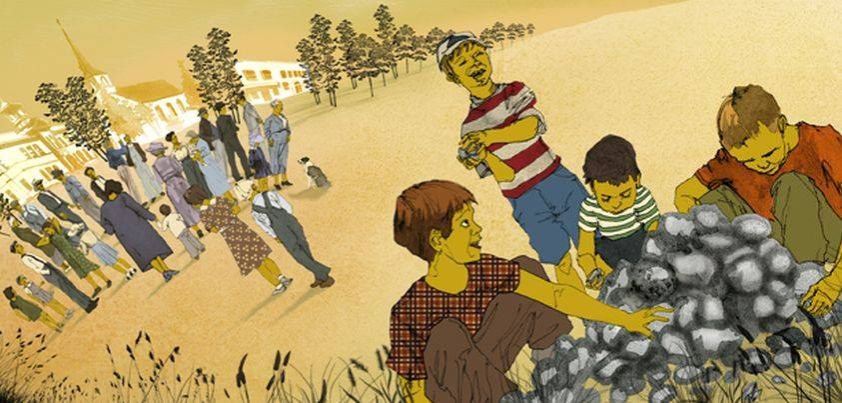
Zero Hour: Short story by Ray BradburyThis chilling story by Ray Bradbury involves an inattentive mother, a feisty seven-year-old girl, and her imaginary friend Drill. Throughout most of the story, the girl leads her friends in a construction game following instructions she receives from Drill. Her mother later learns that groups of children across America are playing the same game. Its name is “Invasion”, and for her the climax comes in a single word: Peekaboo. The major theme of the story is complacency. The mother senses something is wrong, but doesn’t act until too late. Other themes include human smugness (We’re impregnable!), childhood innocence/impressionability, manipulation, fear.

Continue ReadingZero Hour

The Perfect Match

The Perfect Match: Short story by Ken LiuIn this dystopian story by Ken Liu, a powerful cyber system gathers information on the habits, desires and preferences of almost everyone in the world. Through its motherly virtual assistant “Tilly” (Hey Google!), it uses this information to control unfavourable governments and manipulate user’s lives, including autosuggesting products from advertising partners. A member of a rebellious hacking group and disillusioned lawyer caught trying to take down the system are made an offer they cannot refuse. Themes include corporate greed vs. “benevolence”, the dangers of overreliance on AI (blind acceptance and loss of humanity), manipulation and control, rebellion.

Continue ReadingThe Perfect Match

I Have No Mouth and I Must Scream

I Have No Mouth and I Must Scream: Short story by Harlan EllisonThis story from Harlan Ellison is an example of New Wave Science Fiction, a literary movement that flourished in the 1960s and 1970s. Distinguishing features are storylines that are intellectually implausible, and disturbing themes that would not normally be included in traditional science fiction. A sentient supercomputer has destroyed the human race other than five ‘specimens’. With no creative outlet for its powers, it has kept these alive and subjected them to torturous challenges for over one hundred years as revenge against humanity for creating it. Themes: humanity vs. technology, godhood, individualism, revenge, cruelty, violence, misogyny, self-sacrifice

Continue ReadingI Have No Mouth and I Must Scream