 This children’s story by Sandra Cisneros was initially rejected because the publisher thought the themes were too deep for children. It has since become one of the most widely taught stories in Elementary Schools. A misunderstanding at school over an ugly red sweater spoils a girl’s eleventh birthday. Her teacher is convinced the sweater is the girl’s and demands that she put in on. The girl does so but then breaks down in tears, embarrassing herself in front of the class. This is a “coming of age” story that deals with the difficult concepts of vanity and timidity. More…
All posts by shortsonline
Brownies
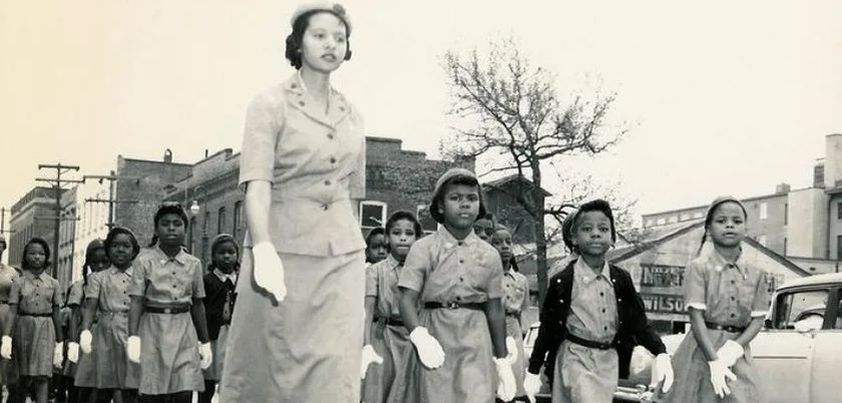 The major theme of this story by ZZ Packer is how racial segregation breeds racial prejudice. At a summer camp, a Brownie troop from a black neighborhood decide to kick the asses of an all-white troop they see exiting a bus. A misunderstanding leads to a confrontation in the shower block, from which the black girls leave in shame. The story ends with the black narrator describing an interaction between her father and a white Mennonite family, and concluding that racism is something mean she cannot stop. Other themes include social class, resentment, anger, revenge, peer pressure.
Looking for Mr. Green
 A major theme of this story by Saul Bellow is work ethic. Times are tough in 1930s Chicago. An intellectual white man starts a much-needed job delivering unclaimed welfare checks to people in a depressed black neighborhood. On his first day his younger supervisor implies that, as a city worker, he isn’t expected to “push too hard”. That’s not the way he works: he wants to do well for doing-well’s sake, and goes above and beyond in a quest to find the elusive Mr. Green. Other themes include poverty, race, suspicion, duty, tenacity, identity. More…
The Stars
 This story by S. Rajaratnam is a biting satire of the “science” of astrology. Inspired by the author’s Hindu upbringing in which those around him shared a strong belief that one’s destiny is written in the stars, he relates the tale of an Indian farmer who doubles as his village astrologer. Having charted his own stars and determined the date and time of his death, he decides to silence sceptics by inviting the whole village to witness and celebrate the event. Themes include astrology, determinism vs. free will, obsession, faith, failure (“miscalculation”), scepticism. More…
First Confession
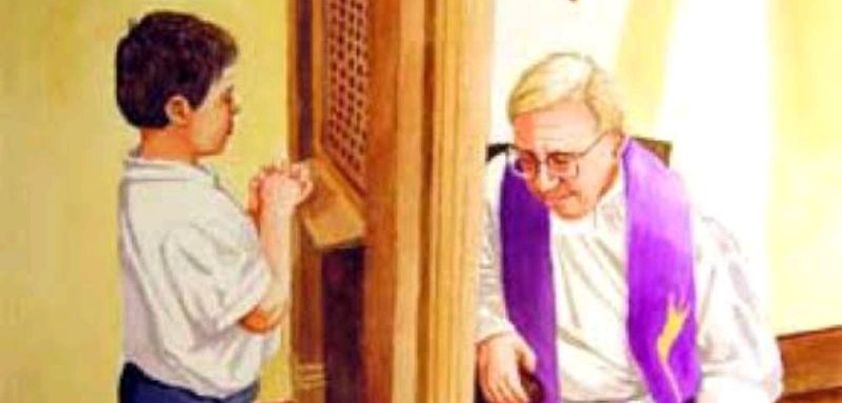 Although the plot of this Frank O’Connor story deals with an important milestone in the Catholic faith, the points made are equally relevant to several other religions. The story satirizes the instilling of fear (of punishment/Hell) as the reason for taking the Eucharist as opposed to celebrating God’s love. A young boy’s intolerance over his country grandmother’s unusual habits results in violent fantasies. A priest’s double standards in scolding the boy’s sister for hitting him and “rewarding” the boy for confessing these murderous thoughts sends them both a confusing message. Themes include innocence, morality, guilt, indoctrination, intimidation, fear, hypocrisy. More…