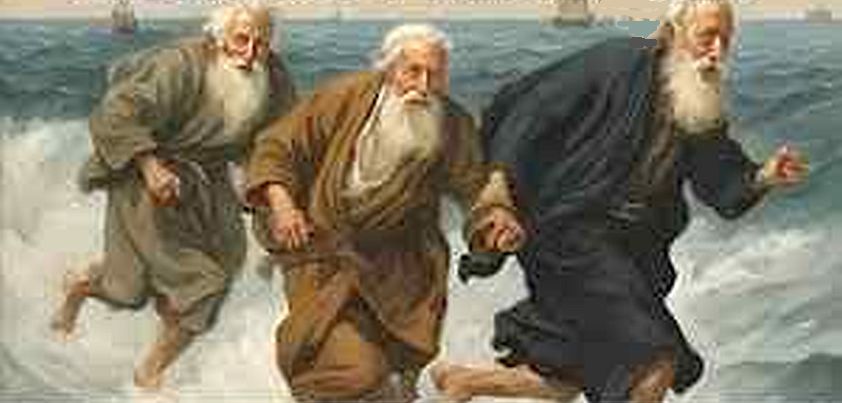
 In this story by Leo Tolstoy, a bishop of the Roman Orthodox Church schools three devout hermits seeking salvation by living alone on a deserted island in reciting the Lord’s Prayer. He claims that although that their own prayer ‘Three are ye, three are we, have mercy upon us.’ encompasses the essence of Christianity, it is insufficient to please God. The bishop is humbled and admits his mistake when they miraculously follow him by gliding across the sea, having forgotten the words. Themes include humility and devotion, religious dogma vs. faith, the nature of prayer. More…
All posts by shortsonline
A Horse in the Moon
 This story by Luigi Pirandello opens with a wedding feast in which guests are concerned for the innocent, vivacious Italian bride. Although wealthy, the Sicilian groom appears physically and mentally ill. After seeing the guests off, the groom tries to hurry his new wife inside. She objects and, while heading towards the nearby village, they come across a dying horse. On seeing his reaction, she realizes the marriage was a mistake. A medical episode and vision he has as the moon rises behind the horse solves the problem for her. Themes include naivety, marriage, madness, suffering, compassion, death, culture clash. More…
What We Talk About When We Talk About Love
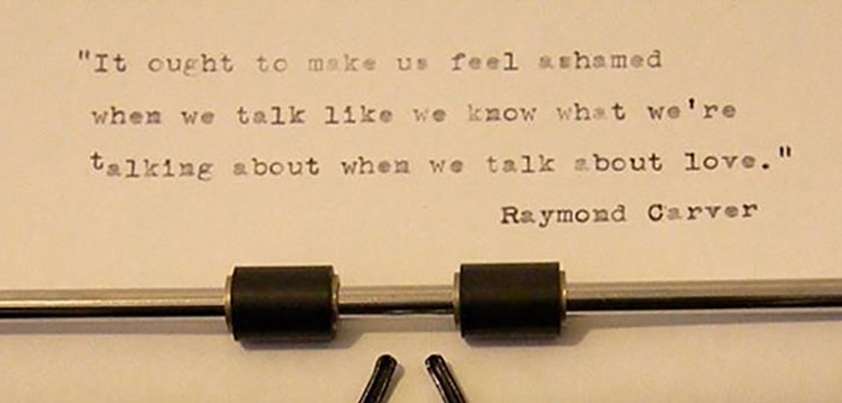 The power of this minimalist story from Raymond Carver about the difficulty of defining “real” love lies in its realism. The two couples involved in the alcohol-fueled conversation are not experts; each member has experienced a failed marriage. None of them can describe love, but they do manage to give examples of what it is and isn’t, and what can go wrong when it ends. The mood darkens along with the emptying bottle, and by story’s end all four are too despondent to move. Themes: the nature of love, the limits of language, marriage and divorce, alcohol abuse. More…
The False Prince and True
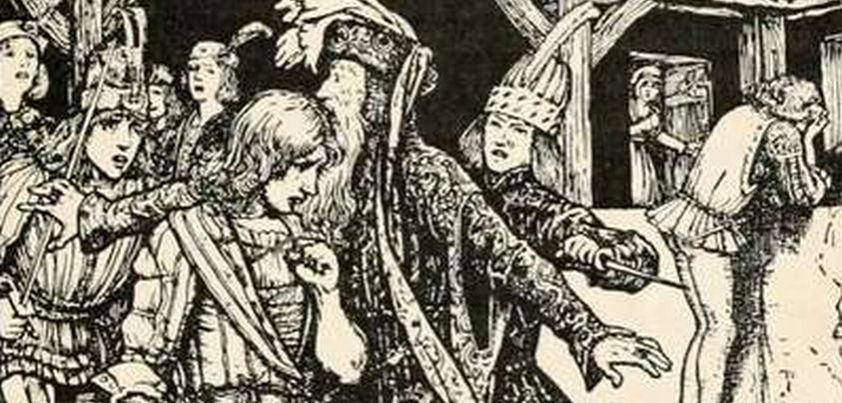 This Portuguese folktale begins with a king learning about an argument between his son and a young nobleman on a tennis court. The prince spoke rudely to the noble, who lost his temper and hit him. Although the king is angrier with his son for not fighting back than the noble, hitting the prince is punishable by death. The only way the noble can save himself is to marry a very ugly, very old woman. As is often the case in folktales, there is a lot of magic around and some surprises are on the way for all involved. More…
The Eyes Have It / The Girl on the Train
 In this story by Ruskin Bond, a blind man sitting in an empty train carriage is joined by a young woman. He is attracted by the sound of her voice as she farewells her family, and even the sound of her slippers. As he initiates a conversation, he decides to conceal the fact that he is blind. This extends to pretending to look out the window and describe the passing countryside. He is successful, only to learn after the woman exits the train that she is also blind. Themes include independence, loneliness, desire, self-consciousness, pretence, perception vs. reality. More…