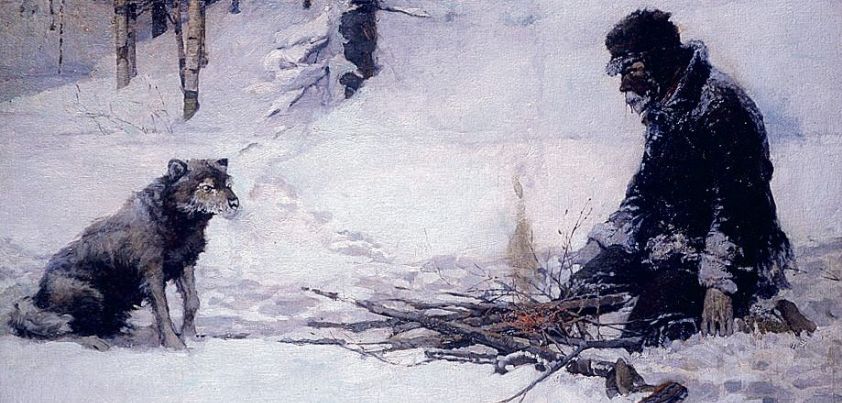
 Jack London is one of the leading authors in a literary style called “naturalism”. Such stories deal with the unforgiving power of nature and man’s struggle for survival. To Build a Fire takes place in the frozen wilds of Alaska. A poorly prepared prospector decides to return to his camp in dangerously cold weather conditions, ignoring advice from more experienced men never to travel through the snow alone. A single foolish mistake brings disaster and the most comfortable and satisfying sleep he had ever known. Themes include survival (man vs. nature), listening to advice, preparedness, instinct vs. intellect, death. More…
All posts by shortsonline
Witness for the Prosecution
 This classic crime thriller from Agatha Christie is better known for its screen and theater adaptions than the short story upon which they are based. There is no Hercule Poirot type detective here. The man charged with finding evidence to free a prisoner he is convinced was wrongly arrested for murder is a dogged solicitor. Things look grim when the man’s wife agrees to testify against him. Fortunately, a letter delivered the day before the trial leads to critical evidence that frees the man. Strangely, the solicitor is unlikely to be happy with the outcome. Themes: justice, deception, betrayal, perception. More…
This is What It Means to Say Phoenix, Arizona
 In this story by Sherman Alexie a young Native-American man enlists the help of a boyhood friend he had grown away from to go on a road trip to bring back his father’s ashes. The focus of the story is the relationship between the two, and how it reflects growing individual and cultural disconnection among tribal Native-Americans. The other man’s help is not in recognition of their former friendship, but rather out of obligation for a deed of kindness once performed by the dead man. Themes include poverty, storytelling, friendship, alienation, loneliness, forgiveness, decline of Native-American culture. More…
The Library of Babel
 Jorge Borges is known for his unusual and sometimes complex stories which connect things that don’t seem real or possible with the themes of metaphysics and religion. The Library of Babel also includes several other themes commonly found in Borges’s work: infinity, language and order vs. randomness. The Library, which is composed of a seemingly endless number of galleries, is an allegory for the universe. The books within the galleries are incomprehensible. The librarians, who represent mankind, search for the gallery of a mythical “Man of Books” (God?), thought to contain a compendium volume which may unlock the Library’s secrets. More…
In the Cemetery Where Al Jolson Is Buried
 Given the subject matter (a woman having difficulty coming to grips with a friend’s terminal illness), one would expect this Amy Hempel story to be a maudlin tale. However, the author’s minimalist style, interspersed with quirky humor, lightens the mood considerably without losing emotional impact. The major theme of the story is fear of death. This leads to avoidance. The protagonist visits her friend only once during her months in hospital. The two evade serious conversation, speaking almost exclusively about trivia and, instead of staying the night as expected, the friend hastens away. Other themes: friendship, abandonment, guilt, grief. More…