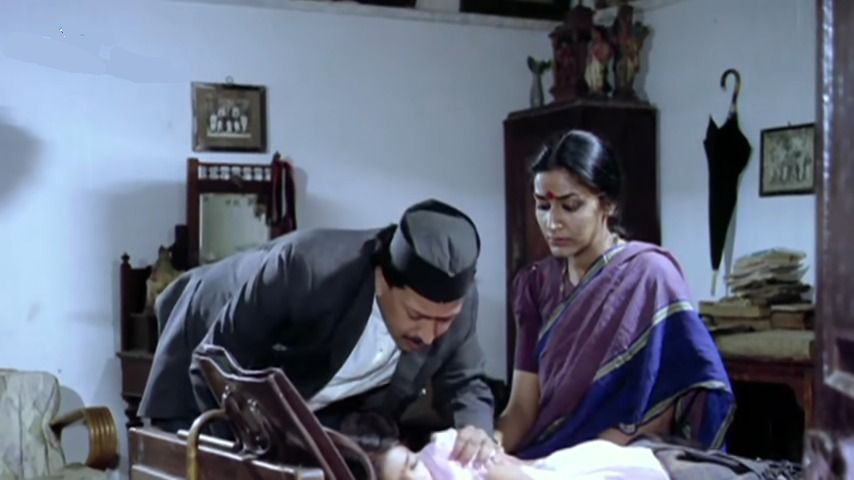
 In this 1940s story by R. K. Narayan, a working-class father is tortured by guilt over his inability to spend time with his young daughter and provide some of the luxuries other children enjoy. When the chronically overworked man asks for an evening off to take her to a movie, he is refused. He is on the point of resignation when offered a small raise that the family needs badly. In a poignant moment, he arrives home late and finds his daughter asleep, still dressed for the movie. Themes: childhood innocence, parent-child relationships, powerlessness, exploitation, financial struggle, sacrifice, guilt. More…
All posts by shortsonline
The Three Questions
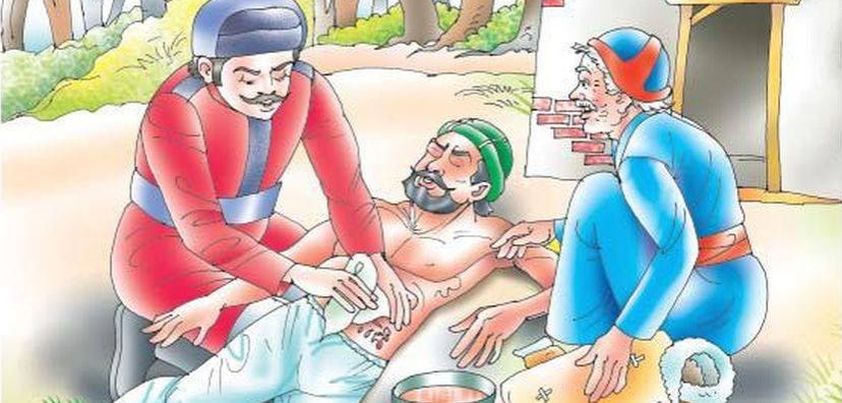 This parable from Leo Tolstoy is about how to succeed in life. A king believes he would never fail in a task if he always knew three things: What is the best time to begin? Who are the most important people to have around you? and What is the most important thing to spend your time doing? He offers a reward for the answers, but neither his wisest counselors nor others who come to claim it can help. An experience with a forest hermit and injured assassin teach him what he needs to know. Themes: wisdom, humility, kindness, forgiveness, morality. More…
The Fisherman and His Wife
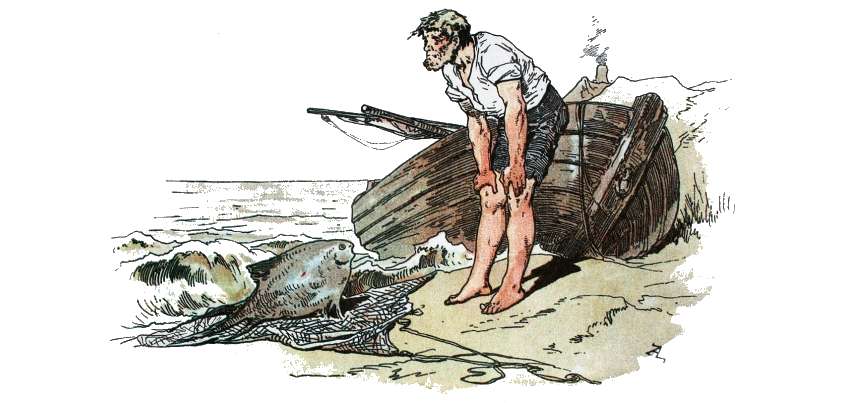 It’s time for another folktale. This one is about dissatisfaction and greed. A poor fisherman catches an enchanted fish and sets it free. When he tells his wife, she is angry that he did not demand a wish in return. She sends him to ask the fish for a nicer house. When the fish grants this, the wife becomes greedy. She sends her husband back several times to ask for bigger and bigger things. Her final wish is so outrageous that the fish either will not or cannot grant it. The fisherman is no doubt happy with what happens next. More…
With the Photographer
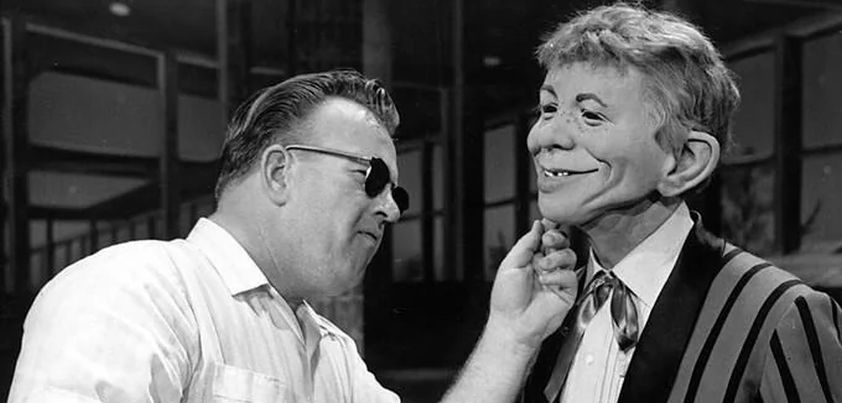 This story by Stephen Leacock makes use of irony and hyperbole to satirize artistic arrogance. A man who visits a professional photographer to have a portrait taken is humiliated during his sitting. The photographer not only criticizes every aspect of his facial features, but also insists on a number of different posture changes to hide what he considers flaws. Later, when the man views the developed product, his face has been so artificially altered as to be unrecognizable. Other themes include appearance and the disconnect between self-perception and the way others see us, insecurity, body shaming, humiliation, anger and frustration. More…
The Fifty-first Dragon
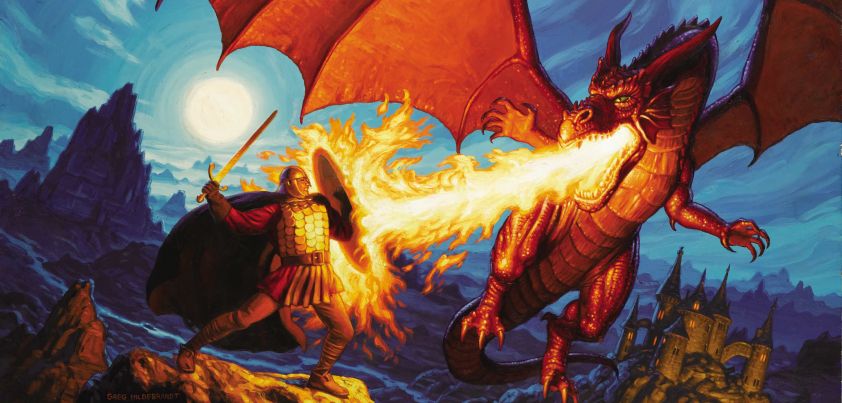 This major themes of this humorous take on the dragon-slayer genre by Heywood Broun are courage and belief in one’s ability. When Gawaine fails almost everything else at “Knight School”, the headmaster decides to make him a dragon slayer. Unfortunately, Gawaine lacks self-confidence and insists on receiving a magical invisibility spell before starting the job. Some reviewers see the story as an allegory of America’s elite College Preparatory Schools. Written in 1919, others see it as a satire of the propaganda slogans used to lure naïve young men to the trenches during World War 1. Other themes: paternalism, deception, vanity. More…