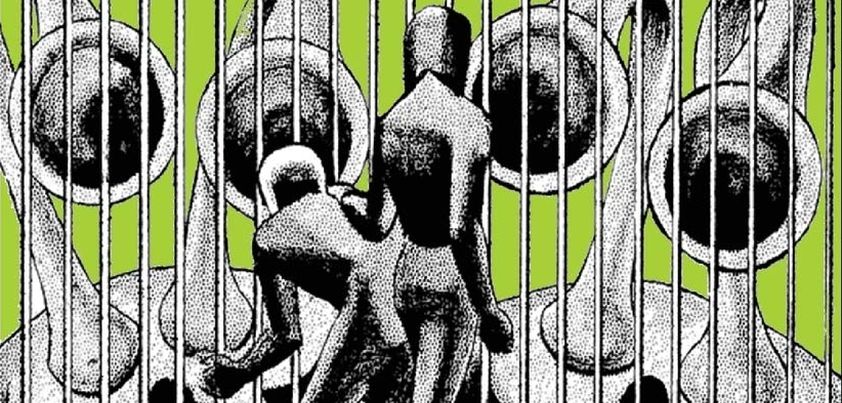
The Hell Screen

The Hell Screen: Short story by Ryunosuke AkutagawaIn Ryūnosuke Akutagawa‘s re-working of this 13th century Japanese tale, a cold-hearted, conceited artist considered to be “the greatest in the land” insists upon personally experiencing the scenes he creates. When commissioned to paint a folding screen with a scene from Hell, he is able to complete all but the central image of a beautiful woman burning alive in a nobleman’s carriage. He asks for help from his Feudal Lord, who agrees to stage the event for him. As the artist watches, his emotions range from horror to ecstasy. Themes: hubris, inhumanity, obsession, inspiration in art, innocence, perception of truth.

Continue ReadingThe Hell Screen

Woman Hollering Creek

Woman Hollering Creek: Short story by Sandra CisnerosCleófilas, Sandra Cisneros’s Mexican protagonist, finds the grass no greener when she marries and moves to a town “on the other side”. Poverty, language and distance leave her with nobody to turn to when her dreams of love and passion become a nightmare. Fortunately, her father has foreseen the possibility and left the home door open. Thanks to a kind woman with a pickup truck and piercing scream, she returns stronger and, one hopes, empowered to strive for a better future. Themes: parental vs. romantic love, cultural traditions (wives as ‘property’), gender roles, isolation, marital abuse.

Continue ReadingWoman Hollering Creek

The Wendigo

The Wendigo: Short story by Algernon BlackwoodIn this story by Algernon Blackwood, a hunting party encounters a Wendigo, a malevolent being said by Algonquian folklore to haunt the wilds of Eastern Canada. While most stories associate the Wendigo with cannibalism, Blackwood’s version, though no less frightening, is a moss-eater. The creature’s presence is foreshadowed early and tension builds until one of their guides is taken and returned as a misshapen shadow of himself. He is taken again, and reappears with a mouth full of moss bereft of mind, memory and soul. Themes include friendship, isolation, superstition, the “Call of the Wild”, primal fear, hysteria, the supernatural.

Continue ReadingThe Wendigo

House Taken Over

House Taken Over: Short story by Julio CortázarSaid to be Julio Cortázar’s first published story, this suspenseful tale is about a middle-aged brother and sister who, having never married, live quiet but contented lives in their aging family mansion. One night, their solitude is interrupted by strange noises coming from a disused wing of the house. The brother locks and bolts the door leading to that part of the house. Unfortunately, the title foreshadows the final outcome. The brother and sister know the identity of the intruders (referred to only as “they”), but this is not shared with the reader. Themes: the idle rich, isolation, fear, change.

Continue ReadingHouse Taken Over

One Friday Morning

One Friday Morning: Short story by Langston HughesThis Langston Hughes story introduces an often-overlooked element of the American racial debate. A community committee reverses a decision to award an arts scholarship to a promising high-school senior when they learn that she is colored. Her art teacher, who is of Irish descent, describes the discrimination and violence suffered by her people when they first arrived in the country. Although the girl didn’t win the award, she emerges from the experience stronger and even more determined to succeed. Themes: equality, the American Dream (defined in the story as liberty and justice for all), racial discrimination, injustice, resilience, determination, hope.

Continue ReadingOne Friday Morning

The Girl Who Can

The Girl Who Can: Short story by Ama Ata AidooIn this inspiring story by Ama Ata Aidoo, a seven-year-old Ghanaian girl demonstrates that success in life is not about meeting societal gender norms, but rather capitalizing on one’s natural talents and abilities. The girl’s grandmother clings to outdated concepts of a woman’s role and place in the community, criticizing her “non-child-bearing” legs and desire for education. The girl’s mother passively accepts the body comments, but supports her schooling. Ironically, when the girl achieves athletic success, the grandmother basks in her glory. Themes include innocence, matriarchy, tradition (gender roles), generational conflict, body shaming, education and self-improvement, identity (self-discovery and empowerment).

Continue ReadingThe Girl Who Can

A Passion in the Desert

A Passion in the Desert: Short story by Honoré de BalzacThis story by Honoré de Balzac recounts the adventures of a French soldier lost in the Egyptian desert during the Napoleonic conquests. He finds a small oasis, but soon realizes that it is already occupied… by a leopard! He befriends the beast and the two manage to co-exist, with the leopard becoming more and more trusting and playful. Although he describes the (female) leopard in increasingly sensual terms, he later learns that the desert holds other passions: (In the desert there is everything and nothing… it is God without mankind.) Themes: isolation, animal/human bonding, distrust, betrayal, finding God in nature.

Continue ReadingA Passion in the Desert

The Green Leaves

The Green Leaves: Short story by Grace OgotThis story from Grace Ogot reads like a folktale. With an overall theme of culture conflict between the modern world and the traditions and beliefs of a Kenyan tribe, the plot can be divided into three sections. The first (ending with Nyagar’s death) has themes of crime, tribal justice, violence, superstition and greed. The second, involving the British authorities, emphasizes colonial arrogance and cultural insensitivity. The third, in which Nyagar’s wife laments his death, introduces a feminist theme. Her chant reflects not only her own loss, but also the powerlessness and complete dependence of all village women on their husbands.

Continue ReadingThe Green Leaves