 It is always nice to find a story with a quirky, innovative storyline. John Collier’s Evening Primrose is in the form of a journal describing the experiences of a failed poet who gives up the outside world to spend the rest of his life living in a department store. He plans to hide out by day and wander the store at night collecting food and other necessities. To his surprise, he finds that a small community of like-minded people already inhabit the store. The only things they fear are discovery by the night watchman and the gruesome “Dark Men.” More…
All posts by shortsonline
The End
 In this stream-of-consciousness dramatic monologue by Samuel Becket, an elderly man released from an institution against his wishes desperately tries to survive despite declining physical and mental health. He was given clothes and money, but his physical appearance made it hard to find accommodation. When he finally did find a room, he was cheated out of the money. Reduced to begging on the streets and living in squalor among rats and toads, he finally loses the will to go on. Themes include the plight of those who look “different” (rejection, alienation, indignity), resilience, mortality, the emptiness and futility of life. More…
Prayer for the Living
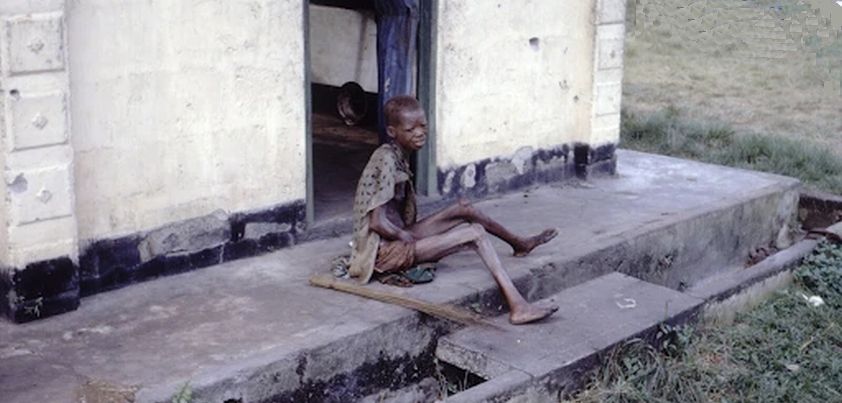 This story by Ben Okri highlights the suffering of innocent civilians caught up in regional conflicts. Set during the Nigerian Civil War when a government blockade of the self-proclaimed Republic of Biafra resulted in mass starvation, a man who hasn’t eaten for three weeks walks among corpses scattered in an unnamed town. He has come to the grim conclusion that the dead seem happier and more alive than the living. His purpose… to make sure that his family and lover are dead before finding “happiness” himself. Themes include the horrors of war, corruption/ethnic rivalry, suffering, acceptance, death as relief. More…
My Father Goes to Court
 The message of this Carlos Bulosan story is that money can’t buy health and happiness. The children of a poor family, full of vitality and laughter, spend a lot of time playing outdoors. Their rich neighbor, who keeps his children secluded indoors, files a legal complaint against the poor family for standing outside his house and enjoying the aroma of his food. Their father goes to court and uses a novel approach to win the case. Themes include family, social inequality, standing up for one’s rights, justice, the importance of fresh air, exercise and laughter for a healthy, happy life. More…
Everyday Use
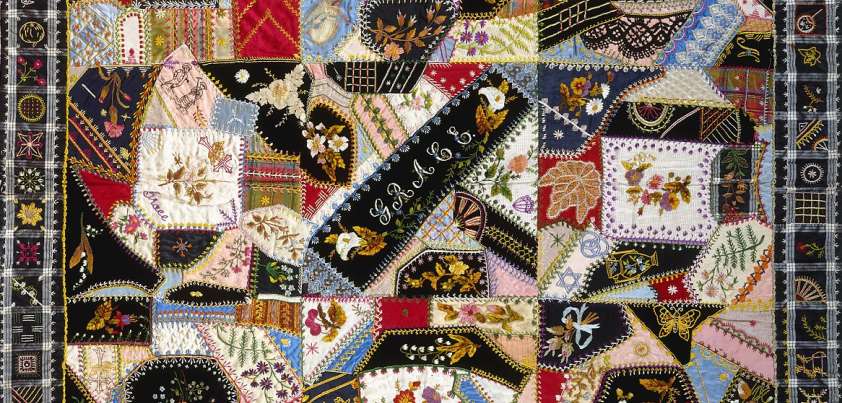 Alice Walker’s study of mother-daughter relationships explores contrasting attitudes towards heritage. A self-centered college graduate (Dee) visits her mother, a poor farming widow. The mother values her African-American heritage; Dee tries to exploit it. Their positions are exemplified in a family heirloom: a hand-stitched quilt that has been promised to Dee’s sister. Dee demands it, claiming that such things are now trendy and valuable. She claims it will be wasted on her sister, who will probably put it to “everyday use”. Themes: heritage, racial identity, connection through tradition, appearance, materialism (the effect of higher education / city life on values). More…