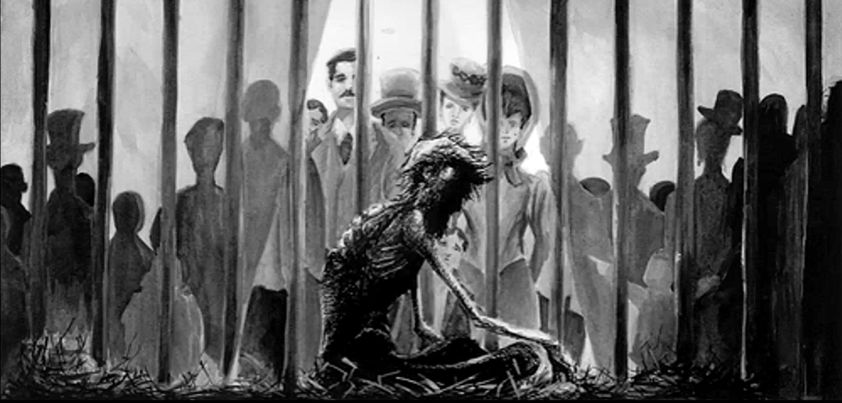
 Themes of Franz Kafka’s A Hunger Artist include alienation and isolation, spiritual emptiness, art, voyeurism, exploitation, change and suffering. The unnamed artist does not hunger for food, but rather artistic recognition and spiritual fulfillment. When, as often happens, public tastes change, he has outlived his usefulness and is quickly forgotten. The story has variously been described as an allegory of the suffering of artists for the sake of their art, a metaphorical representation of the life of Jesus, and a reflection of the tortured final years of Kafka’s own life as an alienated artist dying from tuberculosis. More…
All posts by shortsonline
The Subliminal Man
 This 1963 story from J. G. Ballard envisions a dystopian future where people’s lives are conditioned by subliminal messages disseminated through advertising billboards and the mass media. The hidden messages, which appear to be officially sanctioned ‘to stimulate the economy’, compel people to buy things they don’t need or replace perfectly good recent purchases. Ominously, the major products involved are linked to powerful monopolies. The story is a biting satire of (then) modern advertising and its contribution to the post-war consumerism and rising household debt levels of the 1950s. Themes: conspiracy, technology, advertising, consumerism, debt, dehumanization (loss of free will). More…
That in Aleppo Once…
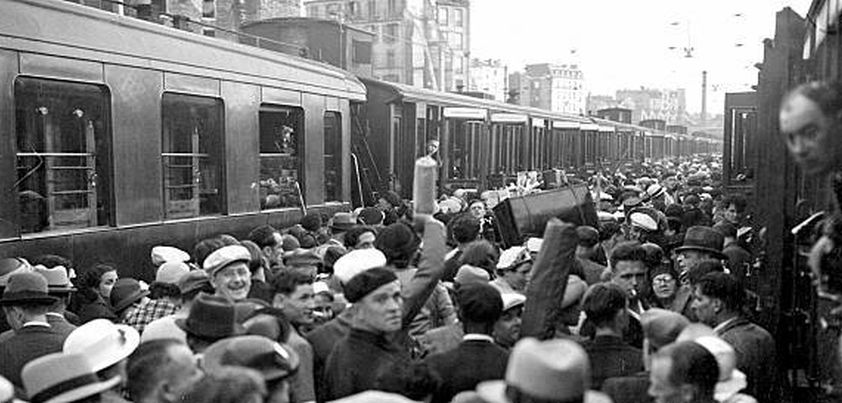 The title of this Vladimir Nabokov story is an allusion to Shakespeare’s Othello. Several characters reflect those in the famous play, and it shares the same major theme (jealousy). The story is more than the tale of a deceitful, adulterous wife who may have only married the older narrator to escape the German occupation. The narrator’s heartbreak has caused him to question not only his wife’s existence, but also whether life is worth living. His letter is an attempt to unburden himself, and create some hope for the future. Other themes: escape, betrayal, deception, uncertainty, suicide (implied by the title). More…
One of These Days
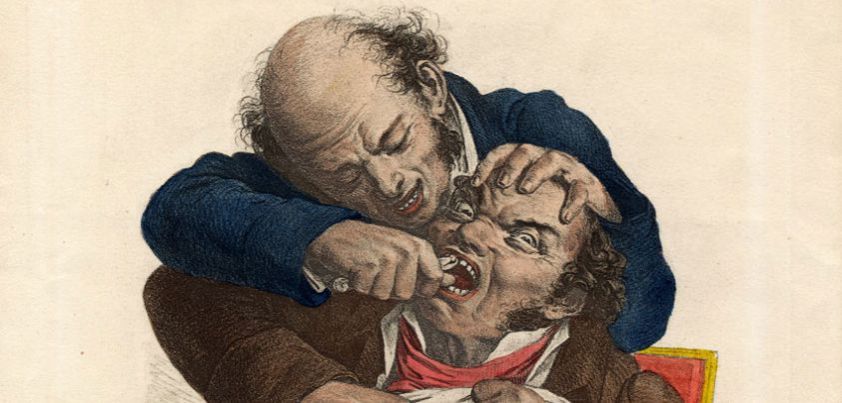 In this story by Gabriel Garcia Marquez, a corrupt Mayor approaches a dentist to treat an abscessed tooth. The dentist does not want to help, but knows he will be killed if he refuses. The dentist has a revolver in a drawer next to his chair. Once the Mayor is in the chair, the dentist has him at his mercy. In a quiet but serious voice, he says to the Mayor: “Now you’ll pay for our twenty dead men.” The dentist has decided what has to be done… does he pull the trigger, or pull the tooth? More…
The Time Machine
 In this story by Dino Buzzati, a scientist builds a luxurious walled city in which a machine slows down time. Animals and plants grow and age half as quickly as those outside, allowing occupants to live for two centuries. Residency is expensive and, once inside, it is impossible to leave as the effects of normal time will be fatal. Life in the city proves not to be the utopia residents expected, and ends in disaster when something happens to the machine. Themes include self-preservation, alienation, monotony, the dangers of relying on technology and toying with the basic laws of nature. More…