 In this chilling story by Ray Bradbury, a man badly injured in a car accident senses something ominous about the onlookers in the crowd that gathered around him. Several weeks later, he notices these same individuals at another accident. He searches newspaper archives and discovers that they and similar groups had attended hundreds of accidents over the last decade. Their sinister purpose is revealed when he has another car crash and they decide to “make him more comfortable”. Themes include morbid curiosity, schadenfreude, anonymity and the possibility of evil in a crowd, the supernatural. More…
Archives
Usher II
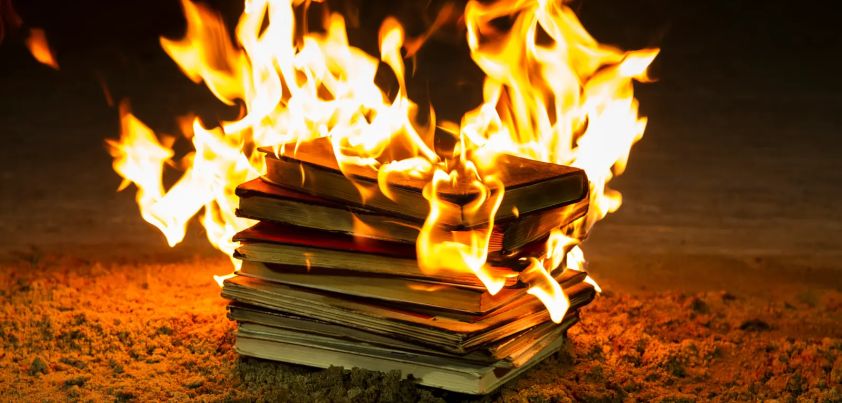 First published in 1950 as Carnival of Madness, this story by Ray Bradbury is also included in his anthologies The Martian Chronicles and The Illustrated Man. A wealthy book-lover, angry about destruction of his extensive library because of fantasy and horror story censorship on Earth, builds a look-alike version of Edgar Allan Poe’s House of Usher on Mars. He invites prominent book-banners to a party at the house, where they meet different Poe-inspired ends. Themes include censorship vs. personal freedom, the importance of speculative fiction, the danger of excess political correctness, zealotry (in this case, taking a protest too far!) More…
The Golden Kite, the Silver Wind
 This Ray Bradbury story is thought to be an allegory of the nuclear arms race that took place during the “Cold War” between the United States and Russia. The “Mandarins” who began the Cold War were Harry S. Truman and Joseph Stalin. One wonders if the first Mandarin’s daughter alludes to Truman’s wife Bess, who he claims to have consulted before every important decision. Moreover, Bess is known to have made changes to his famous speech outlining the Truman Doctrine, which started it all. Themes include rivalry, paranoia, wisdom, the futility of confrontation and escalation vs. the benefits of cooperation. More…
Heavy-Set
 Ray Bradbury‘s character Lenny (Leonard) lives at home with his mother and has a lot going for him. He has a body-builder’s physique, secure job, nice car, and no shortage of girls wanting to go out with him. Unfortunately, he is also mentally and socially challenged. He doesn’t take disappointment or ridicule well, often barely able to control his temper. The story takes place over a Halloween night. Lenny is excited, but the party he was looking forward to is a flop, leading to a potentially explosive homecoming. Themes include alienation, repression, interdependence, arrested development, fitting in, fear, despair. More…
All Summer in a Day
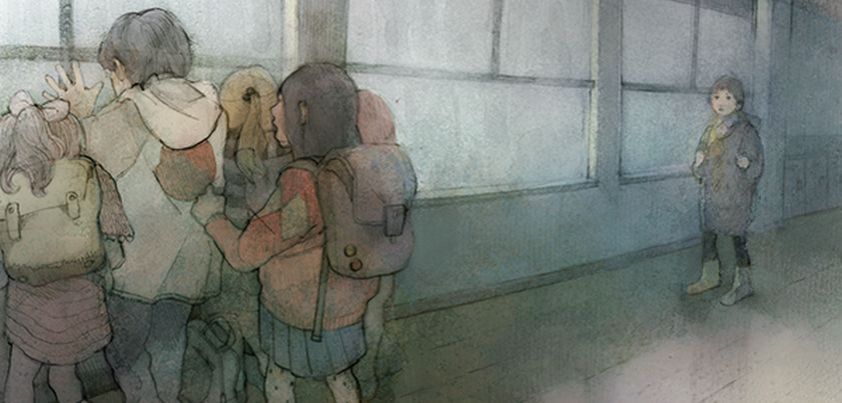 Set on the planet Venus, the climate in this Ray Bradbury story features almost constant rain. The only break comes every seven years, when there are two hours of sunshine. The children of the Earth space travel families on the planet are all looking forward to playing outside during the short break. Only one of them has ever seen the sun, and she is having great trouble dealing with the constant rain. But when the sun finally does come out, she is nowhere to be seen. Themes include adaptability, envy, reaction to differences, and bullying.. More…
The Pedestrian
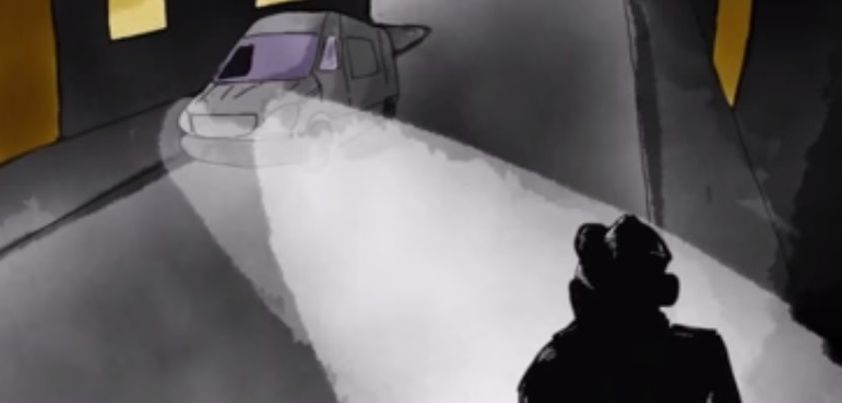 This is our second Ray Bradbury story that questions the social effects of television (the first being The Veldt). Set in 2053, almost everyone stays indoors all night watching TV. Leonard Mead doesn’t. He enjoys going out for a long walk every evening. This is so unusual that the only police car patrolling the empty streets arrests him for his “regressive tendencies”. Fortunately, Bradbury’s predictions about TV were wrong. However, something far more dangerous may be replacing it: social networking on mobile devices! Themes include social dysfunction, dehumanization through technology, conformity vs. individualism, surveillance and control, isolation, disconnection from nature. More…
Zero Hour
 This chilling story by Ray Bradbury involves an inattentive mother, a feisty seven-year-old girl, and her imaginary friend Drill. Throughout most of the story, the girl leads her friends in a construction game following instructions she receives from Drill. Her mother later learns that groups of children across America are playing the same game. Its name is “Invasion”, and for her the climax comes in a single word: Peekaboo. The major theme of the story is complacency. The mother senses something is wrong, but doesn’t act until too late. Other themes include human smugness (We’re impregnable!), childhood innocence/impressionability, manipulation, fear. More…
The Last Night of the World
 This Ray Bradbury story opens with a question: What would you do if you knew this was the last night of the world? A couple believe the world will end sometime during the coming night. The idea came in a dream shared by everyone they know. The couple decide the best thing to do is accept the fact and go through their evening routine as usual. They even manage to share a joke and go to bed laughing. What would you do? Themes include family, powerlessness, acceptance of the “inevitable”, comfort in routine, self-absorption and global awareness. More…
The Drummer Boy of Shiloh
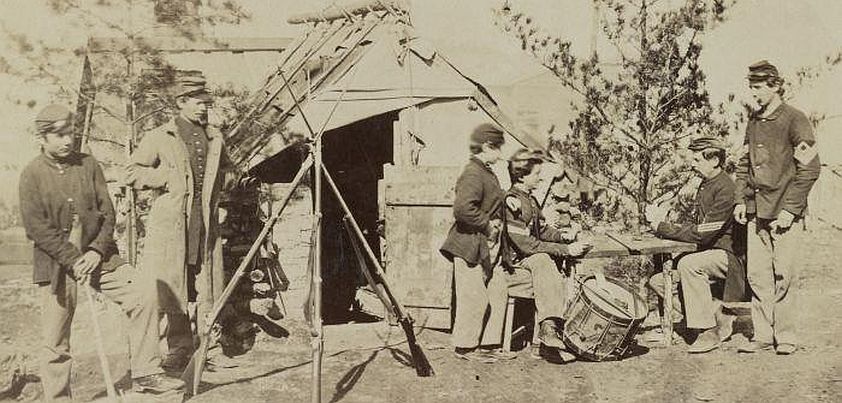 This story by Ray Bradbury packs a lot of raw emotion, even though the “action” is limited to a single conversation that takes place over the course of no more than half an hour. A fourteen-year-old drummer boy who must march into battle with no gun or means of protecting himself is a bundle of nerves on the night before his first encounter with the enemy. An inspirational talk with his commanding general teaches him that his drum may be one of the most effective weapons in the army. Themes include isolation and loneliness, empathy, duty, fear, courage, death, honor. More…
The Veldt
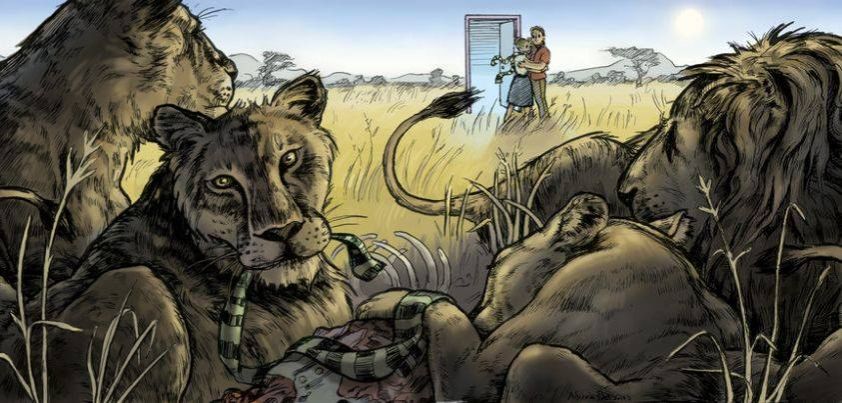 In this chilling story by Ray Bradbury, frantic parents who try to rein in their spoiled children by shutting down the hi-tech games room in their “HappyLife” home become a “HappyMeal”. Although written in 1950 to question the rising influence of television, the story serves as a warning to modern parents who let their children build their lives around social networking and/or game play. The story’s major theme is the alienation, dehumanization and breakdown of family values that can arise in a household through over-reliance on technology. Other themes include consumerism, poor parenting, illusion vs. reality, dystopia. More…
The Flying Machine
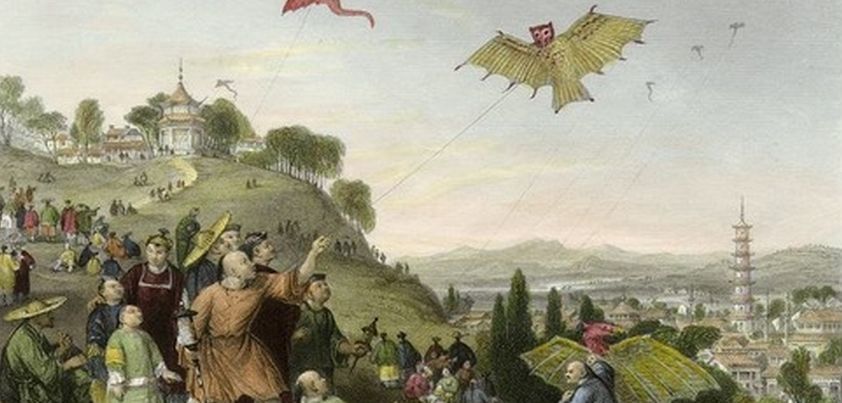
 In this story by Ray Bradbury, a Chinese Emperor learns that one of his subjects has invented a “flying machine”. Thinking that the invention could be used against him if the “technology” fell into the wrong hands, he has the man executed, the kite destroyed, and the whole episode hushed up. Written shortly after the end of World War II, by which time the Soviets had already replicated America’s atomic bomb, the story could be considered a parable warning of the risk of developing weapons of mass destruction. Themes include the potential danger of technology, fear of progress, shortsightedness, selfishness/control. More…
There Will Come Soft Rains
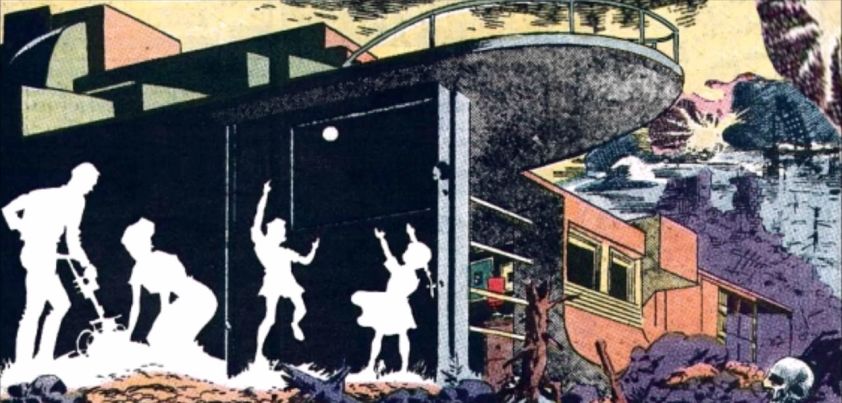 This science-fiction story from Ray Bradbury chronicles the last day in the ‘life’ of an automated house that has survived nuclear war. Although the house’s inhabitants are dead, represented by shadows on the outside walls, it has continued its daily cycle of programmed activity. Major themes are the danger of nuclear war, and the consequences of taking technology too far. In replacing almost all human tasks in their daily life, the householders were dependent on technology. Ironically, that same technology built the bombs that destroyed them. Other themes include death (the dog, house and humankind), nature (the only survivor), dystopia. More…
A Sound of Thunder
 What is the most dangerous thing about time travel? According to this story by Ray Bradbury, it is doing some small thing that may change the future. Five men travel back in time to hunt a T-Rex. One of them panics when he sees the monster and steps off a specially prepared path. Because of this, they return to a very different world. The last thing the clumsy hunter hears is a sound of thunder. Themes include arrogance, cowardice, the dangers of technology, connections between past and present, democracy vs. dictatorship, the ethics of game hunting. More…