
Sweet Porridge
 In this German folktale (also known as The Magic Porridge Pot), a kind old woman gives a magic pot to a poor girl looking for something to eat in a forest. When someone says special words, the pot cooks sweet porridge. The only problem for the girl, her mother and the village they live in is that you need to say special words to make the pot stop cooking. This is a popular teaching story for 3-5 year-olds, made more so because the poem that inspired it was also the source for a famous Disney film segment.
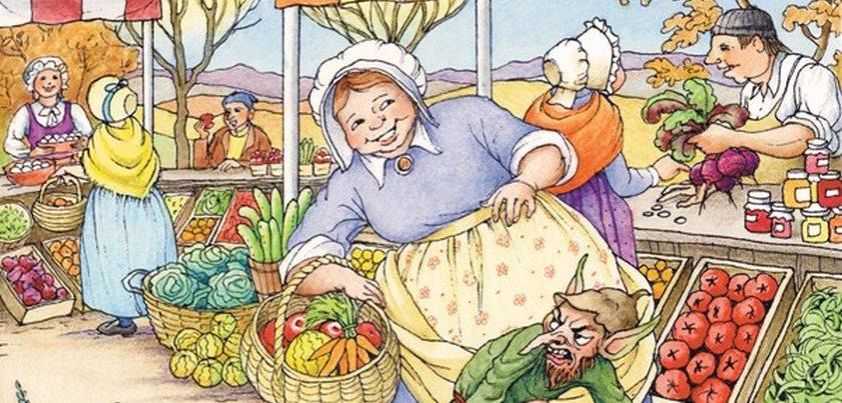 In this folktale, a strange looking little old man asks a nurse to come to his house to help his sick wife look after their baby boy. The man’s wife gives the nurse some ointment to put on the baby’s eyes. Being curious, the nurse puts some of it on one of her own eyes. The family seemed normal enough up to this point. However, the ointment helps her to learn their secret. The nurse pays a heavy price for her actions when the old man finds out what she has done.
 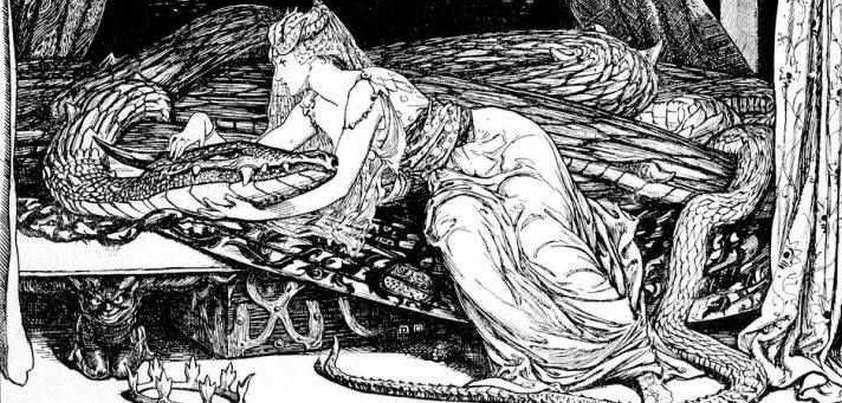 In this Serbian folktale, a young girl stops her rich but cruel father from setting his dogs on three old men who come begging to his door. The old men are not really beggars, but fairies. They foretell that a baby boy in a nearby village will one day own all the rich man’s money and land. The rich man learns this and tries several times to kill the boy. However, he boy survives and the fairies’ prophesy comes true. As a final punishment, the rich man must work forever in a job that is much worse than begging.
 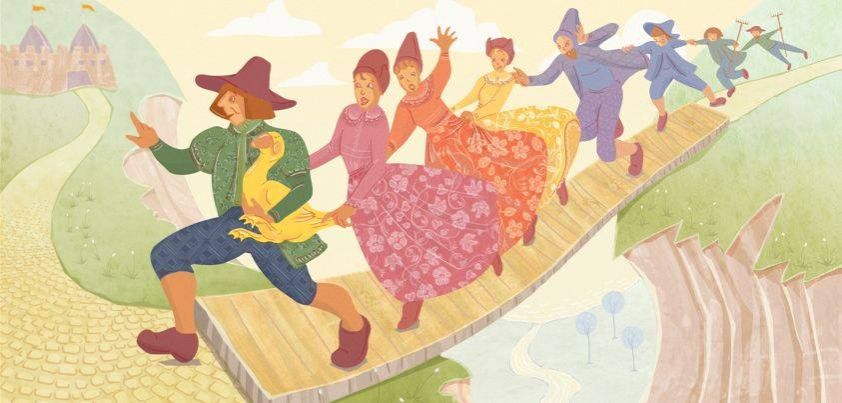 The Golden Goose is about a kind but not very clever young man who one day shares his food with a hungry old man. The old man tells him where to find a goose that has feathers of gold. The goose has a strange power. Those who touch it, and any who touch them, cannot remove their hands. A king, who has a daughter that has never laughed, has promised that she will marry the first man to make do so. The man and goose, with seven people running behind stuck fast to them, look silly enough to do this.
 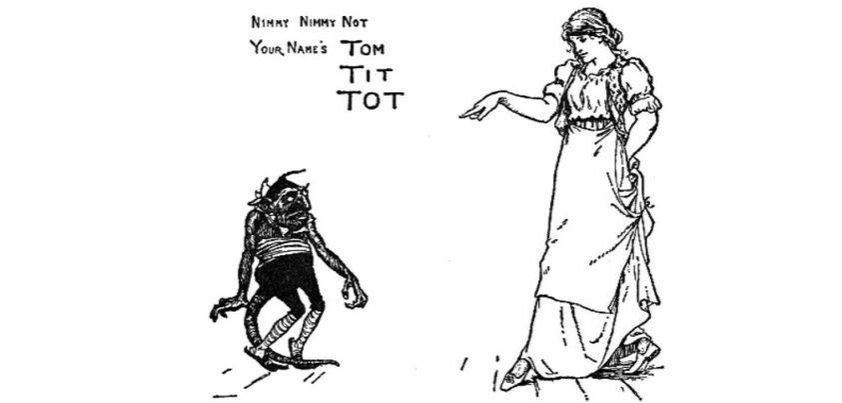 The protagonist in Tom Tit Tot is a lazy girl who doesn’t appear to be good at anything except eating. Her mother lies to the king by saying she is a whiz with the spinning wheel. For some reason this is just the kind of girl the king is looking to marry. The poor girl can’t even spin a top, so in order to avoid losing her head she accepts an offer of help from a small magical creature. As the creature helps the girl, she must try to guess its name. If she can’t, she shall become “its”.
 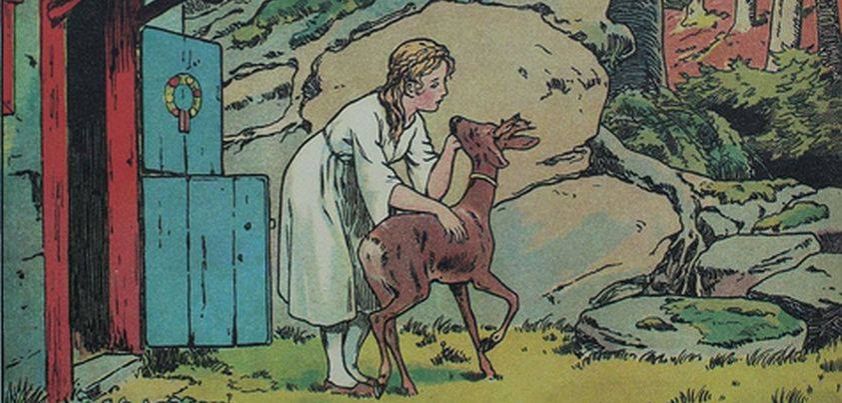 This is a well-known European folktale. A brother and sister run away from home after years of being badly treated by (you guessed it!) their wicked stepmother. The stepmother also happens to be a witch, and the children have some unlikely adventures. The brother is turned into a deer that loves nothing better than to be hunted. The sister becomes a Queen, has a baby, and is murdered by (you guessed it!) the wicked stepmother. Fortunately, the sister’s ghost comes back to life, the brother is made normal again, and they all (except the wicked stepmother) live happily ever after.
 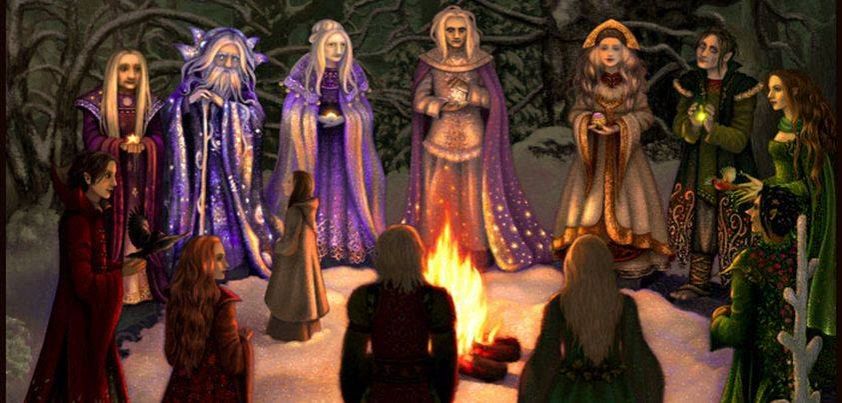 Although this folktale has been called the “Slavic Cinderella”, for me it doesn’t quite get there. We have a young girl persecuted by family and a magical element (the gods of the twelve months of the year) that helps her, but here the comparison ends. There is no ball or special event, no beautiful clothes, and no handsome prince. She falls in love with a kind man and the two spend a blissful life of drudgery taking care of her family farm. As nice as it seems, this is not what most people would call a ‘fairytale’ ending!
 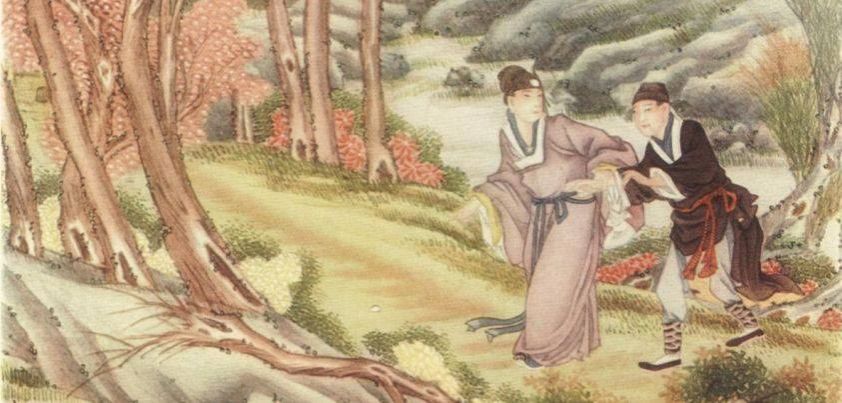 This Chinese folktale tells of two friends who would do anything for each other. One day they decide to go for a walk in a forest. During the walk, the friends see a gold nugget on the path. Unable to decide who should have it, they leave it where it is so as not to cause trouble between them. They later tell a greedy farmer about the nugget. He goes to get it, and becomes angry when he finds something unpleasant in its place. The two friends go back to look, and are well rewarded for their trouble.