
The Heart of a Monkey
 In this Swahili folktale, a monkey accepts the offer of a ride on a shark’s back to see the wonders under the sea. Once at sea, the monkey learns that the real reason for the trip is that the shark king needs a monkey’s heart to cure an illness. The monkey tricks the shark into returning. He then explains the trick by telling a story about a donkey, a hare, and a lion. One of the animals kills another. The third animal cooks it, but tells the killer there is no heart. Can you match the animals to the outcome?
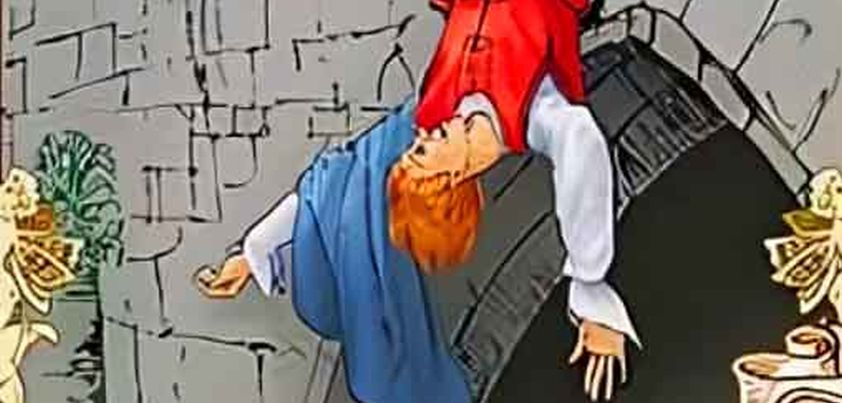 This Irish folktale is about a boy who likes to play tricks on people and wants nothing more than to grow up to be a thief. His mother warns him that if he does become a thief he will be caught one day and hang from the Bridge of Dublin. The boy does some rather terrible things on the way to becoming the most famous thief in the country. Luckily, there is still justice in some folktales and the Shifty Lad is soon lying dead under the Bridge of Dublin… but not for the reason his mother expected.
 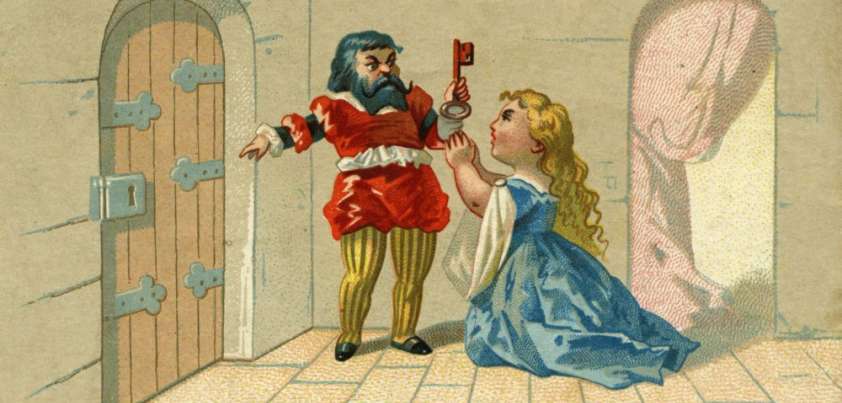 As in real life, many folktales have protagonists who attain riches and/or happiness by questionable means. Bluebeard, Charles Perrault’s serial killing nobleman, obviously deserves his fate. However, it is also hard to see how his last wife, who first rejected him based on his looks, seemingly only married him for his riches, and then betrayed his generosity and trust by entering a forbidden room, deserves a “happily ever after” future. Themes include judging by appearances, greed, vanity, betrayal of trust and justice. One question remains: if the beard made women and girls run away, why didn’t Bluebeard shave it off?
  This folktale from Japan is about a hardworking man who leads a poor but happy life until the day a mountain spirit decides to grant him several wishes. Predictably, his initial wish is for riches. When this does not satisfy, he craves power. He starts with power over man (as a prince), and moves on to power over nature (as the sun, a cloud, and a great rock on a mountainside). He is never satisfied until finally realizing that a humble stonecutter has as much power as anyone or anything on Earth.
 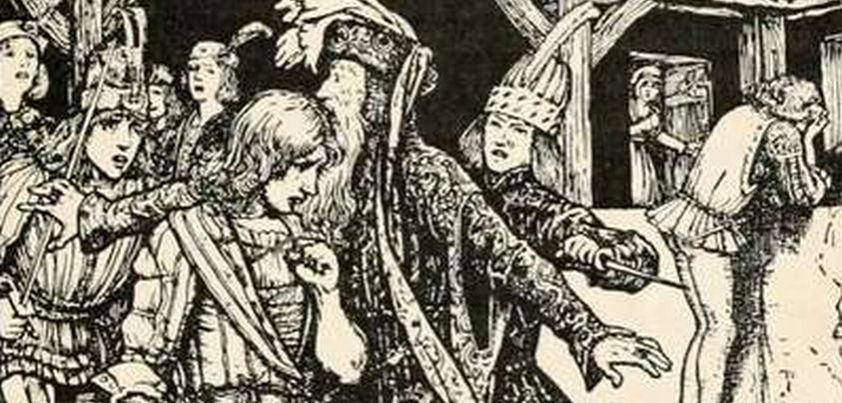 This Portuguese folktale begins with a king learning about an argument between his son and a young nobleman on a tennis court. The prince spoke rudely to the noble, who lost his temper and hit him. Although the king is angrier with his son for not fighting back than the noble, hitting the prince is punishable by death. The only way the noble can save himself is to marry a very ugly, very old woman. As is often the case in folktales, there is a lot of magic around and some surprises are on the way for all involved.
  In this Romanian folktale, a rich man thinks how terrible it would be to die and have to leave all of his money behind. He sets out to find a land where people do not die. Finally, he comes across a country where the word death is unknown. Instead of dying, people simply follow a strange voice and never return. The rich man is sure that he is strong enough to resist the voice. He moves there with his wife and family, only to learn the truth of the English idiom: Nothing is certain in life but death and taxes.
  Most ‘frog’ folktales involve a frog prince or at the very least a male frog. However, in this story from Italy, a female frog makes friends with a young man and helps him keep his mother happy as he searches for a wife. Little does the young man know that his perfect woman is sitting on a rock beside him. Three possible morals: 1) Sometimes we don’t appreciate those around us enough; 2) Often the thing we are looking for is right under our noses; 3) Or how about the English idiom beauty is only (frog) skin deep.
  This Norwegian folktale is about a young man whose poor father sends him out into the world to earn a living. He joins a group of robbers, and is so good at stealing that he becomes their leader. The Master Thief returns home a rich man and decides to marry the Governor’s daughter. In order to marry the girl, he must prove how good a thief he is. This story goes against the English idiom: Crime doesn’t pay. The moral seems to be that crime does pay… but only if you are very good at it!