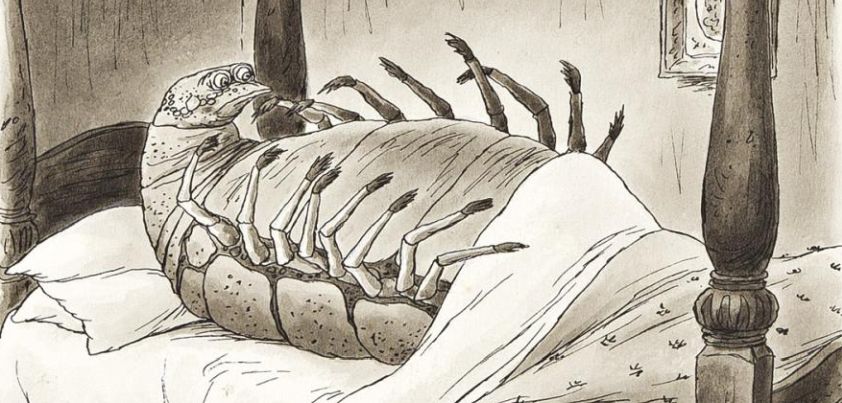
 In this enigmatic story from Franz Kafka, a man who works hard as a traveling salesman to support his parents and younger sister wakes up one morning having metamorphosed into a giant bug. The father brutally confines the man/bug to his room, and for a period he/it is treated with consideration and compassion by the mother and daughter. However, as the family struggles to deal with their new financial situation, he/it gets less and less attention and ultimately suffers a rather cruel end. Themes include family, identity, self-sacrifice, alienation, transformation, isolation, betrayal, and the absurdity of life. More…
All posts by shortsonline
The Country Husband
 Rather than wide-open spaces far from a city, John Cheever’s “country husband” lives on a large block in an upper-class New England suburb. A near-death experience results in a growing awareness of the shortcomings of his way of life. He becomes more demanding and impulsive, leading to a dangerous infatuation with an underage teen, out-of-character behavior that causes his family to become social outcasts, and an argument that almost destroys his marriage. A psychiatrist has an innovative solution. Themes: appearances vs. reality, conformity, isolation, loneliness, lack of fulfillment, materialism, marriage (gender roles/domesticity, lack of communication/intimacy,), sexual fantasy. More…
The War of the Wall
 This story by Toni Cade Bambara is about a wall in an inner city neighborhood in the Southern United States. The wall is special to the local community: old people sit in its shade; children play handball and other games against it. Two boys watch in dismay as a strange and seemingly rude woman from New York begins to paint some kind of mural on the wall. When the woman refuses their demands to stop, the boys make plans to sabotage her work. What she paints changes their mind. Themes include community, rash judgement, rudeness, tolerance, respect, remembrance. More…
Farewell to a Ghost
 Although one of the main characters is a ghost, this story by Manoj Das is not a horror story. An unfortunate ghost in a deserted villa has become an integral part of life in an Indian village. The government plans to demolish the villa to pay its taxes, and the villagers must try to relocate the ghost so that it doesn’t try to resettle in someone’s house. Themes include coming of age, the important role of superstition in traditional village culture, and the impact of modern ideas in changing traditional values and beliefs. More…
Fever
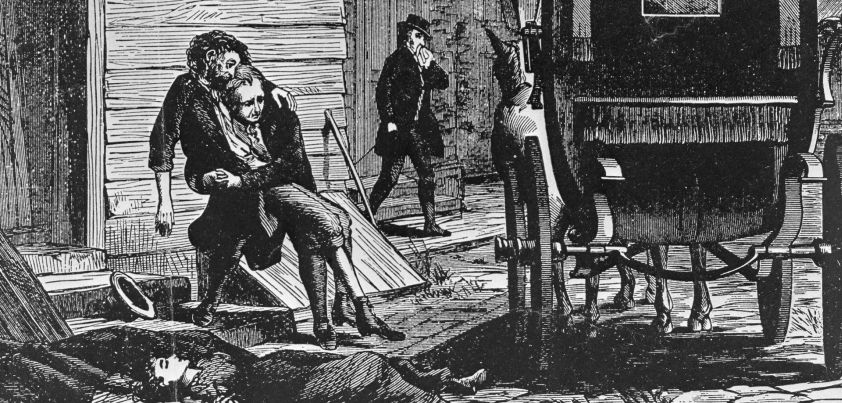 A cursory first reading of this story often leaves students confused. John Wideman’s innovative style involves multiple voices, some of which are not even identified, and randomly traveling both backwards and forwards in time. The grim narrative is prefaced as a tribute to the people (mostly free African-Americans) who heroically nursed the sick and buried the dead during the Philadelphia yellow fever epidemic of 1793. The fever serves as a metaphor for the effects of the story’s main themes (prejudice and racism), which can potentially destroy both victims and perpetrators. Other themes: slavery, fear, suffering, death, despair. More…