Reinterpreted folktales that include events from recorded history play an important part in cultural renewal by helping later generations relate to their heritage. This African-American example from Virginia Hamilton packs a lot into just 1200 words. Its major themes are slavery, cruelty, suffering, Free-dom, and hope. Freedom comes when Toby’s magic words rekindle the forgotten ability of some slaves to fly. For readers not into the supernatural, flying could also be a metaphor for running away or even death. Hope comes in Toby’s call to those left behind to wait for their chance to run. More…
All posts by shortsonline
Saboteur
This story from Ha Jin begins with what appears to be a simple shakedown attempt by two corrupt Chinese policemen. The victim, who should have known better, attracts the attention of onlookers (who do nothing), resists arrest (a bad move) and challenges their station officer’s authority (bringing a weekend locked up in miserable conditions). When forced to “confess”, he faces loss of his reputation, job and wife. On release, he morphs from victim to villain. The original trumped-up charge was sabotage; his act of revenge is more like biological terrorism! Themes: police brutality and abuse of power, injustice, capitulation, revenge. More…
The Color Master
In this folktale-like story by Aimee Bender, a group of artisans skilled in making fine clothing and footwear receive several difficult commissions from a king. The story is a loosely based prequel to the fairy tale Donkey Skin, in which a princess demands three dresses of seemingly impossible color (the sky, the moon and the sun) to avoid having to marry her father. In the process of directing the work, the dying Color Master anoints a successor and, in instructing her to put anger into the creations, saves the princess. Themes include artisanship, succession, faith, unnatural love (incest).
Korea
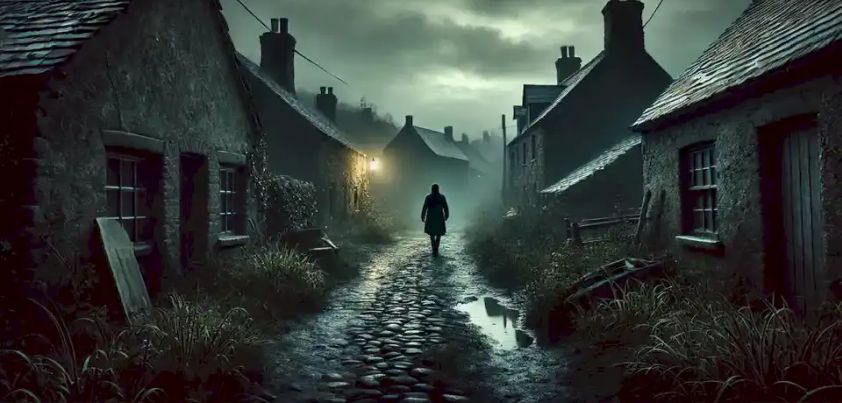
Despite the title, this acclaimed story from John McGahern has almost nothing to do with Korea. Set in Ireland, a father opens up to his teenage son about his traumatic experiences during the War of Independence. He was clearly scarred by them, and may have suffered what we now know as PTSD. The son is about to leave school, and the father encourages him to consider emigrating to America for a better life. The son later learns that what the father is really hoping for is a better life for himself. Themes: war, father-son relationships, desperation, betrayal, coming of age. More…
The Hell Screen
In Ryūnosuke Akutagawa‘s re-working of this 13th century Japanese tale, a cold-hearted, conceited artist considered to be “the greatest in the land” insists upon personally experiencing the scenes he creates. When commissioned to paint a folding screen with a scene from Hell, he is able to complete all but the central image of a beautiful woman burning alive in a nobleman’s carriage. He asks for help from his Feudal Lord, who agrees to stage the event for him. As the artist watches, his emotions range from horror to ecstasy. Themes: hubris, inhumanity, obsession, inspiration in art, innocence, perception of truth. More…