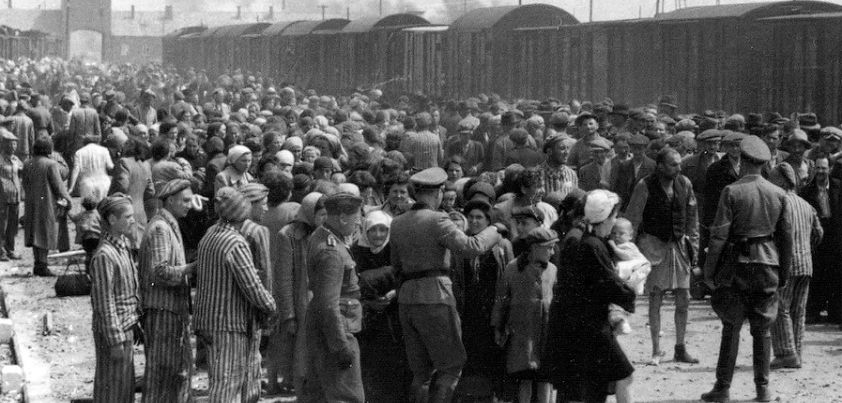
 This almost clinical account of Tadeusz Borowski’s holocaust experiences explores an often overlooked aspect of the so-called “final solution”: how general prisoners forced to assist in sending the condemned to gas chambers became so desensitized to the brutality that many actively participated in it. Because of their access to discarded food and clothing, these men formed the “elite” among the prisoner hierarchy. In camp, their insensitivity to suffering prevailed and many looked down on and showed little compassion for the plight of “less fortunate” fellow inmates. Themes: man’s inhumanity to man, death and suffering, the survival instinct, detachment, guilt, rationalization. More…
All posts by shortsonline
The Minister’s Black Veil
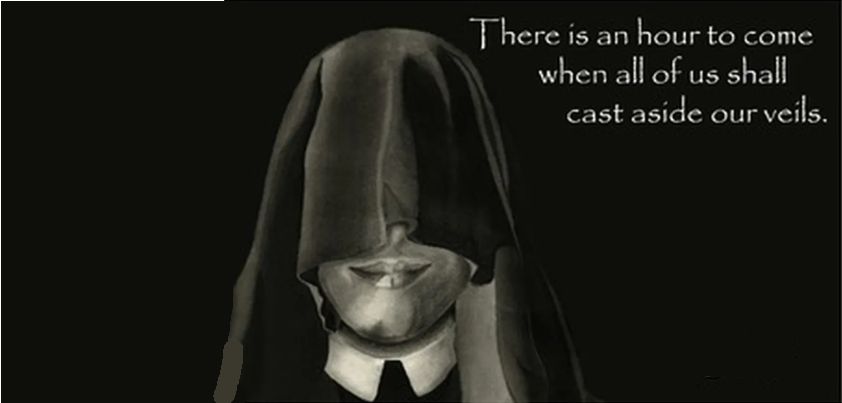 In this Nathaniel Hawthorne story, a church minister frightens and intrigues parishioners by spending most of his life hiding his face behind a black veil. themes include uncertainty (Why the veil?), alienation and loneliness, hidden sins (for which the veil may be a symbol), moral superiority, guilt, fear, and death. Most readers consider the story from the parishioner’s side. However, it is interesting to contemplate how dark the world must look to the minister. Is the veil the equivalent of the dream by a character in another Hawthorne story (Young Goodman Brown): a reminder of the evil in every man? More…
The Offshore Pirate
 Several F. Scott Fitzgerald stories feature spoiled young women from wealthy families who make a sport of manipulating the men around them. Ardita, the flapper protagonist in this romantic adventure, is one of the rudest, most obnoxious of these. A highlight of the story is Fitzgerald’s powerful descriptive language. A disturbing feature for today’s readers is the use of 1920s social and racial slurs in building Curtis Carlyle’s backstory. Major themes include wealth, egotism, rebellion against authority, escapism, racism and class-consciousness. Despite the closing “illustrative” kiss, one wonders if any relationship with Ardita could have a happily ever after ending. More…
The White Horses of Vienna
 This story from Kay Boyle reflects the rise of Austrian Nazism in the early 1930s. Its main characters are an injured doctor (and Nazi sympathizer), his anti-Semitic wife, and a Jewish locum sent to work with them. The story neither condemns nor condones Nazism. A puppet show alludes to the injured doctor’s political ideals; a tale about Vienna’s famed Lipizzaner horses is a metaphor for the fall of the Austrian Empire and the dire economic circumstances that will soon encourage the government to welcome Hitler’s armies. Themes include isolation and natural beauty, family, racism, fascism, activism vs. acceptance. More…
God Sees the Truth, But Waits
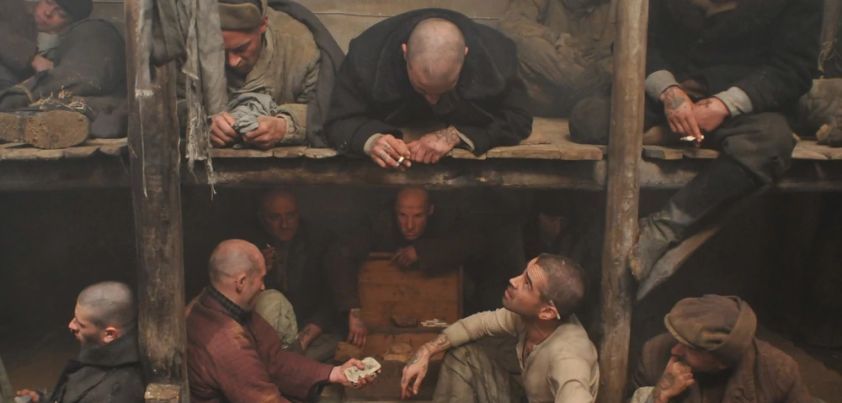 This is one of Leo Tolstoy’s earlier short stories, published between his two epic novels War and Peace and Anna Karenina, and thirteen years before What Men Live By. It has themes of injustice, acceptance, forgiveness and redemption. The protagonist suffers a dramatic fall in worldly terms, which is more than matched by his growth in spiritual grace. The plot was not new. It is a re-working of an almost identical tale from War and Peace related by peasant character Platon Karataev. The novel was written for the Russian nobility; this version was targeted at its common people. More…