 We are presenting these stories from Samuel Clemens (aka Mark Twain) together because, although the characters appear to be opposites, they actually support the same themes: 1) all people have a bad and/or selfish side; and 2) whether good or bad, people don’t always get the reward/punishment they deserve. While the bad boy appears inherently evil, the “good” boy’s motivation is his selfish wish for eternal praise. With its over-the-top sarcasm, the story of the bad little boy has an even more depressing message… bad boys grow into bad men, and the worst of them end up becoming successful politicians! More…
Category Archives: Short Stories
Faith, Love, Time and Dr. Lazaro
 The major themes of this story by Gregorio C. Brillantes are expressed in the title. A country doctor, disillusioned by the suffering of patients and his oldest son’s suicide, has lost faith in religion and become detached from his deeply religious wife and younger son. As the son accompanies him on a late night house call to attend a dying baby, he realizes how out of touch the two have become. Upon their return, he has a momentary epiphany: for things like love, there was only so much time. Other themes include indifference, isolation, duty, father-son relationships, poverty. More…
The Sea of Lost Time
 The seaside town in this story by Gabriel Garcia Marquez is a smelly, unpleasant place. With every incoming tide, the ocean brings garbage and rotting fish. Many people have moved away; the town is dying. Things change when a local man, Tobias, notices something different about the sea breeze. It smells like roses. Weekend visitors begin to arrive. There is music and dancing again. One of the visitors is a strange foreigner with bags of money. He gives it away to people who ‘do things’ for him, and one day shows Tobias the secret of what lies beneath the waves. More…
Poonek
 In this story by Lim Beng Hap, a young man returns to his riverside village in Sarawak after ten years absence at school. The only thing that has changed is that a girl who had been his constant childhood companion has grown into a beautiful woman. When the girl’s father offers her to the young man in marriage, he initially declines. The belief among his people is that refusing such an offer makes him Poonek (likely to suffer a disaster), and he soon has a warning encounter with a crocodile. Themes include tradition, superstition, patriarchy, love. More…
Games at Twilight
 This story from Anita Desai highlights what children did in the evening before the electronic age: played together outside! Although set in India, it could have taken place almost anywhere in the world. A sensitive young boy playing ‘tag’ with his siblings courageously hides out in a dark and threatening shed. He loses track of time and is shattered when he emerges to claim the glory and finds the other children have forgotten about him and moved on. Major theme: the disillusionment that comes with confronting your potential insignificance in the world. Other themes: identity, fear, courage, expectation, disappointment, humiliation. More…
The Storm / At the ‘Cadian Ball
 Kate Chopin’s The Storm is widely considered one of her best stories. As a wild storm rages outside, a farmer’s wife (Calixta) and wealthy plantation-owner who had stopped for shelter (Alcée) engage in wild, stormy sex inside. Although both are married, neither feels guilty about the tryst. Afterwards, Calixta continues family life as normal, though seemingly more contented. Themes: family, passionless marriage, lust. In order to fully understand the characters, it is helpful to read the story’s prequel, At the ‘Cadian Ball. Calixta and Alcée were once infatuated with each other, but class and race differences kept them apart. More…
Dead Stars
 This story by Paz Marquez Benitez is set in a culture and time where honor outweighs love. A young lawyer delays marrying his fiancé for three years because it doesn’t feel right. Although he falls in love with another, he keeps his word, marries the fiancé, and dreams of the other woman for eight years. He likens the dreams to seeing the light of dead stars, long extinguished, yet seemingly still in their appointed places in the heavens. When he sees the other woman again, the light has gone out. Themes: courtship, fidelity, forbidden love, honor, regret, understanding. More…
Through the Tunnel
 This coming of age story by Doris Lessing takes place as a British mother and her eleven-year-old son holiday at a foreign seaside resort. While the mother enjoys their regular “safe” swimming beach, she allows the boy to explore a nearby rocky cove. There, he watches local teenage boys as they dive from rocks and appear to navigate their way through a long underwater tunnel. Determined to match the dangerous feat and prove he is no longer a child, he practices for several days before trying himself. Themes include identity, isolation, independence, determination, courage, self-discipline and self-control. More…
Dr Heidegger’s Experiment
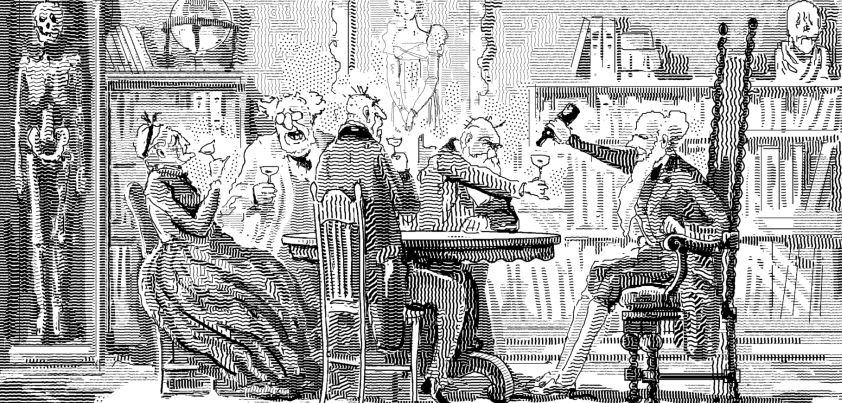 In this story from Nathaniel Hawthorne, an ageing scientist invites four elderly friends to participate in an experiment ostensibly designed to test the efficacy of the waters of the fabled fountain of youth. The inclusion of several supernatural elements clouds whether the effect of the water was real, imagined or faked by substituting alcohol. However, as each friend had a major character flaw in their youth, it is likely that the experiment had a different thesis, which is supported by their behavior after drinking. Themes: ageing, failing to learn from past mistakes, obsession with youthfulness and appearance, the supernatural. More…
Marriage Is a Private Affair
 The major themes of this early story by Chinua Achebe are generational conflict and change/progress. A young Nigerian couple living in 1950s Lagos decide to get married. They are from different ethnic groups, which causes tension with the man’s village-based father. He is from the Igbo ethnic group in which marriages are traditionally arranged by parents and restricted to others within the group. When the couple marry in defiance of tradition, the man’s father cuts off contact. Eight years later, a letter and rainstorm cause him to regret the decision. Other themes: family, tradition, bigotry, gender roles, defiance, pride, remorse. More…
Aftermath
 This story by Mary Yukari Waters deals with several often overlooked aspects of war: its effect on the families of those who don’t return, the resultant scarcity of basic necessities, and the impact of occupational forces on the lives of the loser. In the aftermath of World War 2, a young Japanese mother struggles to deal with the loss of her husband, her young son’s growing Americanisation and dimming memories of his father, and the fundamental shifts taking place in Japanese society. Themes include loss, grief, memory, customs and tradition, motherhood, change. More…
The Enormous Radio
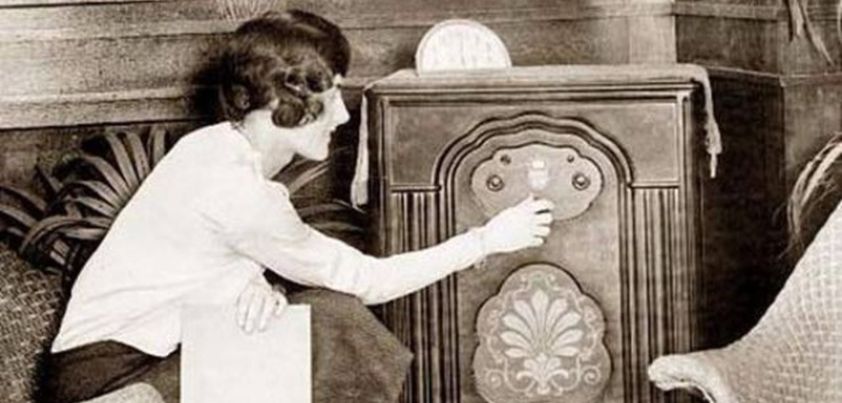 Like many John Cheever stories, the major themes of The Enormous Radio are appearances vs. reality and the myth of urban bliss. Other themes include eavesdropping, obsession, secrecy, smugness, self-delusion and hypocrisy. A seemingly contented couple’s life changes when a malfunctioning radio begins to pick up conversations from people in surrounding apartments. The woman becomes obsessed with listening in and, after learning her neighbors’ secrets about affairs, marital and financial problems, etc., begins to look down on them. This feeling of superiority is soon dashed when her husband points out some unsavory aspects of her own past. More…
The Canal
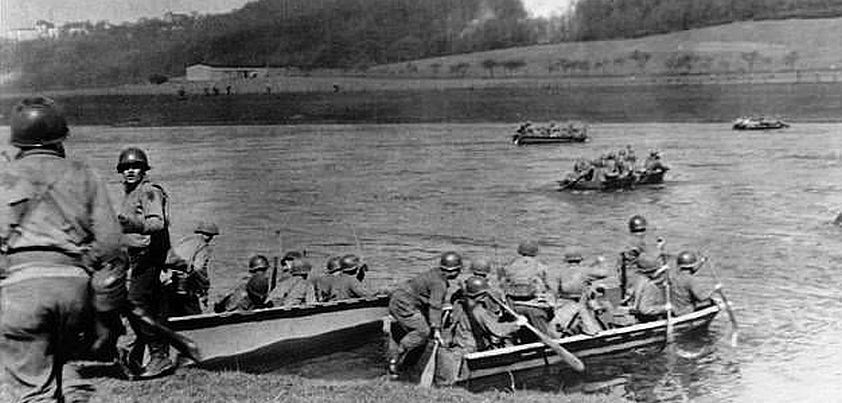 In this story by Richard Yates, two men at a cocktail party learn that their army divisions fought alongside each other during a bloody World War 2 canal crossing. One boasts about his role in the operation; the other is reluctant to share information. As their wives compete to build up their respective husband’s roles in the fighting, readers learn that although the second man performed equally as bravely, due to some mistakes along the way he would rather forget what happened. Themes include memory, conceit, gender roles, glorification of war vs. the reality of war, self-esteem, humiliation and shame. More…
The Guilty Party – An East Side Tragedy
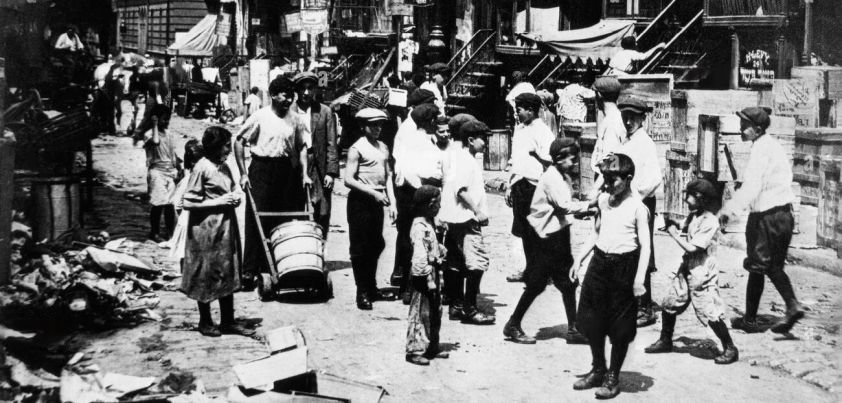 This story by O. Henry takes recent events in America, where parents have been found partly responsible when their child commits murder, to a new level. A young man boasts to friends that he will teach his fiancée a lesson by taking another girl to a dance. The fiancée makes good her promise to kill him if he does, then flees and commits suicide. A heavenly court absolves her of the crime, blaming a red-haired, unshaven, untidy man, sitting by a window reading while his children play in the streets.. Themes include guilt and innocence, parental neglect, love, betrayal, redemption. More…
To the Man On the Trail
 In this Jack London story, a group of Alaskan miners celebrating Christmas greet a stranger warmly. The man is in a hurry. He shares a drink, passes around a picture of his family, and asks to be awakened in four hours to be on his way. Shortly after he leaves, a policeman arrives claiming the stranger had stolen $40,000. The men are initially angry at being deceived. However, when they learn he had only stolen money owed to him, they drink to the stranger’s good luck and “confusion to the police”. Themes include camaraderie, betrayal, morality, wilderness justice. More…
Where I’m Calling From
 This Raymond Carver story describes how a friendship that develops between two strangers attending an alcohol drying-out retreat puts both on the road to recovery. The story’s message is that while acceptance that you have an alcohol problem is an important first step, true recovery begins when you acknowledge the damage it has caused to the lives of yourself and your loved ones, and are prepared to face up to your demons. The story also recognizes that, post-recovery, there is a high likelihood of a relapse. Themes: substance abuse, alienation, loneliness and the need for human connection, self-awareness, fear, hope.
Gooseberries
 For me, the major theme of this philosophical story by Anton Chekhov (the nature of happiness) is conveyed through the symbolization of the plateful of gooseberries. This can be expressed in two seemingly conflicting idioms: one man’s (Ivan’s brother’s) sweet taste of success can leave a sour taste in someone else’s mouth. Put Chekhov’s way, complete happiness shouldn’t exist because it requires contributing to and/or being indifferent to the suffering of others; true fulfillment in life only comes from doing good. Other themes: obsession, greed, ego, class, isolation, mortality, city vs. country life, the beauty of nature. More…
Beware of the Dog
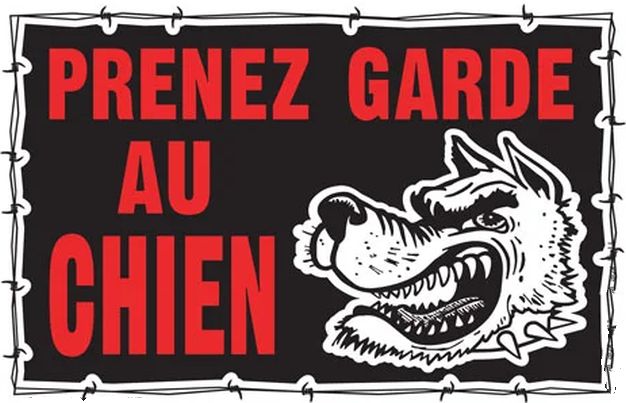 This story by Roald Dahl opens with a World War 2 fighter pilot trying to get his badly damaged plane back to England. As he muses about how stoically he will tell his ground crew that he has lost a leg, he is forced to bail out. He wakes up, his injuries already treated, in hospital. He is initially relieved to learn that he had landed in Brighton. However, over the next twenty-four hours, he gradually realizes that something is wrong. Themes: war casualties, courage, determination, deception (looks can be deceiving), duty.. More…
The Man with the Rose
 In this story by Manuel Rojas, an evangelical priest is predictably dismissive when a man says he has “black magical” powers. The man begs to be put to the test, claiming that, if locked in a room for an hour, he can retrieve any distant object the priest nominates. The priest’s orderly view of the universe is shattered; not only when the man hands him a unique rose he requested from a Santiago convent, but also by what he saw when he unlocked the door and crept into the room twenty-five minutes early. Themes include religion, disbelief, disillusionment, the supernatural. More…
The Cow of the Barricades
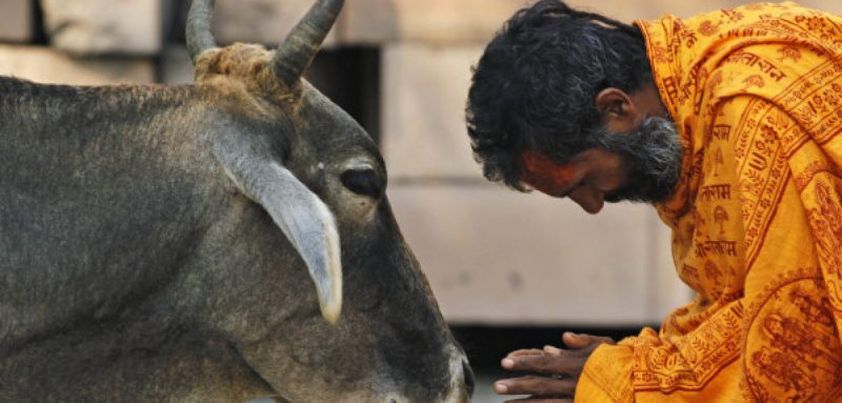 This story from Raja Rao takes place during India’s struggle for independence from British rule. It highlights two major aspects of the conflict: the people’s desire for self-government, and the division within the people between those who supported Gandhi’s directive of passive resistance and those who advocated violent confrontation. The symbol of Gandhian resolution is a revered cow (a holy animal in Hindu culture) which, like many such advocates over the years, is martyred for the cause after leading a crowd of peaceful protesters to barricades as fighting is about to begin. Themes: independence, faith, nonviolent resolution of conflict. More…
The Quilt / Lihaaf
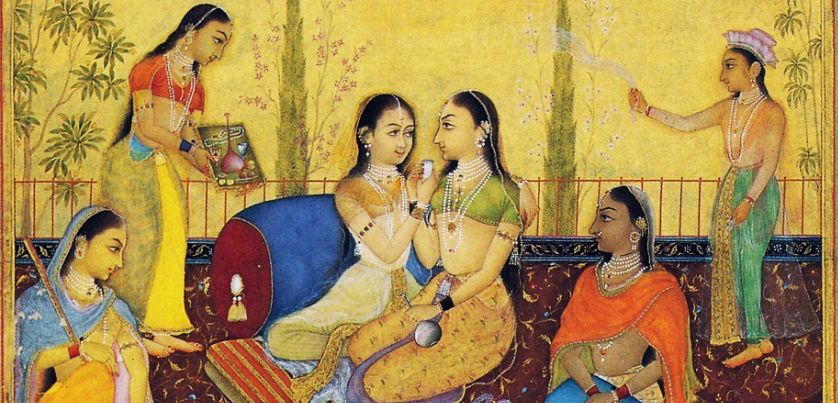 In this story by Ismat Chughtai, a mother leaves her young daughter in the care of her adopted sister. The sister’s husband spends his time entertaining young, fair and slim-waisted boys, while she spends her day being “attended to” by a personal servant/masseuse who also shares her bed. The girl, who sleeps in the same room, is frightened by what seemingly goes on under her aunt’s quilt. Disturbingly, when her aunt’s servant is away for a few days, she tries to groom the girl for the role. Themes include patriarchy, sexuality, female desire and fulfilment, child grooming and sexual abuse. More…
Stones in My Passway, Hellhound on My Trail
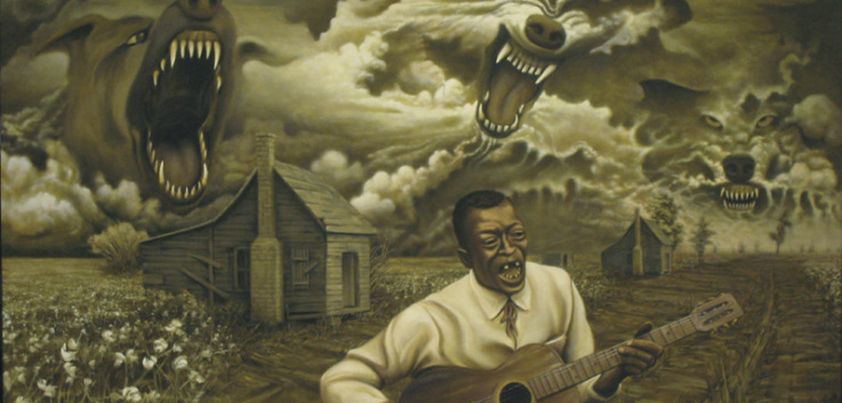 This story from T. C. Boyle is a fictionalized account of the last night in the life of American blues musician Robert Johnson. Although heralded today as a master of the blues, he received little acclaim while alive and led an itinerant, poorly disciplined life. A rumour circulating at the time was that Johnson had sold his soul to the devil in exchange for musical prowess. The story suggests that it was a jilted woman, rather than a hellhound collecting the devil’s due, that brought about his demise. Themes include death, fate vs. free will, music, self-indulgence and jealousy. More…
The Scarlet Ibis
 This tragic story from James Hurst contrasts the innocent outlook of a physically challenged boy with the pride and cruelty of his older brother. It is as if the older boy has two younger brothers: the imaginative storyteller that he clearly loves, and the disabled boy he is ashamed to be associated with. In an effort to mould Doodle to meet his expectations, he pushes the poor lad to a point where his heart can no longer bear the strain. Themes: the beauty and power of nature, acceptance vs. desire to change others, love vs. shame, cruelty, death, regret. More…
Jacklighting
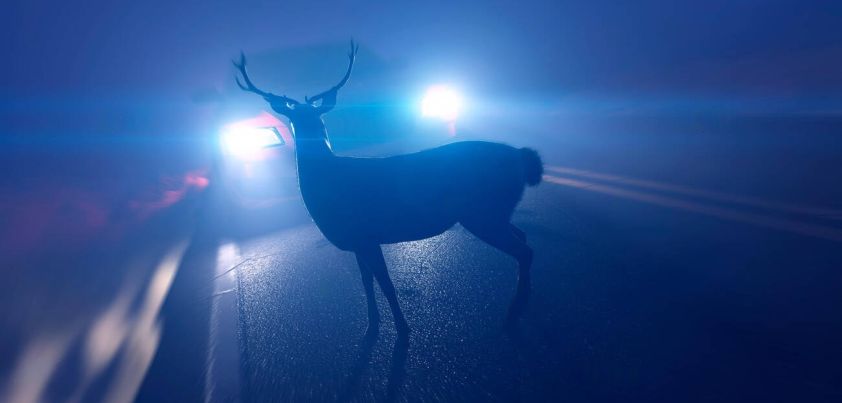 In this story by Ann Beattie, a troubled couple who have travelled from New York to Virginia each year to visit a free-spirited friend and his brother on his birthday, make the trip once more on the birthday following his death. The trip is ostensibly to comfort the friend’s brother. Ironically, although each of them clearly loved the dead man and is in need of closure, they suppress their feelings and do not even talk about him. Themes include friendship, the burdens and unpredictability of life and death, death as relief from suffering, grief and mourning. More…
Here We Are
 This story by Dorothy Parker comprises a dialog between a young newlywed couple traveling by train to their honeymoon destination. It is clear that both are nervous, and that their relationship has hitherto been platonic. The bride appears particularly insecure, and challenges several things her new husband says as indications that he doesn’t care for her, her family, and her taste in fashion. She is looking for affirmation of his love, which he provides, and deflecting thoughts of what they both know will happen that evening. Themes include marriage, innocence, communication, insecurity, jealousy, embarrassment, sex. More…
Because My Father Always Said He Was the Only Indian Who Saw Jimi Hendrix Play ‘The Star-Spangled Banner’ at Woodstock
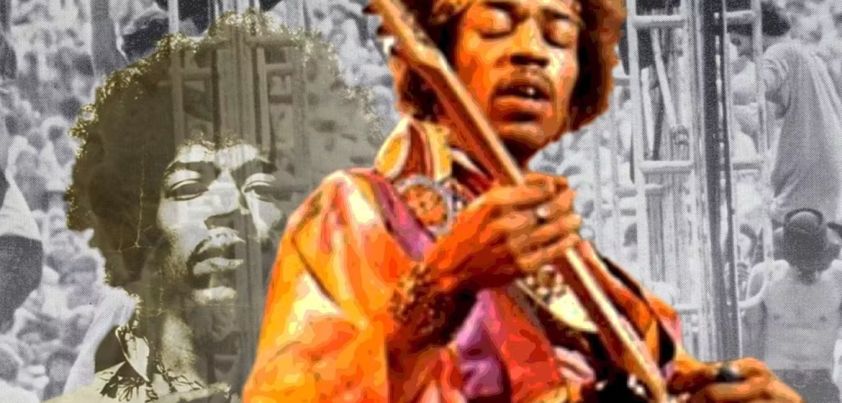 In this story by Sherman Alexie a Native-American boy recalls the good and not-so-good times before his father rode off on his motorcycle, never to return. His father led a rebellious early life, spent two years in prison, visited Woodstock, and came home a heavy drinker. The relationship between his parents was volatile, alternating between alcohol induced arguments and lovemaking. The boy’s father had difficulty opening up and music, especially the titular song, was an important catalyst for communication between them. Themes include father-son relationships, war (in all contexts), alcoholism, marriage breakdown, abandonment, memory, the power of music. More…
The Ones Who Walk Away From Omelas
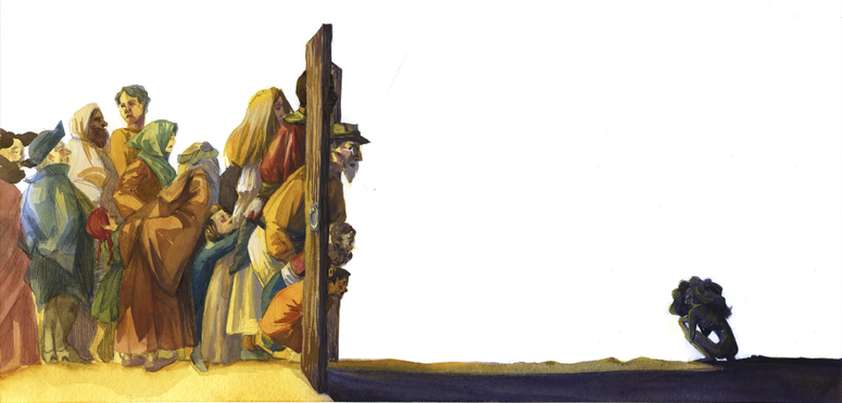 This philosophical narrative by Ursula Le Guin describes life in the seemingly utopian city of Omelas. We learn that almost everyone in the city lives in complete happiness. There is no organized system of rule, few laws, sexual freedom, no crime, no violence, and nobody living in want. Sadly, there is a blight on this “paradise”. For happiness to prevail, a single child must live in absolute misery, locked up alone in an underground cell. Themes: morality and moral compromise (the price of happiness), victimization, complicity (collective knowledge = shared responsibility), guilt, courage (the ones who “walk away”). More…
The Gold-legged Frog
 In this touching story by Lao Khamhom, a Thai farmer must leave his dying son in the hands of faith-healers and herbalists to grovel in front of local officials for a 200 baht government handout. He gets the money but, contrary to what other villagers say, it’s not his lucky day. Major themes are the harshness of nature on farming communities, and the abuse of power by the Thai authorities of the day (the late 1950s) in dealing with them. Other themes include family, poverty, suffering, helplessness, survival, superstition, social class, and “luck”. More…
The Boarded Window
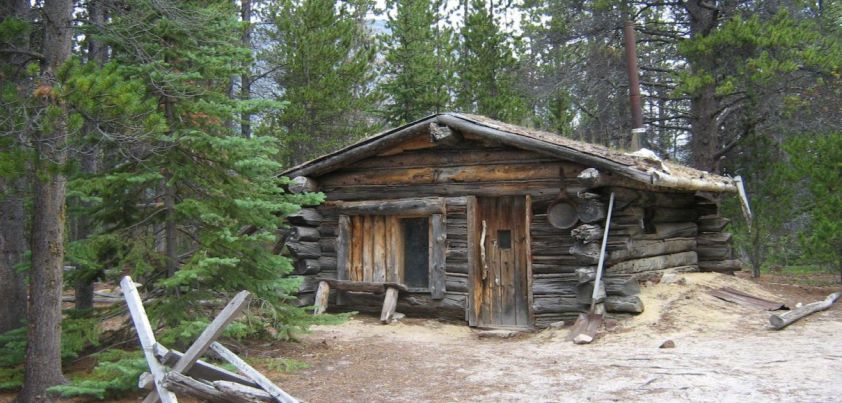 In this short gothic horror story from Ambrose Bierce, a boarded window symbolizes a grieving and possibly PTSD affected man’s desire to shut himself off from the outside world. Murlock shows no signs of traditional mourning over his wife’s passing, so his decision to live as he does could well result from a sense of shame and/or guilt over his part in her death. As we have only his version of the night’s events, it could even be that (with or without a panther) his wild shot was the reason for her throat wound! Themes: isolation, death, shame/guilt, loneliness. More…
Karma
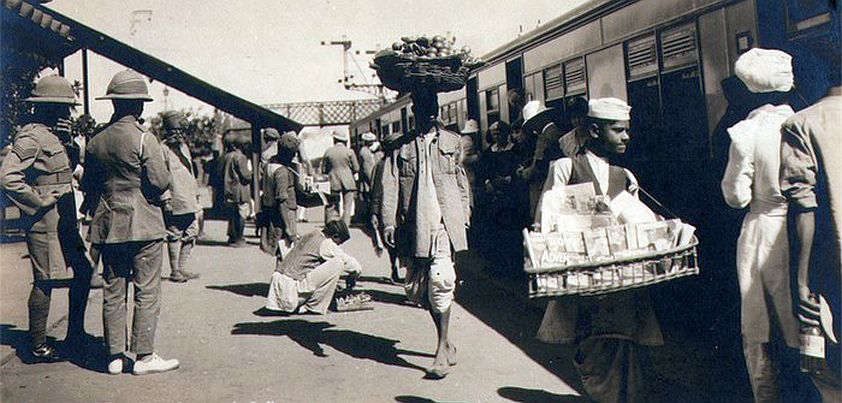 Sir Mohan Lal, the pretentious high-ranking Indian official in this story by Khushwant Singh, is caught between two cultures. After rejecting his heritage and aspiring to identify with the British ruling class, he cannot escape his “Indian-ness”. His self-important behaviour is contrasted with that of his wife, who he treats with disdain but passively accepts her lot. Ironically, his humiliating treatment on a train (being unceremoniously thrown out of his first class carriage by two drunken British soldiers) highlights the dark side of the world he aspires to. Themes include identity, cultural alienation, social class, colonialism, narcissism, prejudice, humiliation. More…
A Sound of Thunder
 What is the most dangerous thing about time travel? According to this story by Ray Bradbury, it is doing some small thing that may change the future. Five men travel back in time to hunt a T-Rex. One of them panics when he sees the monster and steps off a specially prepared path. Because of this, they return to a very different world. The last thing the clumsy hunter hears is a sound of thunder. Themes include arrogance, cowardice, the dangers of technology, connections between past and present, democracy vs. dictatorship, the ethics of game hunting. More…