The Wave

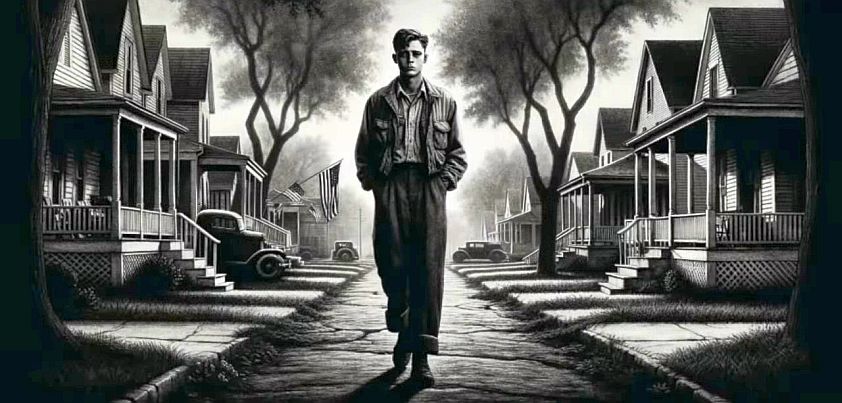
The Wave: Short story by Liam O'FlahertyThe only “characters” in this vignette from Liam O’Flaherty are a cliff, waves, and “the wave”. Major themes include permanence, time, the power of nature/many. O’Flaherty was a noted Republican, and the story can be looked upon as a powerful allegory of Ireland’s struggle for independence. The cliff (Britain) stands firm and resolute, having successfully weathered many storms over its long history. Individually, the smaller waves (the Irish people) make little impression against its rocky walls. Working together, and combining to form “the wave”, they have enough power to begin breaking down the mighty cliff.

Continue ReadingThe Wave

The Two Brothers and the Gold

The Two Brothers and the Gold: Short story by Leo TolstoyIn this story by Leo Tolstoy, two devout brothers who have dedicated their lives to helping the needy react very differently to finding a heap of gold. One leaps aside and runs away; the other takes it into town and puts it towards building and provisioning an asylum for widows and orphans, a hospital for the sick, and a hospice for the poor and pilgrims. Returning home penniless after basking in the praise of the townspeople, he is castigated by an Angel for allowing himself to be corrupted by the devil. Themes include religion, selflessness, brotherly love, temptation, hubris.

Continue ReadingThe Two Brothers and the Gold

The Bread of Salt

The Bread of Salt: Short story by N. V. M. GonzalezIn this coming-of-age story by N. V. M. Gonzalez bread of salt (pan de sal), a popular Filipino food, symbolizes the racial, social and economic divide between a working-class teen with big dreams and the Spanish plantation owner’s niece with whom he is infatuated. Embarrassed when she catches him pilfering delicacies leftover after a banquet, he finally comes to terms with the reality of his position. He throws the delicacies away, and on the way home stops to buy some pan de sal. Themes include family, naivety, unrequited love, social and economic class, shame, disillusionment.

Continue ReadingThe Bread of Salt

Oh, Whistle and I’ll Come To You, My Lad

Oh, Whistle and I'll Come To You, My Lad: Short story by M. R. JamesIn this story by M. R. James, a colleague asks a young university professor to scope out some monastic ruins for a possible archaeological dig while away on a golfing holiday. As he investigates the area near what would have been the altar, he finds an artificial cavity in the masonry that contains an ancient bronze whistle with strange inscriptions. He was originally unhappy that the only available room in his hotel had two beds but this proves fortunate, providing the terrifying personage he “whistles up” a place to spend the night. Themes include fear, agnosticism, the supernatural.

Continue ReadingOh, Whistle and I’ll Come To You, My Lad

The Vane Sisters

The Vane Sisters: Short story by Vladimir NabokovReaders often need to re-visit this Vladimir Nabokov story several times to grasp the nuances of the plot. The major characters are the haughty, misogynistic, first-person (and therefore unreliable) narrator and two sisters, one of whom strongly believes in the occult. Like other Nabokov stories, secret codes are involved. The acrostic message hidden in the final paragraph leaves readers wondering how much of the story came from the spirits of the then dead sisters. Themes include unfulfilled love, death, mourning, and interconnections (between memory and imagination, past and present, the real and spiritual worlds).

Continue ReadingThe Vane Sisters

A Chip of Glass Ruby

A Chip of Glass Ruby: Short story by Nadine GordimerSome people see this Nadine Gordimer story as primarily an anti-apartheid tale. For me, the main theme is exemplified in Yusuf’s “aha moment” when he finally understands why his wife is not like the others. Gordimer shows apartheid for what it is by contrasting those behind it with an extra-ordinary, ordinary woman who doesn’t want anybody to be left out (people without somewhere to live, hungry kids, boys who can’t get educated) and cares enough to put herself at risk by doing something about it. The absence of a denouement in the story suggests that her fight isn’t yet over.

Continue ReadingA Chip of Glass Ruby

In the Withaak’s Shade

In the Withaak's Shade: Short story by Herman BosmanLike a number of Herman Bosman‘s Oom Schalk Lourens stories, In the Withaak’s Shade is a satire of the life of Bushveld Afrikaners embellished in the form of a “tall tale”. It tells of a farmer’s unlikely encounter with a leopard as he was lying down under a withaak tree while busily searching for some lost cattle. Several of Bosman’s common themes (storytelling and the indolence, independence and mateship of the Boer landowners) are obvious. Two others (the mass hysteria that follows the reported sighting, and destruction of wildlife) are not.

Continue ReadingIn the Withaak’s Shade

The Twelve Months

The Twelve Months: Slavic folktale from Josef BaudisAlthough this folktale has been called the “Slavic Cinderella”, for me it doesn’t quite get there. We have a young girl persecuted by family and a magical element (the gods of the twelve months of the year) that helps her, but here the comparison ends. There is no ball or special event, no beautiful clothes, and no handsome prince. She falls in love with a kind man and the two spend a blissful life of drudgery taking care of her family farm. As nice as it seems, this is not what most people would call a ‘fairytale’ ending!

Continue ReadingThe Twelve Months

Han’s Crime

Han's Crime: Short story by Shiga NaoyaThe crime referred to in this fascinating psychological narrative by Shiga Naoya is either murder or manslaughter. A theatre performer (Han) kills his wife during a knife-throwing act. At the end of questioning, the judge asks: Do you not feel the slightest sorrow for your wife’s death? Han answers: None at all! …I never could have imagined I would feel such happiness in talking about her death. The judge (and readers) must decide if the death was a crime or terrible accident. Themes: illegitimacy, infanticide, toxic marriage, conscious vs unconscious actions, legal vs moral guilt, doubt vs certainty.

Continue ReadingHan’s Crime

Usher II

Usher II: Short story by Ray BradburyFirst published in 1950 as Carnival of Madness, this story by Ray Bradbury is also included in his anthologies The Martian Chronicles and The Illustrated Man. A wealthy book-lover, angry about destruction of his extensive library because of fantasy and horror story censorship on Earth, builds a look-alike version of Edgar Allan Poe’s House of Usher on Mars. He invites prominent book-banners to a party at the house, where they meet different Poe-inspired ends. Themes include censorship vs. personal freedom, the importance of speculative fiction, the danger of excess political correctness, zealotry (in this case, taking a protest too far!)

Continue ReadingUsher II