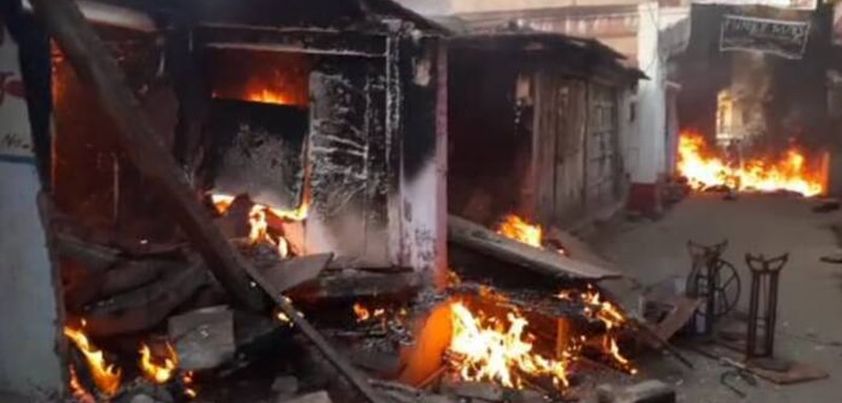
 This story by Saadat Hasan Manto takes place during the rioting that followed India’s Partition. Set in an “Indian” border town from which most Muslims have fled, an elderly judge underestimates the carnage to come and insists on staying. After a stroke, he becomes bed-ridden and is unable to flee. Every night, his seventeen-year-old daughter watches Muslim houses burning in the city around them. When a Sikh man repays a kindness the judge had once done for his father, we learn the reason their house has (so far) been spared. Themes include religious conflict, denial, fear, innocence, duty, betrayal. More…
Archives
Toba Tek Singh
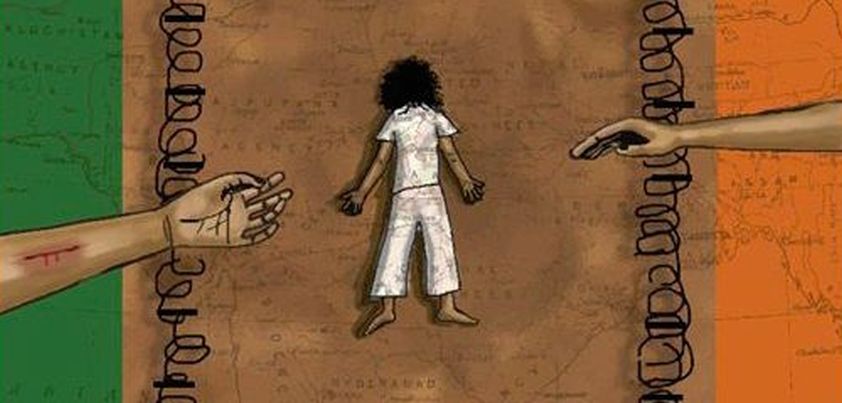 This month marks the 75th anniversary of the partition of British India into two countries: Hindustan and Pakistan. Some years ago we featured Rajinder Singh Bedi’s Lajwanti, a Partition story from an Indian viewpoint. In honor of the occasion, we are pleased to provide this story from the Pakistan side by controversial writer Saadat Hasan Manto. This is not your usual Partition story of mass displacement and violence. Instead, it is a clever satire of the governments of the two countries, as reflected in a decision several years later to exchange institutionalized lunatics. Themes: insanity, separation, religious segregation, nationality, confusion, belonging. More…
The New Constitution / Naya Qanun
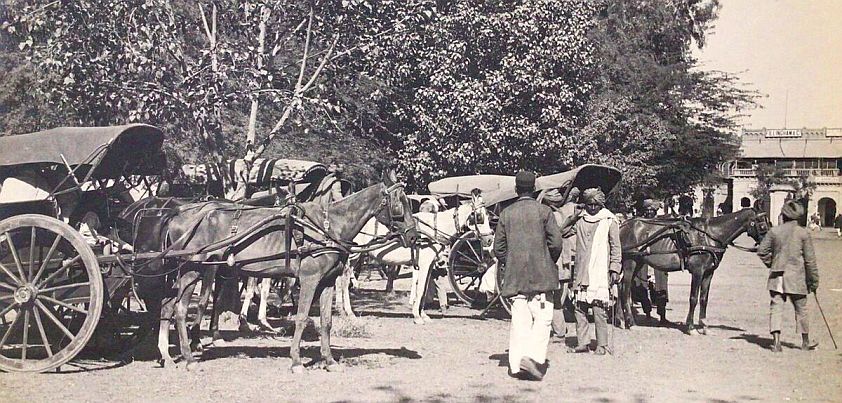 A message of this story by Saadat Hasan Manto is to make sure you fully understand something you overhear before acting on it. An illiterate tongawala [coachman] learns about the world by eavesdropping on customers. Over several days, he overhears talk of a new “India Act”, which he misinterprets to be a new constitution that will free India from British rule. Having developed a hatred of the British for subjugating and exploiting his country, he is excited by the “news”. Unfortunately, acting on it lands him in jail. Themes include colonialism vs. freedom and self-determination, excitement, hope, disillusionment. More…
The Dog of Tithwal
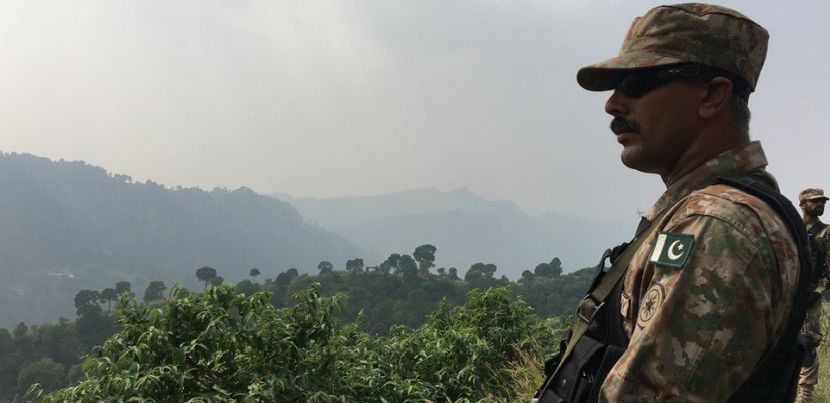 This story from Saadat Hasan Manto takes place during the first Indo-Pakistan (Kashmir) War, which commenced just two months after the 1947 formation of the two countries. The war was a form of “Mexican standoff”. This is reflected in the plot, where soldiers break their boredom with occasional shots towards the enemy camp that have no chance of hitting anyone. The treatment and killing of Jhun Jhun for “refusing” to take sides is symbolic of the suffering of civilians caught up in the conflict. Themes: natural peace and harmony vs. mankind’s propensity for violence, futility, innocence, distrust, cruelty, human suffering. More…
Open It / Khol Do
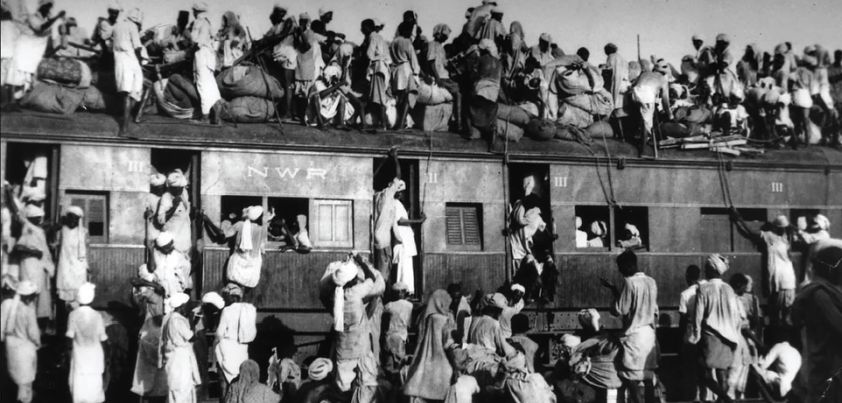 Set in the aftermath of India’s Partition, this story by Saadat Hasan Manto highlights how a total breakdown in law-and-order led to many predatory attacks against women. A father, separated from his seventeen-year-old daughter as they fled after his wife was disembowelled in front of them, desperately searches for her in a refugee camp for Indian Muslims evacuated to Pakistan. Some camp volunteers agree to look for the girl. They are successful, but do not return her. When found, her corpse displays a shocking conditioned reflex. Themes include displacement, chaos, gendered violence, depravity, fatherly love, despair. More…
Smell / Bu
 In this story by Saadat Hasan Manto, a refined Indian man sees a factory worker sheltering under a tree outside his apartment during a rainstorm. He invites her up to dry off and, consensual or otherwise, they have sex. As she spends the night he notices that every part of her body emits an at once foul and sweet-smelling odour. This enchants him so much that sex with other women, including the henna-smelling upper-class wife he marries years later, is less satisfying. Themes include social class/ethnicity, exploitation (rape?), promiscuity, sensuality, smell as an agent for memory and desire. More…