 Although this story by Ivo Andrić describes the building of a famous Bosnian bridge, it is more about the two men responsible for its construction: a Grand Vizier who had recently emerged victorious from banishment and commissioned it as a tribute to his birthplace, and the meticulous master builder who completed it. Although the Grand Vizier was one of the most powerful men in the Ottoman Empire, the banishment experience had left him so insecure and isolated that he suffered delusions and decision-making paralysis. Themes include dedication, creative anxiety, political intrigue, isolation, fear, the transience of life and happiness. More…
All posts by shortsonline
The Catbird Seat
 Set in 1940s New York, this story by James Thurber is a not-so-gentle satire of the lengths to which desperate people will go to resist change. A meek, solitary man believes the brash efficiency expert brought in to streamline his employer’s workflows threatens his job and must be “rubbed out”. He plans what he considers an almost perfect murder, only to be thwarted at the last moment by lack of a weapon. Fortunately, in a moment of inspiration, he turns the tables and puts himself in the “Catbird Seat”. Themes: workplace gender stereotypes, alienation, change, insecurity, desperation, revenge. More…
The Ultimate Safari
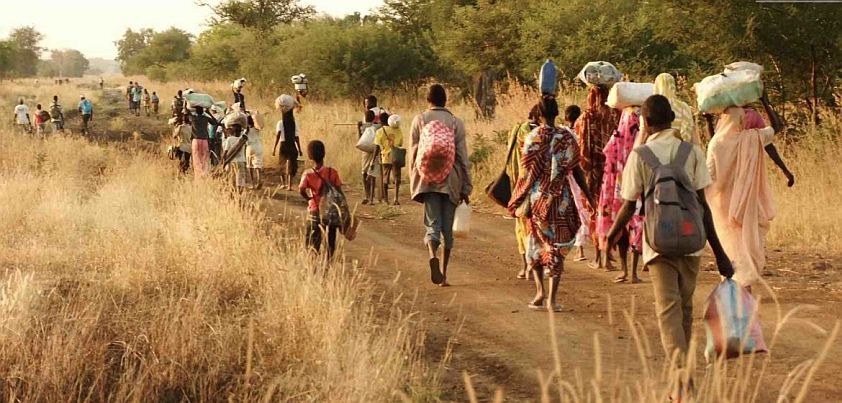 Set during the Mozambican Civil War, this story from Nadine Gordimer follows a family as they undertake an arduous journey to a South African refugee camp through Kruger Park. The story is told through the eyes of a nine year-old girl who understands little about the war other than that her father is away fighting for the government. Following her mother’s disappearance while buying cooking oil, the rest of her family join a group of other displaced villagers for the dangerous 40-mile (65 km) trek through the park. Themes include family, war, loss, lawlessness, displacement, fear, endurance, hope. More…
Snow
 Although this Alice Adams story has little action, a lot is achieved. A middle-aged man initially questions his decision to create a “diversion” for his first meeting with his daughter’s lesbian lover in the form of a weekend skiing trip with his girlfriend. Talking in their isolated cabin that night, the three women reveal things about themselves that not only bring the man closer to his daughter and girlfriend, but also help him understand his initial feelings (jealousy) toward his daughter’s partner. Themes include fatherhood, sexuality, deception, sexual assault, teenage pregnancy, jealousy, love. More…
The Garden of Forking Paths
 The themes of this story from Jorge Borges are order vs. disorder, time, and sacrifice. An ancient Chinese scholar gave up everything to write a book and create a labyrinth. No one could understand the book or find the labyrinth until a modern day sinologist solved the mystery. The book is the labyrinth; it argues that time is not linear, but a starting point for an infinite number of paths. A descendant of the scholar murders the sinologist. This has nothing to do with the book, but rather a cause he doesn’t believe in. More…