Featured Stories

(See top menu for all 1,500+ stories}

For Esmé with Love and Squalor

For Esmé with Love and Squalor: Short story by J. D. SalingerJ. D. Salinger’s Esmé is a precocious, orphaned teenage girl whose friendship and compassion help a young American soldier deal with the horrors of war. Salinger’s characterization of the soldier (Staff Sergeant X) in the second part of the story suggests first-hand experience with PTSD. This was misunderstood at the time, as reflected in the comment from Clay’s girlfriend: nobody gets a nervous breakdown just from the war and all. She says you probably were unstable like, your whole goddam life. Major themes: youthful innocence, the brutality of war and its effect on mental health, loss, humanity and hope.

Continue ReadingFor Esmé with Love and Squalor

The Fence

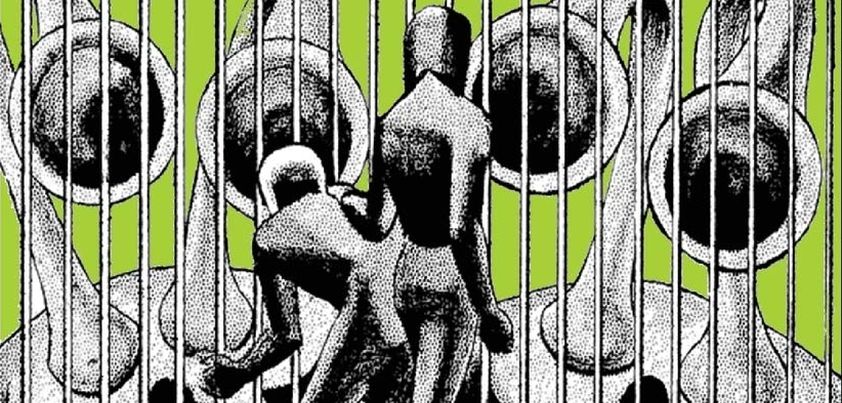
The Fence: Short story by Hamsad Rangkuti This story from Hamsad Rangkuti is an allegory of the biblical concept do unto others as you would have them do unto you. Many people are uncomfortable interacting with those who are different or less fortunate. Their solution is to establish social boundaries (fences) that block concerns about them from their lives. The story’s message is two-fold. First, no fence offers complete protection. Second, as exemplified by the vagrant gang, the mere existence of such a fence can bring about the result it is intended to prevent. Themes: (the mother) fear, lack of compassion, selfishness; (the father) kindness, sharing, faith.

Continue ReadingThe Fence

Pigeon Feathers

Pigeon Feathers: Short story by John UpdikeJohn Updike’s Pigeon Feathers is a web of conflicts and satire. The central conflict is thirteen-year-old David’s crisis of faith, which he ultimately resolves through an epiphany born out of bloody violence. David’s questioning leads to conflict with the family church minister, who dismisses his concerns by inanely equating Heaven to the “goodness” of Abraham Lincoln. Unresolved conflicts include country vs. city living, and the organic (the land has a soul) vs. chemical (the earth is nothing but chemicals) farming debate between David’s parents. Themes: environmentalism, aging and death, family, isolation, spirituality, science vs. religion, the wonder of nature, faith.

Continue ReadingPigeon Feathers

Marriage Is a Private Affair

Marriage Is a Private Affair: Short story by Chinua AchebeThe major themes of this early story by Chinua Achebe are generational conflict and change/progress. A young Nigerian couple living in 1950s Lagos decide to get married. They are from different ethnic groups, which causes tension with the man’s village-based father. He is from the Igbo ethnic group in which marriages are traditionally arranged by parents and restricted to others within the group. When the couple marry in defiance of tradition, the man’s father cuts off contact. Eight years later, a letter and rainstorm cause him to regret the decision. Other themes: family, tradition, bigotry, gender roles, defiance, pride, remorse.

Continue ReadingMarriage Is a Private Affair

In Paris

In Paris: Short story by Ivan BuninIn this story by Ivan Bunin, a well-to-do, middle-aged Russian exile becomes “animated” for the first time in years when he encounters a sophisticated Russian waitress in a Paris restaurant. Both live in isolation and solitude, having fled their homeland for supporting the wrong side in the Russian Civil War. A date at the cinema predictably leads to a steamy romance. The woman moves in with the man, but it is not until the tragic final paragraph that readers can appreciate how much she loved him. Themes include loss, isolation and loneliness, sexuality, love, mortality, despair, a community in exile.

Continue ReadingIn Paris

The Frog

The Frog: Italian folktale from Andrew LangMost ‘frog’ folktales involve a frog prince or at the very least a male frog. However, in this story from Italy, a female frog makes friends with a young man and helps him keep his mother happy as he searches for a wife. Little does the young man know that his perfect woman is sitting on a rock beside him. Three possible morals: 1) Sometimes we don’t appreciate those around us enough; 2) Often the thing we are looking for is right under our noses; 3) Or how about the English idiom beauty is only (frog) skin deep.

Continue ReadingThe Frog

The Open Window

The Open Window: Short Story by H. H. Munro (aka Saki)This story by Saki satirizes the social obligations imposed upon the middle and upper classes by late-Victorian/Edwardian etiquette. A pompous hypochondriac is holidaying in a peaceful country village as treatment for a nervous condition. He doesn’t like visiting strangers, but does so as a courtesy to his sister who has written letters of introduction to people she knows there. During one such visit, an imaginative fifteen-year-old girl plays an innocent practical joke on the neurotic man, causing him to run from her house in horror. Themes include social conventions, perception (appearance vs. reality), gullibility, escapism, deception.

Continue ReadingThe Open Window

America and I

America and I: Short story by Anzia YezierskaIn this semi-autobiographical story, Anzia Yezierska begins by outlining her expectations of life in America as a young Russian immigrant in the late 1800s. Instead of a land of acceptance, equality and opportunity, she experiences alienation, exploitation and poverty. Although her situation improves as she develops English proficiency and vocational skills, her factory job is not satisfying. Fortunately, the study of American history leads to the revelation that her adopted country is a world still in the making, and helps her find a fulfilling purpose in life. Themes include innocence, poverty, immigration and cultural diversity, assimilation, opportunity, fulfilment.

The world, and America’s need for unskilled migrants, has changed. Yezierska laments the fact that America was unable to tap the human and cultural potential of many other immigrants of her day. Sadly, the poor woman would turn in her grave if she knew how far off the mark the idealistic prediction expressed in her last paragraph has proved to be.

Continue ReadingAmerica and I