Featured Stories

The Bunyip

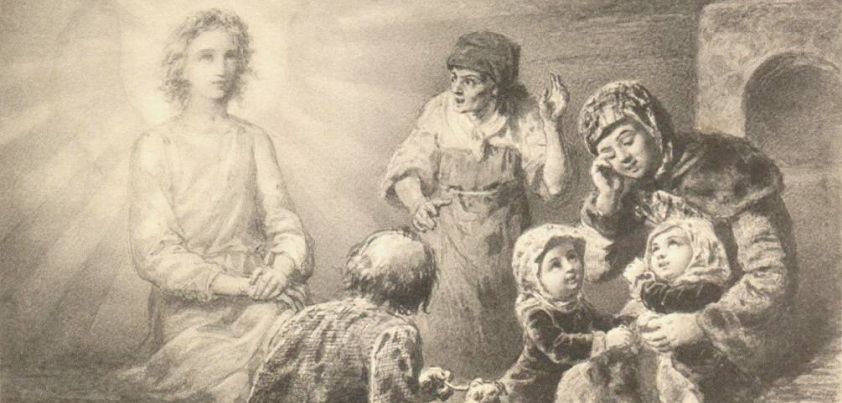
The Bunyip: Australian Aboriginal Myth from Andrew LangFolklore is full of stories of fierce mythical creatures. North America has Bigfoot or the Sasquatch, Nepal and Tibet have the Yeti, and Australia has the Yowie/Yahoo and water-dwelling Bunyip. Bunyip sightings have been reported since the early days of settlement, and today’s story is one of the first literary accounts of the creature. A foolish aboriginal hunter tries to kidnap a Bunyip cub, secure in the knowledge that he can out-run its clumsy mother on land. He learns too late that the mother has magic powers that will change his people forever.

Continue ReadingThe Bunyip

Victory Over Japan

Victory Over Japan: Short story by Ellen GilchristToday we are featuring the trilogy of “Rhoda” stories from Ellen Gilchrist’s short story collection Victory Over Japan. In the titular first story, set in the final days of World War 2, Rhoda is a willful third-grader living in fear of when her disciplinarian father returns home from the war. In the second story, Music, she is a rebellious fourteen-year-old, obsessed with beauty and romance and constantly at war with her father. In the final story, The Lower Garden District Free Gravity Mule Blight or Rhoda, a Fable, she is a lost thirty-four-year-old at a crossroads.

Continue ReadingVictory Over Japan

Death in Venice

Death in Venice: Novella by Thomas MannThis Thomas Mann classic is renowned for its masterful psychological profile of Aschenbach, a jaded, aging writer who develops an unhealthy infatuation with a fourteen-year-old-boy during a Venetian holiday. Although the novella’s central theme (homosexuality) is no longer controversial, other aspects of the story (pedophilia and stalking) certainly are. Sympathy for Aschenbach is greatly diminished when, out of selfishness, he decides not to warn the holidaying boy’s family about a deadly epidemic being covered up by authorities. Many readers see Aschenbach’s fate as just punishment for his actions. Other themes: art and the artist, alienation, obsession, depravity, death.

Continue ReadingDeath in Venice

The Crooked Man

The Crooked Man: Short story by Charles BeaumontSet 500 years in the future, this story by Charles Beaumont envisions a dystopian world where homosexuality is the norm, heterosexuality is not only frowned upon but illegal, and children are tube-born and machine-nursed. Although the male protagonist is strongly attracted to a young woman, both struggle to deal with physical contact due to their social conditioning. As they cannot show affection in public, she disguises herself and they meet in a sleazy “men only” bar. In the end, she gets what she came for and his concerns are resolved. Themes include oppression, prejudice, sexual orientation, depravity.

Continue ReadingThe Crooked Man

Muffin

Muffin: Short story by Susan Cooper“Bullying” has been around since the first humans left their caves and formed hunter/gatherer groups. The problem in dealing with it, as in this story from Susan Cooper, is the power gap that often exists between perpetrator and victim. Set during the Blitz of World War Two, the story’s protagonist (a persecuted schoolgirl) tries striking back. As is often the case, this only makes things worse. A kindly old lady witnesses an assault and offers to help. When the poor woman dies in the bombing, an unlikely friend becomes the girl’s protector. Themes: bullying, kindness, sharing problems, offering help.

Continue ReadingMuffin

Weight

Weight: Short story by John Edgar WidemanIn this story by John Edgar Wideman, a writer calls his mother and reads her a draft of a story he has written. It opens with the metaphor My mother is a weightlifter, and goes on to admire the way she has shouldered so many burdens throughout her life. She is not impressed. Two days later, she dies. As he reflects on the call he realizes it wasn’t the story that upset her, but his opening words: This is about a man scared he won’t survive his mother’s passing. Themes include motherhood, love, racial inequality, suffering, strength, dependence, grief, fear.

Continue ReadingWeight

The Metaphor

The Metaphor: Short story by Budge WilsonIn this coming-of-age story by Budge Wilson, a seventh-grade girl flourishes under a flamboyant English teacher. Inspired by the teacher, she learns to endure problems at home by writing metaphors. Four years later, she has the same teacher in high school. The unruly tenth graders constantly humiliate the poor woman, who has difficulty coping. Rather than acknowledge their past or offer thanks for her help in seventh grade, the girl ignores her. When the teacher dies in a tragic after-school accident, the devastated teen copes with her guilt by writing a metaphor. Themes include identity, peer pressure, guilt, self-realization.

Continue ReadingThe Metaphor

Cell One

Cell One: Short story by Chimamanda Ngozi AdichieSome websites describe Nnamabia, the young protagonist in this story by Chimamanda Ngozi Adichie, using terms such as ‘a wayward, rebellious son’. This is treating him too kindly. At the beginning of the story, Nnamabia is an entitled, spoiled, manipulative brat… too weak-willed to resist imitating the petty thefts of his peers, yet so cowardly that the only person he is game enough to steal from is his mother. Although he did not deserve the punishment he received at the hands of the so-called Nigerian justice system, he learnt some important lessons and came out of it a man.

Continue ReadingCell One