The Bloody Chamber

The Bloody Chamber: Short story by Angela CarterIn Angela Carter’s titillating re-telling of Charles Perrault’s Bluebeard a wealthy, three-times widowed French nobleman marries a seventeen-year-old virtuoso pianist and rushes her away to his secluded castle for a “honeymoon”. When browsing the library, she is shocked to discover his penchant for sadistic pornography. After a passionless consummation that satisfies his desire to have married a virgin, he lays a deadly trap designed to end the marriage. While he is away on business, the woman’s dark newborn curiosity springs the trap, which leads her into his bloody chamber. Themes: manipulation, sexual awakening, depravity, loneliness, curiosity, violence, death.
Continue ReadingThe Bloody Chamber

The Snow Child

The Snow Child: Short story by Angela CarterIn this story by Angela Carter, a dominating Count riding along a snowy road with his wife wishes aloud for a beautiful girl. When the naked “child of his desire” miraculously materializes, the Countess plots to be rid of her. Two failed attempts result in the Countess’s furs and boots springing to the girl, leaving her naked. The third attempt succeeds. When a prick from a rose kills the snow child, the Count’s masculinity and dignity are stripped away as he weeps while defiling her body. Themes include patriarchal power, objectification of women, lust, jealousy, humiliation, depravity (necrophilia).

Continue ReadingThe Snow Child

The Werewolf

The Werewolf: Short story by Angela CarterAlthough the beginning of this Angela Carter “wolf tale” resembles the Charles Perrault children’s story Red Riding Hood things soon take a very different turn. A wolf loses a paw, grandma is missing a hand, and the villagers show their bravery by beating the old woman to death. Carter uses foreshadowing and omissions in the storyline to leave readers with a question: Was the grandmother really a witch/were-woman, or was the “good child” one of those northern country people with a cold heart mentioned in the opening sentence?. Themes include female empowerment, self-reliance, courage, betrayal?, superstition, mob violence.

Continue ReadingThe Werewolf

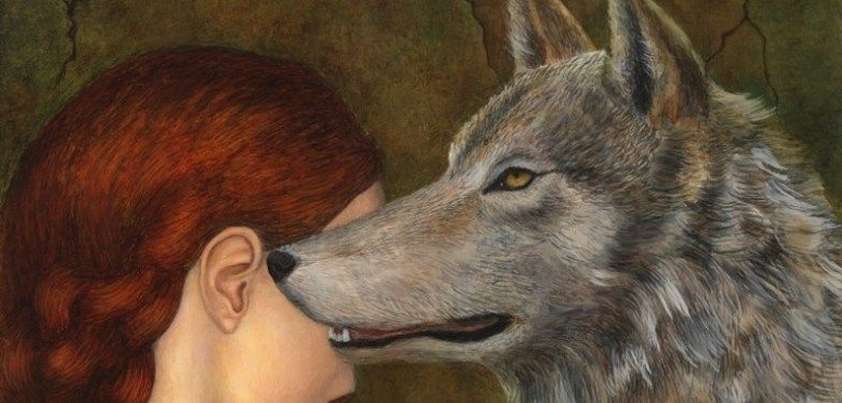
The Company of Wolves

The Company of Wolves: Short story by Angela CarterThe early part of Angela Carter’s Company of Wolves comprises background and several anecdotes which build anticipation and atmosphere. The main story, which doesn’t start until one-third of the way through the text, is an adult-oriented adaption of Charles Perrault’s children’s story, Little Red Riding Hood. Carter expands on Perrault’s original theme (beware of strangers) through eroticism. Rather than ending up in the wolf’s stomach, the girl uses her feminine wiles to “tame” him. Her additional themes include objectification and the innate power of women, virginity and female sexual awakening, violence, seduction, transformation.

Continue ReadingThe Company of Wolves

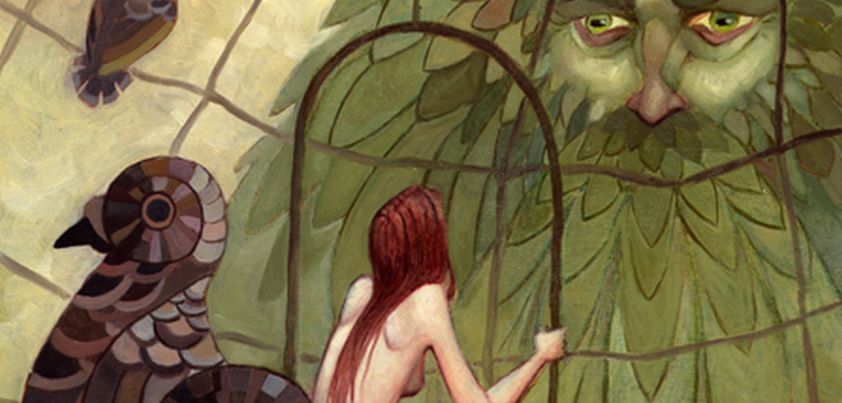
The Erlking

The Erlking: Short story by Angela CarterThis “fairy-tale” by Angela Carter is derived from a European myth. A magical being living in harmony with nature seduces young women traveling through his forest domain. The women are powerless to resist. When he tires of one, he transforms her into a bird, cages her, and adds the cage to a collection of similar cages adorning the walls of his house. The protagonist, sensing her fate, decides that the only way to free herself and his “bird” collection is to do away with him. Themes include connectedness to nature, the supernatural, power and objectification, sexuality, entrapment, liberation.

Continue ReadingThe Erlking

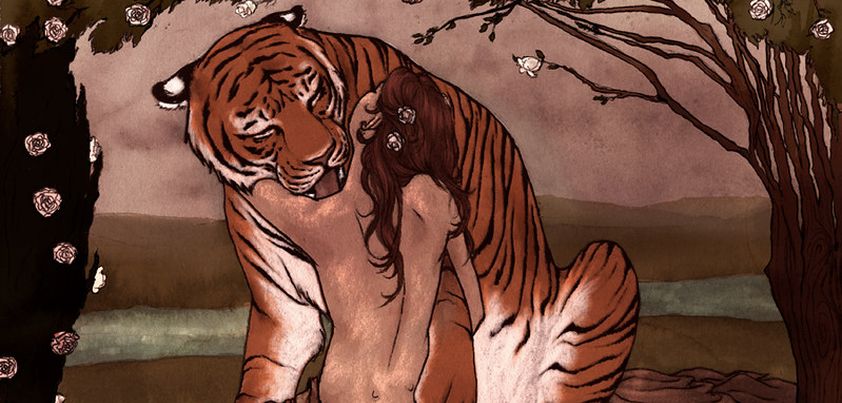
The Tiger’s Bride

The Tiger's Bride: Short story by Angela CarterIn Angela Carter‘s feminist retelling of the Beauty and the Beast fairytale, the heroine turns the tables on “La Bestia”. A beautiful girl’s father bets and loses her to the Beast in a card game. At the Beast’s castle the girl is asked to do something she considers shameful, in return for which she would be released undamaged and her father’s gambling losses returned. She feels a moment of power when her refusal hurts the Beast, but eventually makes a life-changing decision. Themes include gambling addiction and greed, objectification and the innate power of women, sexuality, shame, acceptance, transformation, liberation.

Continue ReadingThe Tiger’s Bride