Featured Stories

The Kitemaker

The Kitemaker: Short story by Ruskin BondThe major themes of this Ruskin Bond story are change and the isolation/loneliness of the aged. An old man in a once rural Indian village lays back and reflects on his life as a professional kitemaker and how much the world has changed. The village’s traditional social structure, sport of adult kite flying, open spaces, and once close community spirit are no more. His only joy in life is spending time with and making kites for his grandson. A torn kite carried by the wind far above the city symbolizes release of his soul. Other themes: tradition, nostalgia, pride, mortality.

Continue ReadingThe Kitemaker

A Night in the Hills

A Night in the Hills: Short story by Paz Marquez BenitezThis story from Paz Marquez Benitez deals with something many people caught up in a routine job or coming to a crossroads in life go through: dreaming of escape to an alternative, seemingly more appealing lifestyle. City-based Gerardo has always dreamed of living in the countryside. Recently widowed, he accompanies a friend to inspect some newly opened public land. After a single night in the jungle, he decides that life “in the hills” is not as appealing as he had imagined. Themes: imagination (the grass is always greener), city vs. country life, discontent, enlightenment, acceptance.

Continue ReadingA Night in the Hills

Filboid Studge

Filboid Studge: Short story by H. H. Munro (Saki)This story is from Saki is a spoof on modern advertising. A businessman who had invested all his money into a failed breakfast food requests help from an impoverished artist who wants to marry his daughter. The artist gives the product an unappetising name and promotes it with a poster of celebrities in Hell clamouring for the unpalatable dish “they cannot buy now”. Sales take off, and the businessman sells the company and marries his daughter to someone a “vast deal higher” than the hapless artist. Themes include despair, the power of advertising, branding (appeal to duty/guilt), social class, ingratitude/betrayal.

Continue ReadingFilboid Studge

The Birthmark

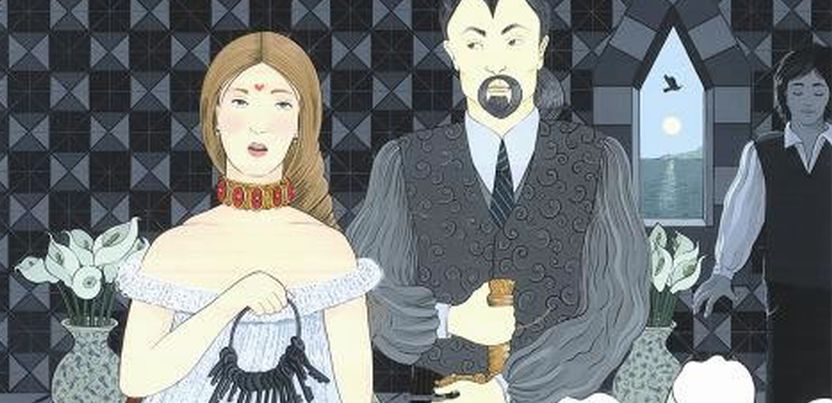
The Birthmark: Short story by Nathaniel HawthorneIn this story by Nathaniel Hawthorne, a brilliant scientist takes a break from his work to marry a woman of nearly perfect beauty. Her one “blemish” is a small hand-shaped birthmark on her left cheek. Much of the scientist’s work has involved (often unsuccessfully) trying to manipulate the laws of Nature. As he begins to obsess over the frightful birthmark, his wife agrees to allow him to remove it… even if it costs her life! The story’s message: the folly of pursuing human perfection; no one is flawless. Themes: perfection, obsession, hubris, religion, gender roles, submission/sacrifice, science vs. nature, mortality.

Continue ReadingThe Birthmark

The Piece of String

The Piece of String: Short story by Guy de MaupassantThis Guy de Maupassant story involves a frugal farmer whose reputation is forever tarnished after a rival falsely accuses him of finding and failing to return a lost pocketbook. Sadly, he is the victim of a stereotype about “Norman craftiness”. No matter how much he protests that he picked up a piece of string, and even in the face of another peasant coming forward with the pocketbook, nobody will believe him. This weighs so much on the proud man’s mind that he wastes away to an early death. Themes: false accusations, stereotyping, injustice, pride, obsession with image/reputation.

Continue ReadingThe Piece of String

Tickets, Please

Tickets, Please: Short story by D. H. LawrenceThis story by D. H. Lawrence is a humorous take on gender dynamics during World War 1 after a disproportionate number of women entered the workforce to replace men sent to war. It deals with a group of hardened women (they fear nobody, and everybody fears them) working as tram conductors in England’s industrial Midlands. When a womanizing ticket inspector takes advantage of one too many of the conductors, they join forces and exact sweet revenge. An important (feminist) theme of the story is exploited women finding their collective “voice”. Other themes include power, desire, passion, rejection, vengeance and rage.

Continue ReadingTickets, Please

A Day Goes By

A Day Goes By: Short story by Luigi PirandelloFirst time readers of this narrative from Luigi Pirandello may find it confusing until the last few paragraphs. The story is an allegory of life, contracted into a single day. The day begins as the disoriented protagonist is unceremoniously cast out of a train carriage into the dawn, and ends with him lying on his deathbed surrounded by his children and grandchildren. Themes include alienation (not knowing oneself, lack of self-confidence, exclusion); identity (what makes us who we are – clothes, occupation, recognition, money, possessions, family); and time (the speed at which life appears to have passed as we age).

Continue ReadingA Day Goes By

The Eye

The Eye: Short story by Paul BowlesIn this story from Paul Bowles, a long-term expatriate living in Tangier investigates the death of a fellow expatriate he has never met. The man died from an apparent digestive illness, suspected to be the result of gradual poisoning. Rumor among the expatriate community blamed his night watchman, who had both motive (a reported legacy) and opportunity (he had replaced the original cook, purportedly with a relative). The narrator’s investigation suggests that rather than murder, the dead man was the victim of a ritual healing gone wrong. Themes: expatriate lifestyle (paranoia, detachment, idle gossip), isolation, superstition, criminality vs. fate.

Continue ReadingThe Eye