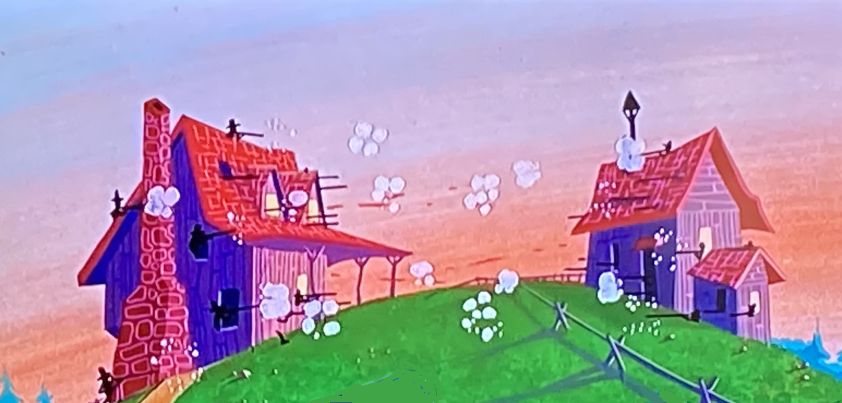
 A motif of this classic Western by John Fox, Jr. could well be the scheming nature of women. A neighbor misled the community as to Becky’s virtue to win her boyfriend Jim’s heart; both women manipulate the men around them to maintain their “honor”; a missionary uses the threat of a deathbed curse to force the reluctant neighbor to seek Becky’s forgiveness; and, based on the smile on Becky’s face when she dies, her words of forgiveness may have been feigned to make sure that she will “git thar” [where Jim is] first. Themes: deception, hate, lawless violence, forgiveness, superstition. More…
Désirée’s Baby
 Kate Chopin’s Désirée’s Baby Kate Chopin’s Désirée’s Baby reflects the culture of America’s ‘Deep South’ in the mid-1800s. The name Désirée originates from the French word for desire. Armand Aubigny, a young plantation owner who is proud, bigoted and harsh on his slaves, marries the orphaned Désirée for her beauty. He is not concerned about her unknown background until she has a mixed-race baby. His reaction causes Désirée to run from the house and flee with the baby into the bayou. Some weeks later, Armand uncovers an even more devastating secret. Themes (see below) include love, impulsiveness, racism, elitism, shame and/or vindictiveness, and identity. More…
The Three Hermits
 In this story by Leo Tolstoy, a bishop of the Roman Orthodox Church schools three devout hermits seeking salvation by living alone on a deserted island in reciting the Lord’s Prayer. He claims that although that their own prayer ‘Three are ye, three are we, have mercy upon us.’ encompasses the essence of Christianity, it is insufficient to please God. The bishop is humbled and admits his mistake when they miraculously follow him by gliding across the sea, having forgotten the words. Themes include humility and devotion, religious dogma vs. faith, the nature of prayer. More…
What Men Live By
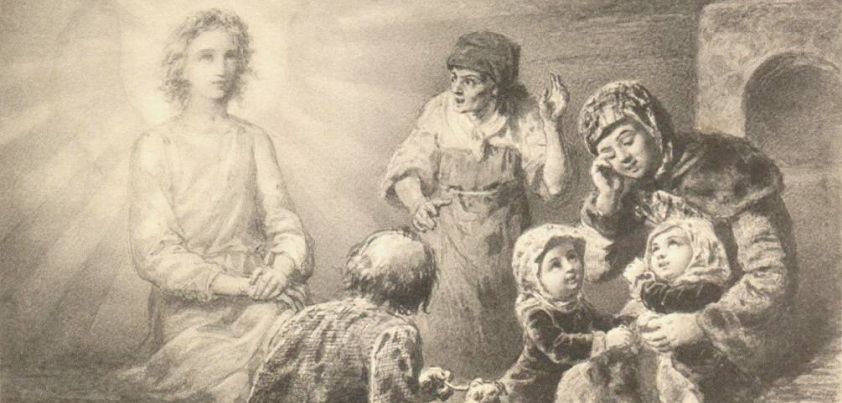 In this story by Leo Tolstoy, God punishes a disobedient angel by casting him out of Heaven to live as a man. The only way he can get his job back is to learn the answers these questions: What dwells in man? What is not given to man? and What (do) men live by? He learns the answers from the family of a poor but compassionate shoemaker, an imperious rich man, and a kind, charitable woman who has adopted the two orphaned children of a dead neighbor. Themes: humanity, compassion, kindness, arrogance, duty, death. More…
An Outpost of Progress
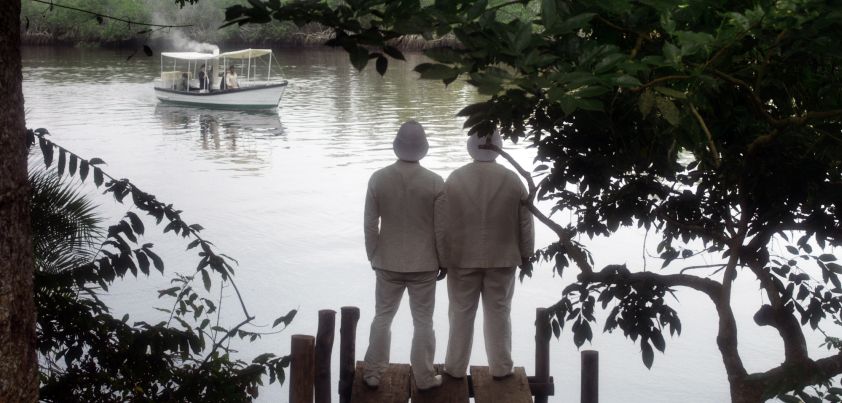 Joseph Conrad’s major theme in this story is the hypocrisy of colonialism. Motivated by greed, the bumbling administrators of a remote African trading post rationalize their activities by talking about the sacredness of the civilizing work, and the merits of those who (go) about bringing light, and faith and commerce to the dark places of the earth. They denigrate the local tribesmen, but make no effort to learn their language or customs. Ironically, being cut off from civilization results in their moral, physical and mental decline to an even lower level of savagery. Themes: colonialism, greed, slavery, isolation, madness. More…