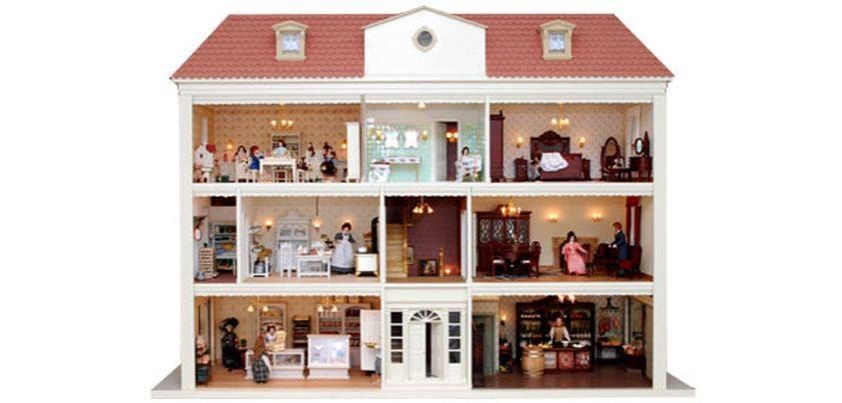
 Today we are featuring two stories from New Zealand: The Doll’s House by Katherine Mansfield and its sequel, The Washerwoman’s Children, written in celebration of Mansfield’s centenary by Maori writer Witi Ihimaera. In the first story, a family friend gives a magnificent doll’s house to the children of a well-to-do family. Their mother allows them to invite all but two of the girls at their school to come and see it. These girls (sisters) are shunned and teased by the other children because of their mother’s lowly job. Themes: imagination, class, prejudice, peer pressure, bullying, kindness. More…
Mateo Falcone
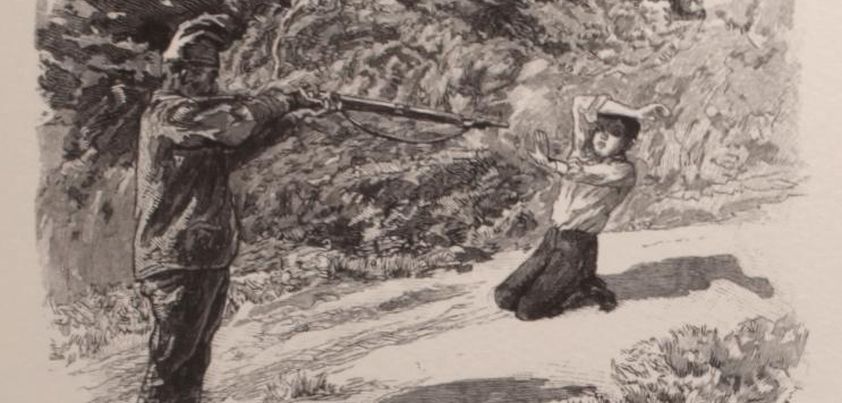 This disturbing tale by Prosper Mérimée has been called “the cruellest story in the world”. Although it deals with some complex issues, the plot is rather simple. Set in the wilds of Corsica, a bratty ten-year-old boy left home alone is confronted by a wounded criminal fleeing the police. He pays the boy to hide him but, when the police arrive and offer a bigger reward, the boy betrays the man. This brings shame upon his family, and forces his father to enforce the Corsican Code of Honor. Themes include greed, honor and betrayal, custom (vendetta), violence and brutality. More…
A Choice of Butchers
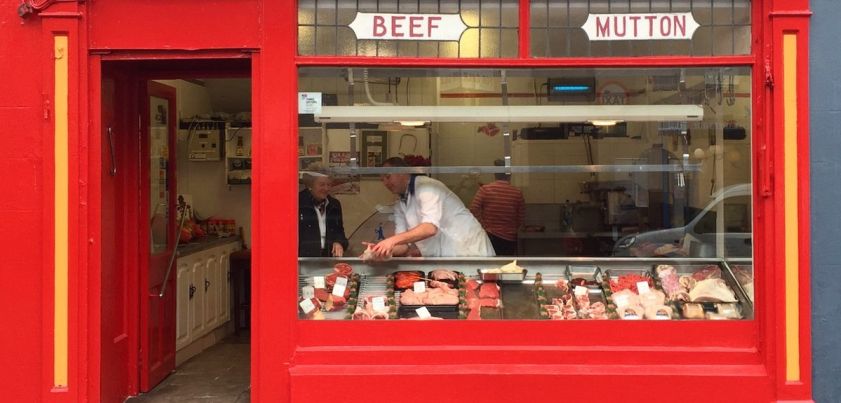 In this confronting story from William Trevor, a seven-year-old boy is faced with several issues he is far too young to understand: a hard-drinking, overbearing father he catches passionately embracing their maid; a monetary gift and unexpected good-night kiss from their soft-spoken, empathetic lodger; and a perpetually tired, unaffectionate mother who appears to passively accept her lot. Add to this that he is an “afterthought child” with both parents in their fifties and the question of why a butcher’s family would need a maid, and the story becomes an amateur psychological sleuth’s dream with some serious unstated themes. More…
The Machine That Won the War
 This story by Isaac Asimov remains relevant today as technology plays an increasing role in controlling everything from military applications to crucial infrastructure. An inter-planetary war has been won, Earth is safe, and three men bask in the glory. Ironically, it wasn’t won by a machine or any of the three ‘experts’. It was won either by chance or because of problems experienced by the enemy. Pointedly, no thought is given to the rights and wrongs of the war, or the suffering on both sides. Themes include war, hubris, the fallibility of machine and human decision-making, chance. More…
A Useless Man
 Rather than being “useless”, the protagonist of this story by Sait Faik Abasıyanık admits to having given up on life. A recluse, he hasn’t washed himself or left his Istanbul neighborhood of four streets in seven years. He follows the same routine, meets the same people, and fantasizes about the same voluptuous Jewish woman every day. One day, for no apparent reason, he ventures further afield and is dumbstruck by the changes to and vibrancy of the city. After returning home, he is so disoriented by the experience that he contemplates suicide. Themes include alienation, loneliness, fear, hopelessness, depression. More…