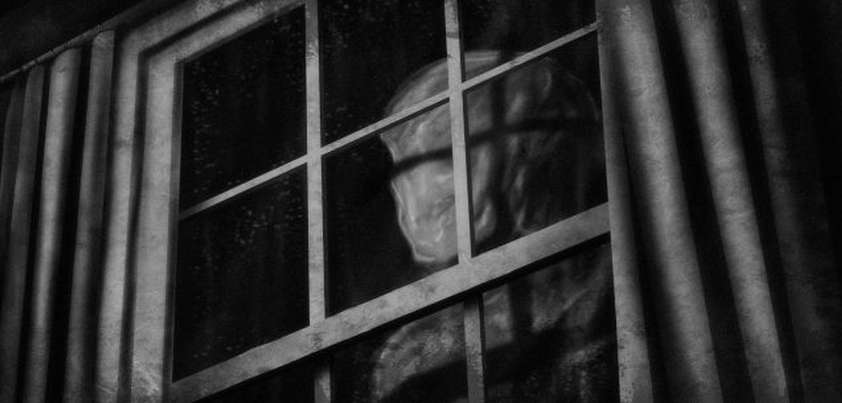
 In this moving story by Richard Matheson, what appears to be a mutant eight-year-old child has been locked in a basement for most of its life because of his/her monstrous form and size. The child does not appear to be possessed by an evil or supernatural force and is inquisitive about the outside world. Sadly, it is beaten every time he/she ventures upstairs or attempts to look outside. The horror aspect comes from the cruelty the child suffers and the threat of impending violence if it continues. Themes include appearance, alienation, isolation and loneliness, desire for acceptance, cruelty, retaliation. More…
The Ass, the Table, and the Stick
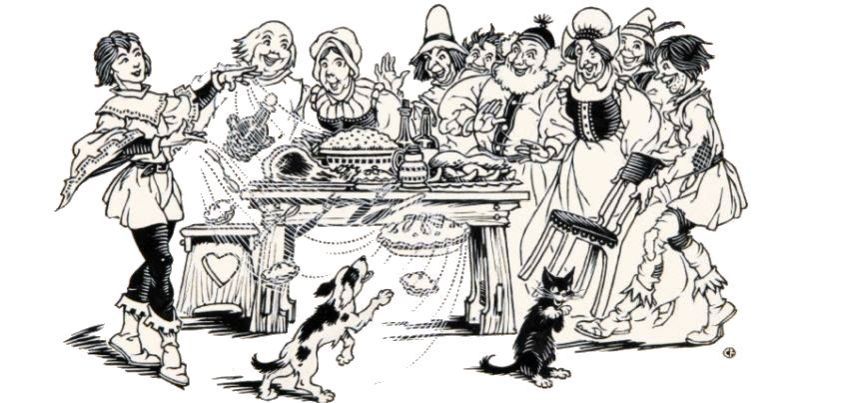 In this English folktale, a young man works for a year and earns a magic donkey. An innkeeper tricks him out of it, so he works for another year and earns a magic table. The same innkeeper tricks him out of this. For his next job, the boy earns a magic stick. This helps the young man get his donkey and table back, as well as to marry his true love. Unfortunately, in winning the girl the young man shows a side of his personality that will make readers wonder if he really deserved all the magical help! More…
Diamond Dust: A Tragedy
 This story by Anita Desai uses dark humor to highlight themes of loneliness, pet love, tolerance, alienation, conformity and fulfillment. A puppy of “indecipherable” breed brought home by a conservative Indian public servant causes havoc in his home and neighborhood as it grows into an almost uncontrollable, ferocious badmash. Mr Das, who has a secure job and is seemingly happily married, is clearly missing something in life. Although his obsession with the dog fills this gap and brings about a kind of second childhood, it leads to condemnation and ridicule from his wife and colleagues, and anger from the community. More…
The Crocodile’s Lady
 Like one of our earlier Manoj Das stories, Farewell to a Ghost, this story illustrates the prevalence of superstition in traditional Indian village life. A foreign professor visits a remote village and is fascinated by the story of the Crocodile’s Lady. In appreciation for her protection, villagers take it in turns to feed and care for the now ninety-plus year-old. As a young woman, she had been carried off by a crocodile and reappeared a decade later, claiming to have fallen in love with and lived with it in the river. Themes include religious faith, the supernatural, unnatural love, loyalty. More…
The Emperor’s New Clothes
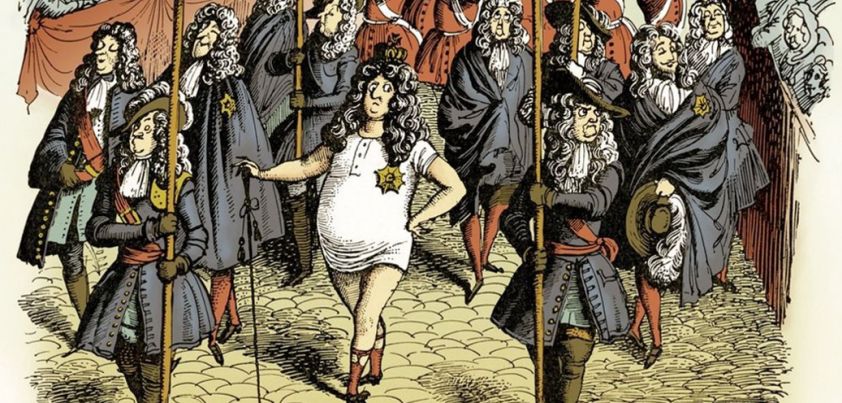 The main theme of this famous children’s story from Hans Christian Andersen is, of course, vanity. Other themes include deceit, gullibility, honesty (fear of speaking up) and pride. The Emperor who puts appearance before the well-being of his people, and his courtiers who sense that something is amiss but don’t have the courage to report it, carry two important messages. We shouldn’t judge people by the clothes they wear, what brand of phone they carry etc., and children should be encouraged to speak up if safe to do so when they see something that is wrong. More…