 This is our second Ray Bradbury story that questions the social effects of television (the first being The Veldt). Set in 2053, almost everyone stays indoors all night watching TV. Leonard Mead doesn’t. He enjoys going out for a long walk every evening. This is so unusual that the only police car patrolling the empty streets arrests him for his “regressive tendencies”. Fortunately, Bradbury’s predictions about TV were wrong. However, something far more dangerous may be replacing it: social networking on mobile devices! Themes include social dysfunction, dehumanization through technology, conformity vs. individualism, surveillance and control, isolation, disconnection from nature. More…
The Short Happy Life of Francis Macomber
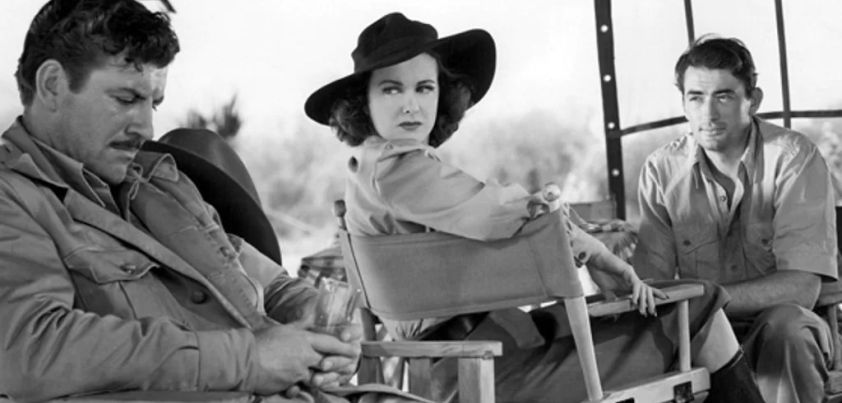 Author Ernest Hemingway goes to great lengths to set up an ambiguous ending to this story about a rich American couple’s fateful big game hunting safari in Africa. No longer (and perhaps never) in love, the couple barely tolerate each other. She can’t afford to divorce him, and he is unlikely to find a more attractive trophy wife. Readers are left to consider whether Francis’s death was murder or an unfortunate accident. What do you think? The major themes are clearly courage and masculinity. Other themes: fear; shame; violence; marriage breakdown; beauty & aging; adultery; misogyny & female stereotyping. More…
The Green Leaves
 This story from Grace Ogot reads like a folktale. With an overall theme of culture conflict between the modern world and the traditions and beliefs of a Kenyan tribe, the plot can be divided into three sections. The first (ending with Nyagar’s death) has themes of crime, tribal justice, violence, superstition and greed. The second, involving the British authorities, emphasizes colonial arrogance and cultural insensitivity. The third, in which Nyagar’s wife laments his death, introduces a feminist theme. Her chant reflects not only her own loss, but also the powerlessness and complete dependence of all village women on their husbands. More…
Mr Know-All
 This story by W. Somerset Maugham takes place at sea. A narrator we learn almost nothing about is forced to share a cabin with a man he takes an instant disliking to because of little more than his name. The other man plays an organizational role in many aspects of ship life to the point of being everywhere and always. The narrator finds him hearty, jovial, loquacious and argumentative. He calls him the best hated man in the ship. It is not until the man ‘loses’ a bet about pearls that the narrator develops a grudging respect for him. More…
The Age of Lead
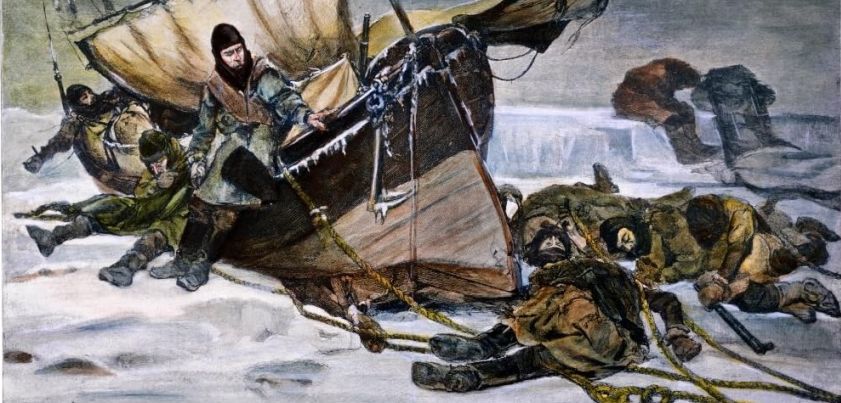 In this story by Margaret Atwood, a frozen 150-year-old body buried in the permafrost provides a lesson for the living. The story uses the solution to mystery cause of death of members of the ill-fated Franklin Expedition to highlight the dangers of consumerism and modern technology such as soil and water pollution, toxic waste and acid rain. The issues are brought home in the parallel story involving the the protagonist’s frustrating relationship with her eccentric, possibly gay lifetime friend who dies of an unknown viral infection. Themes include tragedy, side effects of consumerism and technology, individuality, friendship/unfulfilled love. More…