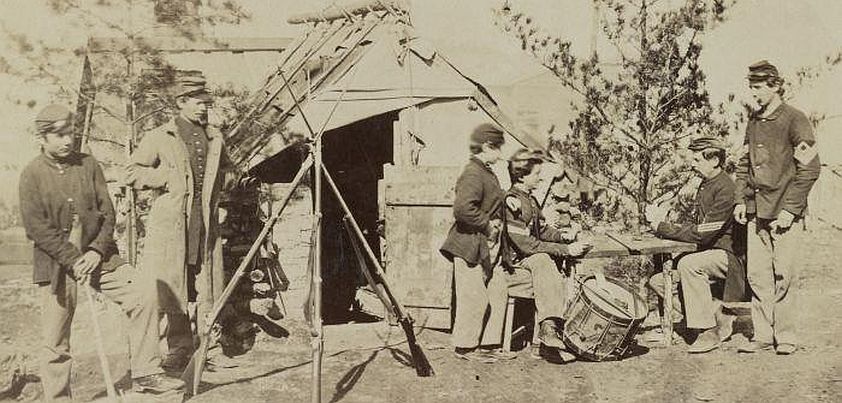
 This story by Ray Bradbury packs a lot of raw emotion, even though the “action” is limited to a single conversation that takes place over the course of no more than half an hour. A fourteen-year-old drummer boy who must march into battle with no gun or means of protecting himself is a bundle of nerves on the night before his first encounter with the enemy. An inspirational talk with his commanding general teaches him that his drum may be one of the most effective weapons in the army. Themes include isolation and loneliness, empathy, duty, fear, courage, death, honor. More…
A Joke
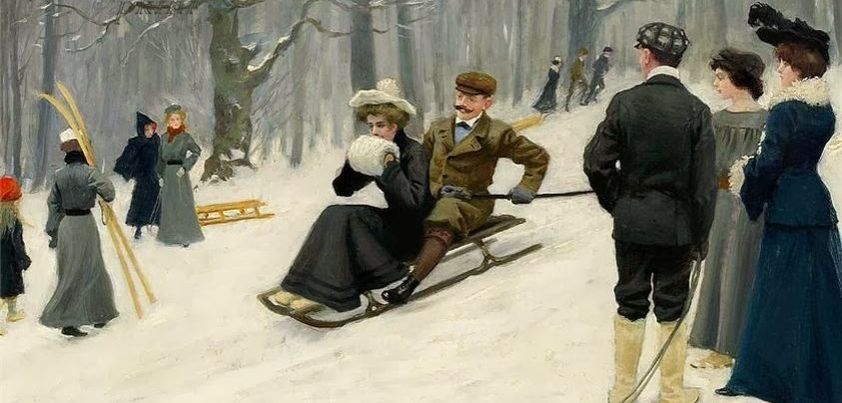 In this story by Anton Chekhov, a young man plays a trick on a terrified lady-friend by whispering a ghostly I love you as they speed down a mountain on a toboggan. Unsure of what she heard, the woman asks the man to repeat the ride over and over. Each time they do so, he whispers the same words. Soon it becomes an obsession and every day she wants to go up the mountain to listen for the words. Her reaction when she thinks she has the answer is a surprise. Themes include fear, innocence, playful deception, confusion, obsession, regret. More…
Walker Brothers Cowboy
 Although set in rural Ontario, there isn’t a cow to be seen in this Depression-era story from Alice Munro. The “cowboy”, once a successful fox farmer, is now a door-to-door household product salesman. The story’s central themes are father-daughter relationships, poverty, pride, dealing with reduced circumstances, and nostalgia. The man’s wife is bitterly resentful of the extent to which the family have “come down” in the world, while an arguably worse-off ex-girlfriend he and his children visit during one of his rounds is still able to enjoy life. Understandably, his daughter (the narrator) is somewhat disturbed by the meeting. More…
The Imitation of the Rose
 If you are looking for a light read, this story by Clarice Lispector is not for you! The protagonist (Laura) has just come home from hospital following a nervous breakdown. Her husband has expectations about a having a “normal” night out together with friends. The story has little more by way of plot, taking place mostly in Laura’s mind. The main themes are mental health, gender identity and family roles. By nature a submissive and withdrawn person, Laura is successfully adjusting to life back at home. Unfortunately, deciding on what to do with a bunch of roses rekindles her anxiety. More…
Sometimes a Dream Needs a Push
 There are two “dreams” in this inspirational story by W. D. Myers. The first is a father’s dream that his son follow in his footsteps and become a competitive basketball player; the second is the boy’s dream to be able to overcome his disability and return to the game. The “pushes” come when the boy is invited to join a wheelchair team, and the father overcomes his feelings of guilt and decides to help the team. Themes: guilt, courage, maintaining a positive attitude, family, father-son bonding, team spirit, how trying and doing one’s best is more important than winning. More…