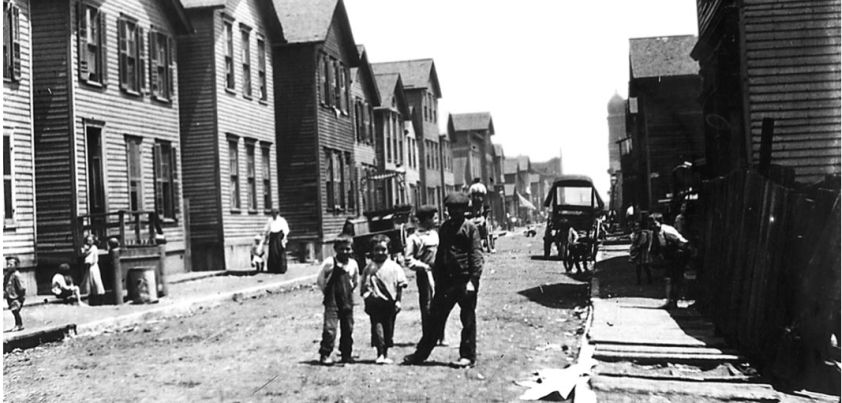
 The major themes of this Sharona Vedol story from Spider Magazine are compassion and generosity. Set during the Great Depression, a young girl accompanies her father to collect rent from families in their apartment blocks. She sees first-hand the hardship being experienced by tenants, and is impressed by the respect and understanding her father shows for each family. She is shocked when they come to a family who have no money left over for food, and worries her father will be angry about something she buys with the two dollars he gives her to buy them groceries. More…
Broken Chain
 The major lesson of this story from Gary Soto is that what someone is like on the inside is more important than his or her looks. An insecure seventh-grader is obsessed with his appearance (teeth, V-cut abs, hairstyle and clothes). His outlook on relationships changes when an act of kindness results in a bike-riding “date” with a girl. When his bicycle chain breaks, it looks like the date will be a disaster. Fortunately, his older brother comes to the rescue and the boy experiences his first touch of “love”. Themes: identity vs. appearance, sibling rivalry (jealousy) / brotherly love, courage. More…
The Man Who Was Almost a Man
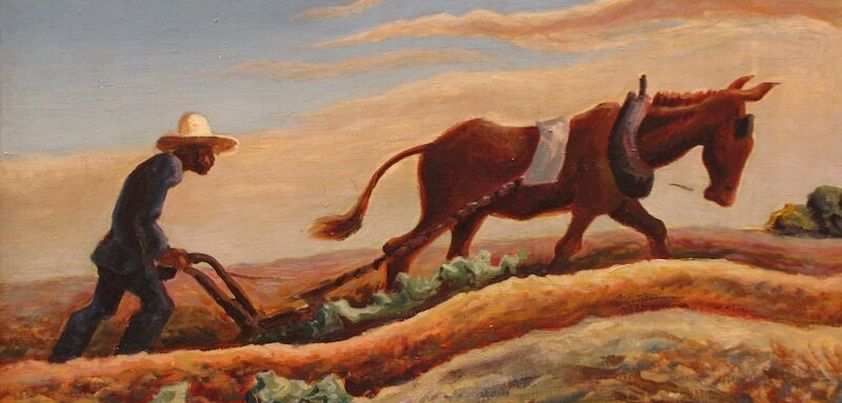 At seventeen, Richard Wright’s naïve protagonist (Dave) is old enough and strong enough to do a man’s work. Unfortunately, his family and co-workers treat him like a boy. Dave buys a gun, believing that having one will win him the respect he deserves. Instead, a wayward shot when he first uses it brings humiliation. Despite the accident, the gun gives Dave a sense of power. Faced with losing it and resuming his former life, he leaves town to look for somewhere a seventeen-year-old with a gun can be a man. Themes: class/racism, coming of age, respect, rebellion, the gun debate. More…
Monster
 The titular Monster in this story by Catherine Lim is an old, rickety, bug-infested bed, treasured by a frail woman in her seventies and despised by her daughter-in-law. Set in highly competitive Singapore, the other monster in the house is generational conflict arising from a fundamental cultural change: a growing lack of respect, understanding and compassion for the aged. Ironically, when the daughter-in-law is finally in a position to destroy the much-hated bed, she learns it may be worth a lot of money! Themes include generational conflict, cultural change (less respect for the aged), sentimentality, materialism, social class. More…
A Vendetta
 This story by Guy de Maupassant features an old widow who lives in a small village in Southern Italy with her only son and his dog. One evening, the son is murdered. The mother is so saddened by this that she swears a vendetta against the killer. Every day, she sits by the window wondering how she, a weak old woman with no one to help her, can carry out her promise. Finally, she comes up with an idea and has her revenge. Themes include grief, vengeance, cruelty, the brutality and potential for injustice of the code of vendetta. More…