 This story by Philip Roth raises questions about the conflict between integrity and loyalty to one’s community group. A Jewish-American army sergeant returning from the European battlefields towards the end of World War 2 is assigned to a training unit in which there is an entitled Jewish recruit. The recruit exploits their common heritage, scheming, lying and manipulating the sergeant to receive special treatment. When the self-serving recruit goes behind the sergeant’s back to avoid serving in the Pacific, he is quickly put in his place. Themes include identity, integrity, “Jewishness”, antisemitism, manipulation. More…
The Pugilist at Rest
 This story by Thom Jones is unusual in that the protagonist, a reflective American Marine, freely admits committing unspeakable war crimes (and getting medals for them) after the rest of his reconnaissance patrol was slaughtered in Vietnam. Post-war PTSD leads to excessive drinking and a vicious boxing match in which he suffers serious brain damage. He must now choose between a life of seizures in a drug-induced haze, or risky surgery that could turn him into a vegetable. Themes include friendship, masculinity, the brutality of war, morality, violence and suffering, choices and consequences, philosophy and art. More…
The Old Aunt / Boodhi Kaki
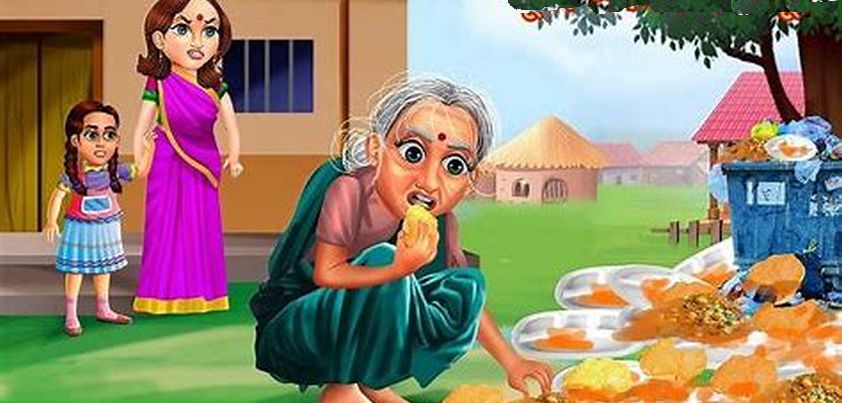 In this story by Premchand a Hindu woman is overcome with pity and fear of adharma (divine punishment for selfishness and injustice) when she sees her husband’s disabled aunt foraging for food among banquet leftovers. The aunt, who has no other living relative, had previously transferred her entire property to the woman’s family in exchange for a promise of care. Rather than being cared for she has been treated inhumanely, often being left hungry and alone in her room for long periods. Themes include greed, betrayal, the plight of the infirm, responsibility, neglect, redemption, kindness. More…
Everything That Rises Must Converge
 Flannery O’connor is known for emphasizing her themes through flawed, often thoroughly dislikeable characters. In this story, she has paired a bigoted mother living in the past with a callous, disrespectful son. The son, a college graduate, considers himself intellectually and morally superior to his mother and delights in antagonizing the poor woman. The unfortunate climax comes at the end of a city bus trip when the mother insults her African American “doppelganger” by offering the woman’s young child a penny. Themes include (through Mrs. Chestny) sacrifice, heritage & appearance vs. character, racism; (through Julian) lack of respect, cruelty, self-deception. More…
The Water-Faucet Vision
 In this humorous story by Gish Jen, a Chinese-American woman whose mother recently passed away reflects on a brief period in her childhood when her mother somehow fell out of their bedroom window. At the time of the fall she was a fifth grader in a Catholic school, obsessed with the idea of becoming a martyr and performing miracles. When her precious comfort beads fall through a drainage grate in the road, she wakes to a “vision” telling her how to recover them. Themes include religious belief, marital conflict, family, friendship, loss. More…