 Although Dorothy Sayers is best known for her mystery stories featuring amateur sleuths Lord Peter Wimsey and Montague Egg, this story features neither. Real estate agent Harold Mummery fears for his ailing wife. Police are hunting for a cook suspected to have poisoned several of her employers. His wife has recently hired a new cook, someone has been tampering with the arsenic-based weed killer in his garden shed, and he is beginning to feel ill. When a chemist identifies arsenic in some hot chocolate the new cook prepared, he rushes home. Themes: fear, suspicion, deception and betrayal, appearance vs. reality. More…
God Sees the Truth, But Waits
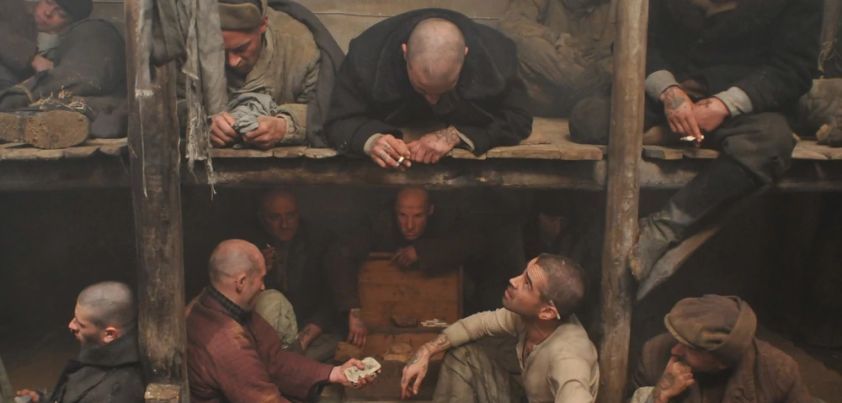 This is one of Leo Tolstoy’s earlier short stories, published between his two epic novels War and Peace and Anna Karenina, and thirteen years before What Men Live By. It has themes of injustice, acceptance, forgiveness and redemption. The protagonist suffers a dramatic fall in worldly terms, which is more than matched by his growth in spiritual grace. The plot was not new. It is a re-working of an almost identical tale from War and Peace related by peasant character Platon Karataev. The novel was written for the Russian nobility; this version was targeted at its common people. More…
If You Sing like That for Me
 In this story by Akhil Sharma, an older Indian woman looks back on the early months of her arranged marriage. Growing up belittled by her mother (for not being as driven and academically successful as her younger sister) and manipulated by her father, she hoped for love. Although initially fearful and distant from her husband, she woke up one morning realizing that she had fallen in love with him. Sadly, when she finds the courage to discuss her feelings, she finds that to him she is a mere commodity. Themes include arranged marriage, sibling rivalry, alienation and loneliness, love, disillusionment. More…
Two Words
 In this story by Isabel Allende a young woman has become famous, traveling an unnamed South American country by foot delivering news, storytelling, writing letters for people, and selling “secret” words that have magical powers. One day, a feared bandit/rebel leader forces her to write a motivating political speech to help him become president. On departing, she whispers two words in his ear. The speech is such a success he becomes the favorite to win the election. However, obsessed by the meaning of her two words, he withdraws into himself. Themes include hardship, courage and determination, loneliness, the power of words. More…
Heart of Darkness
 This story by Joseph Conrad is told through the eyes of a riverboat captain sent into the heart of Africa to contact an enigmatic trading post manager employing questionable methods. It explores the concept of Darkness on several levels. At the highest, we have the ‘darkness’ of unexplored Africa, and the ‘darkness’ of European imperialism in seeking to subjugate its peoples and exploit its resources. On a more fundamental level, we have the potential ‘darkness’ (capacity for cruelty/evil) in the heart of every man. Themes include alienation and loneliness, power, moral and mental degeneration under colonialism, racism, cruelty, greed, exploitation. More…